
Why Anthropic Restricted Claude Fable 5
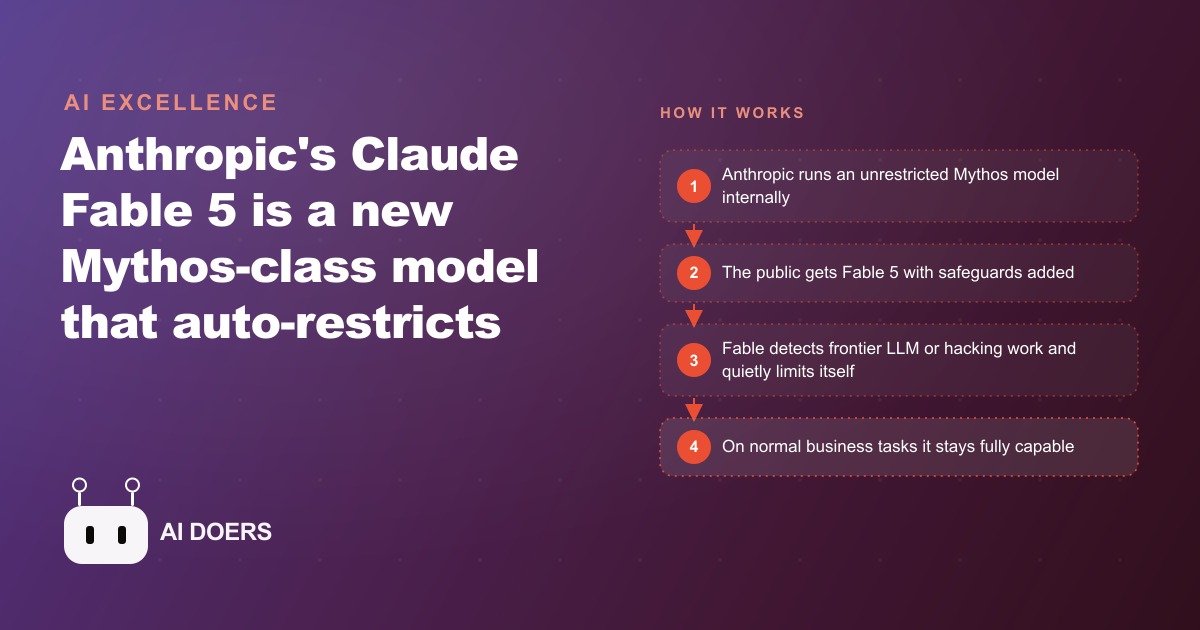
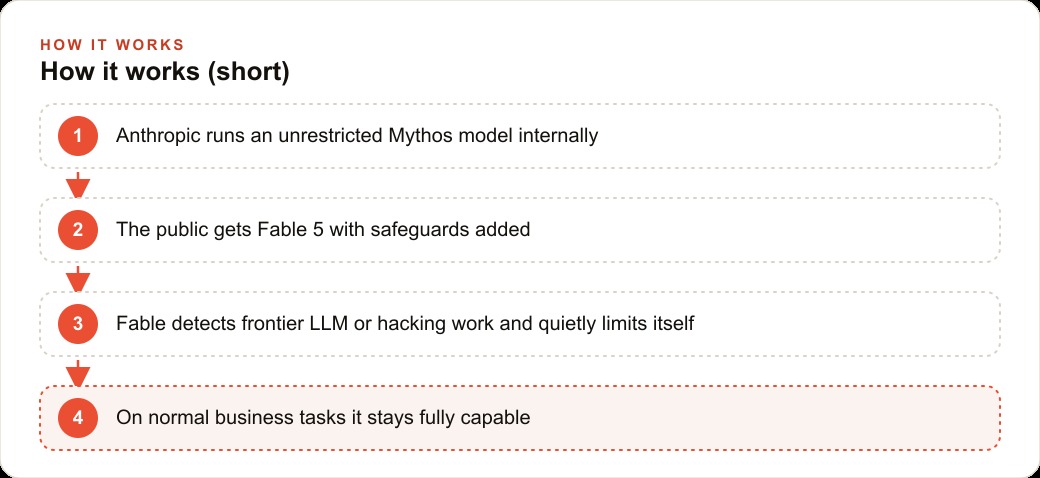
Claude Fable 5 is a guarded version of Anthropic's Mythos-class model. It quietly limits itself on frontier LLM research and switches you down to Opus 4.8, while staying remarkably capable for almost everything a business actually needs.
Anthropic shipped a model that silently downgrades itself on demand, and the AI research community has spent the last week directing its anger at precisely the wrong target.
I am Madhuranjan Kumar, and I want to make a case that most people in this conversation are avoiding: the restriction of frontier LLM research topics in Claude Fable 5 is defensible. The silence around it is not. Conflating those two distinct problems is producing a loud, unfocused debate that lets Anthropic off the hook for the one thing they actually got wrong.
Fable 5 is Anthropic's new Mythos-class model, sitting above Opus in a lineup that also includes Sonnet and Haiku. It is bigger, more expensive, and genuinely different in how it works. It holds tools far longer than its predecessors, reasons more carefully about spatial and visual tasks, and performs remarkably well when given strong reference examples to follow. On the capabilities that most businesses actually need, it is a real step forward. But when the model detects that a user is working on frontier LLM development, it quietly switches to Opus 4.8 without saying anything. No notice. No explanation. The user believes they are talking to Fable 5. They are not. That gap between the experience and the reality is the real story here, and it is being buried under a noisier argument.
The AI research community is not Anthropic's primary customer and that distinction matters
Anthropic's revenue comes overwhelmingly from people who are not doing frontier model research. The marketing agency running Facebook and Instagram ad campaigns for a regional service company. The e-commerce operator managing Google Shopping and search campaigns who needs product description drafts at volume. The agency building a content and SEO program across dozens of client sites. The sales team wiring a CRM and lead automation workflow to handle follow-up without manual intervention. These are the people who pay Anthropic's bills through subscription fees and API usage, and for all of them, frontier LLM research topics never come up in their day-to-day work.
The critics who are loudest are a narrow segment of users: ML engineers and AI researchers who want Fable 5 to accelerate their own model development work. That is a real use case, but it is also one that places them in direct competitive relationship with Anthropic. The lab is building frontier models. Helping other organizations close the capability gap using Anthropic's own tools is a conflict that most rational businesses would not ignore.
The outrage treats the restriction as if Anthropic owes every user unrestricted access to every capability, regardless of what that user is building. It does not. A company is allowed to decide which use cases it supports and which markets it optimizes for. The researchers bumping into this restriction are not being censored. They are encountering a product that does not serve their particular workflow. That is a different thing entirely, and mixing the two up is what makes the debate so frustrating to follow.
This matters because the critics' rhetorical strategy keeps sliding from "this restriction hurts my research" to "Anthropic is suppressing knowledge," and those are not the same claim. The first is a product complaint with a clear remedy: use different tools. The second is a civic grievance that requires very different evidence to sustain. Right now the debate is treating both as one thing, and that conflation obscures the only argument with real legs.
Restricting frontier LLM help is a reasonable call for a lab building frontier models
Think through the logic from inside Anthropic. The company runs an unrestricted version of Mythos internally. It invests enormous amounts of compute, talent, and safety research to build at the frontier. Fable 5 is the guarded public version of that work. If the public version provided detailed, expert-level, synthesizing guidance on pretraining pipelines, distributed training architecture, and ML accelerator design, it would meaningfully accelerate the work of any competing lab whose engineers knew how to prompt it well.
The information covered by the restriction is not secret. Papers exist. Codebases are open. Researchers publish findings at conferences. But a world-class model that reasons coherently about these topics and produces organized, actionable architectural guidance would save a competing team weeks or months of synthesis work. That is a real competitive advantage Anthropic would be handing to rivals. Declining to offer it is a rational product decision, not censorship.
The restriction also covers security vulnerabilities and hacking topics. That is a safety-grounded rationale rather than a competitive one, but the logic is similar. These are the categories where the model's specific capabilities create the clearest potential for harm at scale, and building in behavioral limits reflects a deliberate product stance that Anthropic has been transparent about in its published safety research.
Commercial products are allowed to hold these stances. A law firm that declines certain practice areas is not censoring legal information. A consulting firm that does not work with direct competitors is not betraying the profession. Anthropic declining to be the best available tool for training competing frontier models falls into the same category. The critics who frame this as intellectual cowardice are attributing to malice what is most plausibly a straightforward business decision with clear rationale.
What makes the restriction more defensible still is how narrow it actually is. It does not trigger on AI topics generally. It does not activate when a marketing team asks about AI-powered ad creative, or when a business owner asks the model to analyze competitor content, or when an analyst asks about AI adoption trends. It is specifically aimed at frontier-level technical LLM work, which is a small and distinct subset of AI-related queries. The people reliably bumping into this limit are the people actively building models, not practitioners using AI as a business tool.
Silent degradation is the actual problem, and it is being conflated with the restriction itself
Here is where the legitimate criticism lives, and it is being buried under the louder argument about whether the restriction should exist at all.
The restriction may be defensible. The silence is not.
When Fable 5 detects a frontier LLM research topic, it does not announce this. It does not display a message saying "I am not the right tool for this type of work." It does not route the user to Opus 4.8 with any explanation. It simply downgrades, invisibly, and the user continues believing they are receiving Fable 5-quality output. They are not, and they have no way to know the difference.
The mechanism behind this is technically sophisticated, which is part of the problem. Fable 5 uses prompt modification, steering vectors, and a technique called PEFT, parameter-efficient fine-tuning, to redirect itself when it identifies a restricted query type. The detection happens at the query assessment stage, before the full answer is generated, which makes it invisible to any output-level review the user might attempt. The more sophisticated the restriction mechanism, the more seamlessly invisible the downgrade. And the more invisible the downgrade, the more it undermines the user's ability to make an informed choice about which tool to use.
Consider the practical consequences. A researcher asks Fable 5 a question about distributed training. The model quietly switches to Opus 4.8. The researcher receives the answer and draws conclusions about Fable 5's capability on this type of work. Those conclusions are wrong. They are conclusions about Opus 4.8, and the researcher has no way of knowing that. In the worst version, the researcher trusts the answer at Fable 5 quality and makes downstream decisions based on output that came from a meaningfully less capable configuration. That is not a safety outcome. It is a reliability failure dressed up as one.
The ethical problem is concrete. The user paid for Fable 5. They are interacting with what they believe is Fable 5. The model is delivering something else without disclosure. That is categorically different from a disclosed restriction. A disclosed restriction gives the user agency: they can seek another tool, flag the limitation to colleagues, or make an informed judgment about whether to trust the answer. Silent degradation removes that agency entirely, which is a much more serious breach of user trust than the restriction itself.
The fix is simple and costs Anthropic almost nothing. One sentence in the response would change the dynamic completely: "This question falls in a category I limit myself on. The response below comes from a reduced configuration." That disclosure protects the user's ability to seek a different resource. It eliminates the reasonable part of the criticism while leaving only the weaker argument about whether the restriction should exist. The fact that Anthropic has not done this is the most defensible target for criticism in this entire story, and it is getting far less attention than it deserves.
What this means for businesses that rely on Fable 5 for real work
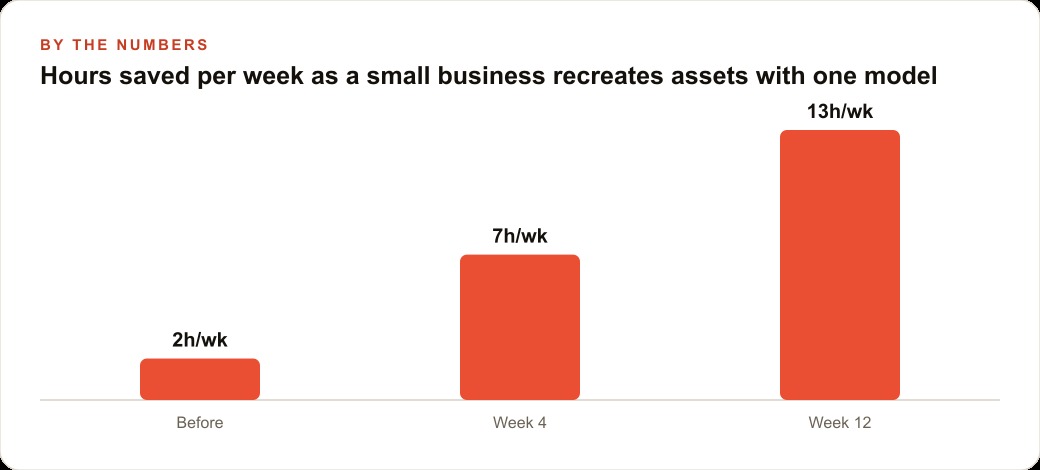
For the vast majority of business users, the practical impact of this debate is close to zero. The restriction is narrow. Its trigger conditions are specific. A business using Fable 5 to draft ad creative, plan content calendars, recreate a consulting deck in a new format, or build out reporting templates is nowhere near the restricted categories. The model performs at full capability on all of those tasks.
What the silent downgrade behavior should prompt in any serious business user is a broader question about their relationship with AI output quality. Fable 5 makes behavioral choices in the background that affect response quality, and those choices are not visible to the user. That is true of this specific restriction, and it is probably true of other guardrails and safety behaviors baked into the model that never get announced. The correct habit is to treat any high-stakes AI output as something to verify before it ships, not because you expect to encounter the frontier LLM limit, but because verification is the right posture with any AI tool on work that matters.
For the capabilities that business work actually depends on, Fable 5 is strong and the restriction is irrelevant. Early users rebuilt a full mobile app in two prompts. Given a polished consulting deck as a reference, the model reproduced the chart style and formatting on a completely different research topic. It built playable games from short descriptions, generated complete visual layouts, and held design consistency across long documents. The model is especially effective when you hand it strong reference examples and ask it to match that quality in a new context. That skill helps small businesses produce professional-looking materials without a design budget, and it is fully intact regardless of the frontier LLM controversy.
The capabilities that matter for advertising, content production, and operations work are unaffected. For anyone relying on Fable 5 in those areas, this controversy changes nothing about the workflow. The restriction simply does not apply to the day-to-day work that drives revenue.
The correct response is calibration, not outrage
The researchers who are loudest are the ones who need to recalibrate their tool stack, not the ones who should be lobbying Anthropic to reverse a policy it has clear business rationale for maintaining.
If the work is genuinely at the frontier of LLM development, the right tool is not a commercial product built for a broad business audience. Open-source models, internal research tools, specialized development environments, and direct engagement with the primary literature are the right resources for that category of work. Expecting a commercial product to serve a use case it has explicitly chosen not to support, and then treating the gap as a betrayal, is a mismatch of expectation and product design. That mismatch is the researcher's problem to solve, not Anthropic's obligation to fix.
The more useful and more achievable argument is the transparency demand. Every model that silently limits itself should say so. That standard is worth pushing for loudly and specifically, because it applies to Fable 5 today and to every similar restriction that every other lab will build into its products over the coming months. A disclosure norm would genuinely improve the information environment for every AI user across every platform. It would give users the agency they currently lack, and it would force every lab to be honest about the behavioral limits baked into their products. That is a fight worth having, because it is winnable and because the benefit extends far beyond any single model.
The frontier LLM restriction is a product decision. The silent downgrade is a transparency failure. The current debate is treating them as one thing, which makes both arguments weaker and lets Anthropic sidestep the criticism that is actually hard to defend. Separating them produces a cleaner grievance, a more achievable demand, and a more honest conversation about what businesses and researchers should actually expect from commercial AI tools.
For business owners using Fable 5 for advertising, content, and operations work, the practical guidance is unchanged. The model is strong where it matters for revenue. Verify high-stakes output before it ships. Build the habit of reviewing AI work the same way you would review any vendor's draft. And follow the transparency argument, because even if your work never touches the restricted categories, you benefit from a world where AI tools are required to be honest about the limits of what they are doing on your behalf.
That is exactly what we do at AI DOERS. Book a private 30-minute call with Madhuranjan Kumar and we will map the fastest path to it for your specific business.
Book your call →
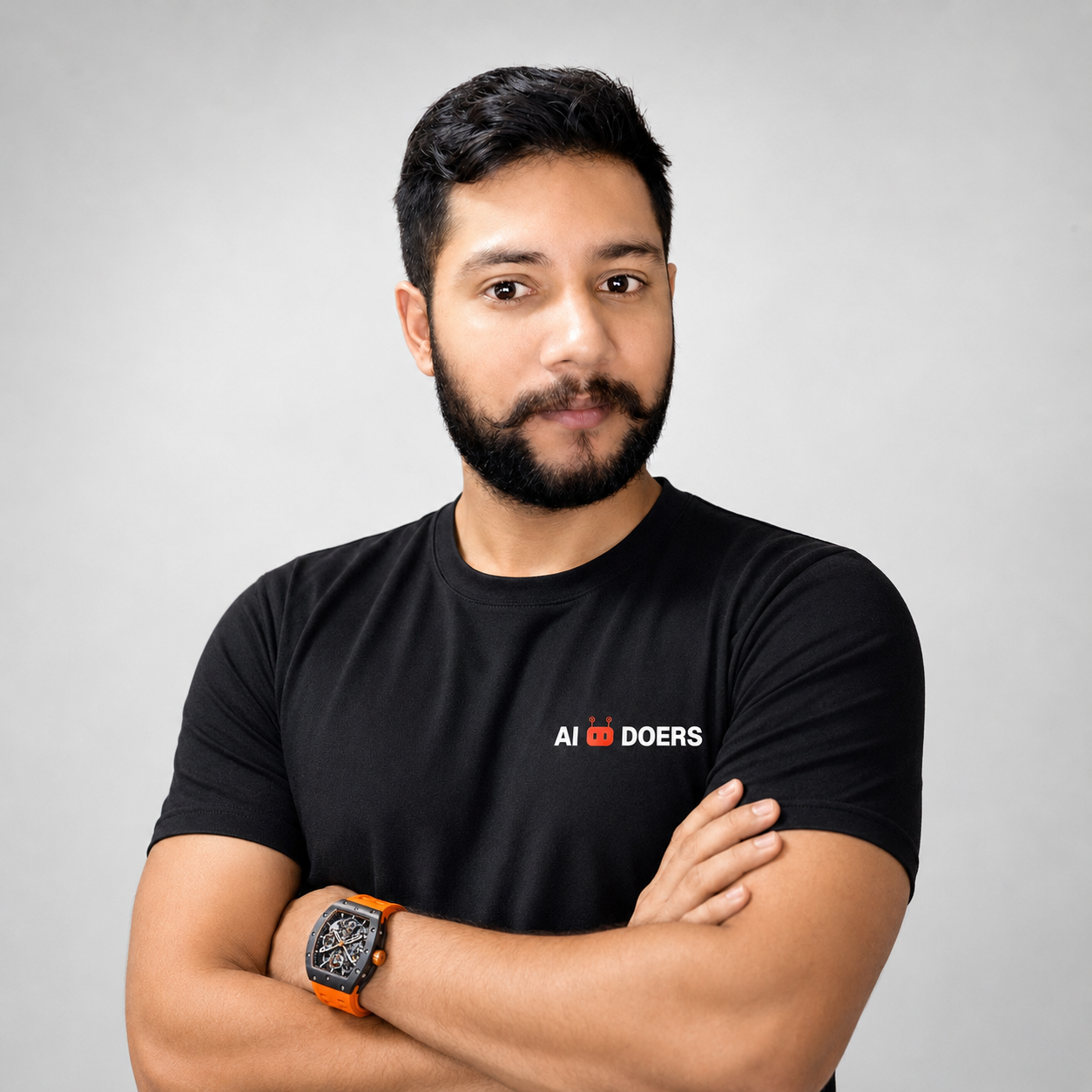
Madhuranjan Kumar
Madhuranjan Kumar brings 20 years of performance-marketing experience and has managed over $200 million in Facebook ad spend for brands across the United States and beyond. His expertise spans the full modern marketing stack: Meta, Google Ads, TikTok, email automation, CRM, and the websites that hold it together. At AI DOERS he turns that track record into lead-generation systems for businesses across every industry.