
Why Andrej Karpathy Joining Anthropic Made One AI Commentator Sad
A single job announcement pulled 24 million views, and that reaction says more about the AI narrative than the move itself. I am Madhuranjan Kumar, and here is how I read it, plus what it means for your business.
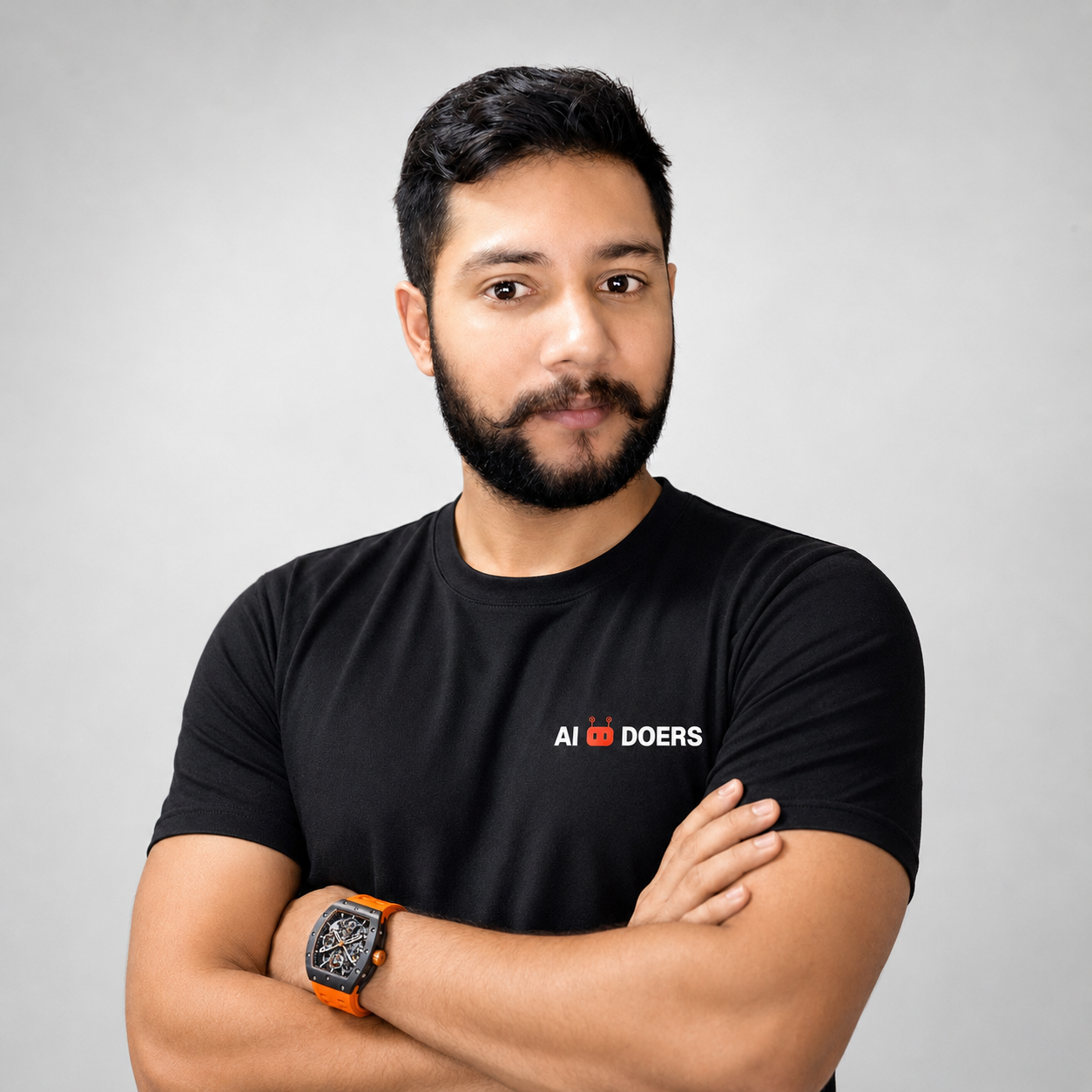
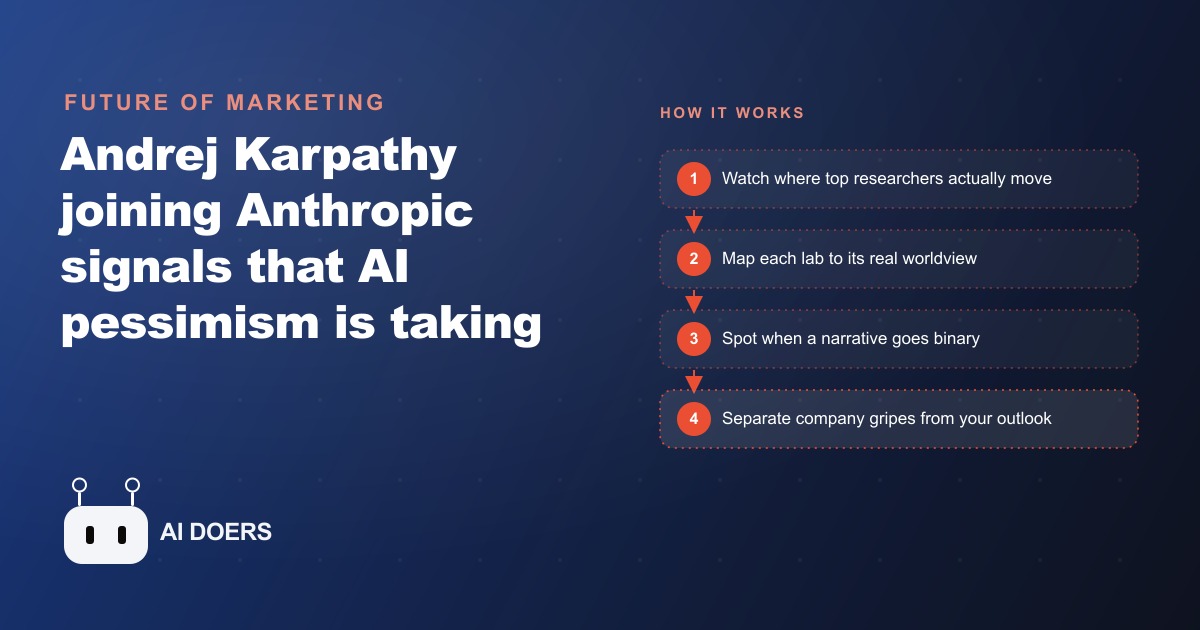
A job announcement got 24 million views. That number is the first thing worth examining, because a career update from even the most prominent researchers in any field does not usually generate that kind of response. The announcement in question was Andrej Karpathy, a co-founder of OpenAI and the former head of self-driving at Tesla, saying he was joining Anthropic. I am Madhuranjan Kumar, and I want to walk through what that response tells us, what the decision tells us, and what a gym owner trying to make sense of AI's place in their business should take from all of it.
The gym owner who panicked after reading AI trainer headlines
The gym in this story had been running profitably for six years. Twelve members of staff. Solid retention. A waitlist for premium training slots. Then the owner started seeing headlines about AI fitness apps replacing personal trainers, about machine learning systems that could generate adaptive workout plans more cheaply than a human trainer could, about the coming disruption of the personal training industry.
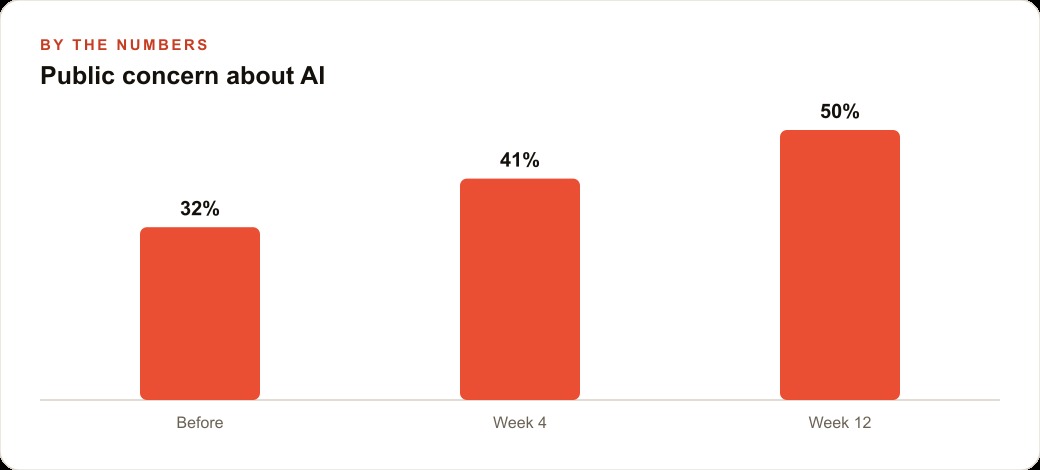
The owner's feed was full of this content for a specific reason that had nothing to do with how accurate it was. Fear and outrage are the highest-engagement emotions on every social platform, and AI disruption narratives trigger both reliably. The algorithm that serves content in any feed optimizes for engagement. The result is that the most frightening version of any story about AI gets amplified far beyond what a proportionate view of the evidence would justify.
The owner considered cutting trainer hours before confirming there was any actual market evidence that clients were defecting to AI apps. The decision was driven by the narrative, not by the business's actual numbers. Retention was still strong. Trainer-dependent premium memberships were waitlisted. The threat was real in the aggregate AI landscape but not yet real in this specific gym's specific market.
What the 24 million views on a job change actually revealed
The Karpathy announcement drew that response because AI labs have become something more than technology companies. They have become belief systems. Choosing to join a specific lab is, in the current moment, a statement about which view of AI's trajectory and ethics you find most credible. When a researcher of Karpathy's standing makes that choice, the choice is read as a co-endorsement of that lab's worldview.
Anthropic's worldview is noticeably darker than its competitors'. Anthropic's leadership has spoken publicly about the risk of a white-collar job bloodbath driven by AI, argued that open source AI development was dangerous, and positioned the company as the only organization building frontier AI responsibly enough to do it safely. Those positions have generated both criticism and significant attraction from people who find the cautious framing more honest than alternatives they see as naive about risk.
Karpathy joining Anthropic is read as an endorsement of that worldview from someone who is not desperate for employment, who is not trying to build career credibility, and who could work anywhere in the field at any compensation. He is already wealthy. He chose based on what he believes. That is why the choice generated 24 million views: it was read as a credible signal about which organization and which worldview is attracting people with nothing to prove.
The business implication is not about Karpathy or Anthropic specifically. It is about how to read talent flows as a form of business intelligence. Where credible, established people with options choose to work tells you something about what those people believe is true. Their actions are more honest than their statements because their actions carry costs that statements do not.
Reading lab moves like a business intelligence report
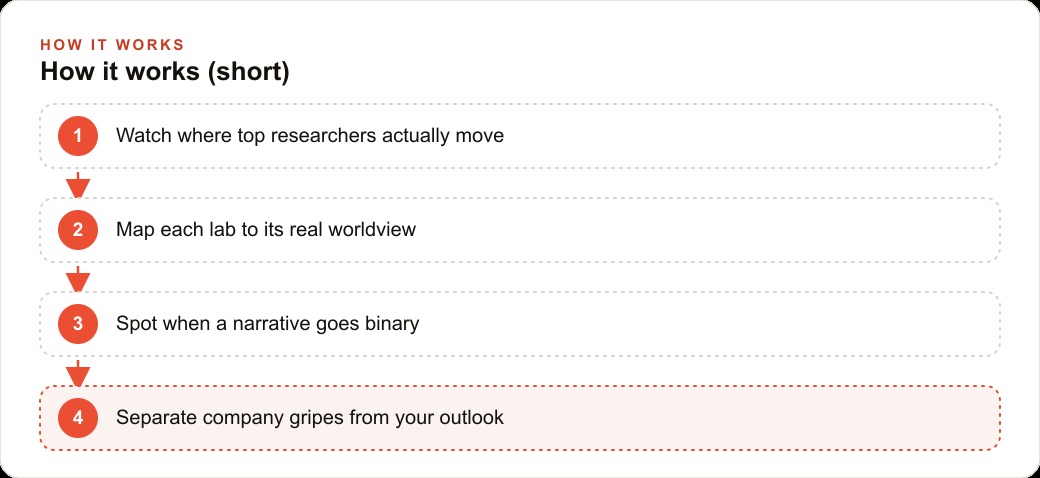
The gym owner who learned to read the AI narrative clearly applied a simple filter to every piece of AI news: is this telling me something about the technology, or is it telling me something about engagement mechanics? The disruption headlines in the owner's feed were mostly telling them something about engagement mechanics. The headlines were performing a familiar function: triggering anxiety, earning shares, driving return visits to the source. The technology content in them was a secondary concern.
The lab talent moves, including Karpathy's, are different. They are actions taken by people with significant opportunity costs who are expressing preferences through behavior rather than through words. Those actions carry information that is harder to manufacture than a headline. A researcher who joins a specific lab because they believe in its approach, not because they need a job, is giving you a more reliable signal about that lab's credibility than any press release the lab could publish about itself.
For an owner navigating AI tools and deciding which ones to build workflows around, the same principle applies. Pay more attention to what people who use AI tools in their actual work consistently do than to what any tool's marketing says. Which tools do practitioners who do not have financial incentive to promote them keep coming back to? That pattern is more predictive of what will be useful in your business than any comparison table or benchmark ranking.
There is also a calibration consideration worth naming. The three major labs have genuinely different worldviews that produce genuinely different product decisions. Anthropic's cautious framing produces an assistant that is more likely to qualify its answers and decline edge cases. OpenAI's optimistic abundance framing produces an assistant that is more likely to engage with uncertain territory and prioritize helpfulness. These differences are real and affect which tool performs better for specific use cases. Understanding the worldview behind a tool helps predict where it will be reliable and where it will frustrate.
How the gym that stayed calm turned the narrative into a positioning advantage
The gym owner, after working through the narrative analysis, made a specific operational decision instead of a reactive staffing cut. The decision was to use AI tools for the administrative work around training, the scheduling, the check-in reminders, the progress summaries sent to members each month, the follow-up message when a member misses two sessions in a row, and to keep all human trainer time focused entirely on the physical, relational, in-person work that no app currently replicates.
This was a positive-sum move rather than the zero-sum cut the original panic suggested. The trainers spent less time on administrative coordination and more time on members. Member experience improved because trainer attention was less divided. Retention held steady while the owners' labor cost per retained member dropped because the administrative overhead was handled by automated tools costing a fraction of a trainer hour.
The marketing consequence was equally useful. The gym could articulate clearly what it was doing: using AI for scheduling and communication so that every training hour is fully focused on you, not on admin. That message, framed as a commitment to quality human attention rather than as a cost-cutting measure, resonated with exactly the premium-membership segment the gym was trying to retain. The clients most worried about AI replacing their trainer were the ones most reassured by a business that was transparent about using AI in a limited, specific way and keeping humans central.
The operational reality six months after the decision
Six months later the numbers were straightforward. Trainer retention was higher than the industry average, partly because trainers were less burned out by administrative tasks. Member retention held at the gym's historical average. The AI scheduling and communication tools reduced the time the front desk spent on routine coordination by roughly a third, allowing the same staff to handle more inquiries and member touchpoints without adding headcount.
The disruption headlines had not stopped. If anything the volume had increased. But the owner read them differently. The question that filtered each one was not is this going to happen? It was is this happening in my specific market, with my specific client base, on a timeline that affects my decisions this quarter? The answer was consistently no, and the business ran calmly while the headlines ran hot.
The Karpathy-to-Anthropic story, read through this lens, is useful information about lab credibility and worldview consolidation. It is not a prescription for the gym owner's operations. The skill is knowing which signals to use and which to route into the engagement-bait category. Building that filter is a skill like any other. It takes practice and deliberate attention, and it produces a business that makes fewer reactive decisions and more reasoned ones over the course of a year. The owner who reads the narrative well and uses AI tools for specific, bounded tasks while preserving the human relationship that drives retention is in a better position at year-end than the one who either panicked or ignored everything and let the competitive environment shift without attention.
For a business that tracks its own marketing performance and customer acquisition costs carefully, the narrative-reading skill also affects ad strategy. The AI anxiety narrative is an opening for a positioning message that speaks directly to that anxiety and neutralizes it. That message cannot be generic. It has to be specific to what the business actually does and genuinely true about how AI is and is not involved in the service. Businesses that are honest and specific in this framing earn trust that businesses deploying vague reassurance do not.
That is exactly what we do at AI DOERS. Book a private 30-minute call with Madhuranjan Kumar and we will map the fastest path to it for your specific business.
Book your call →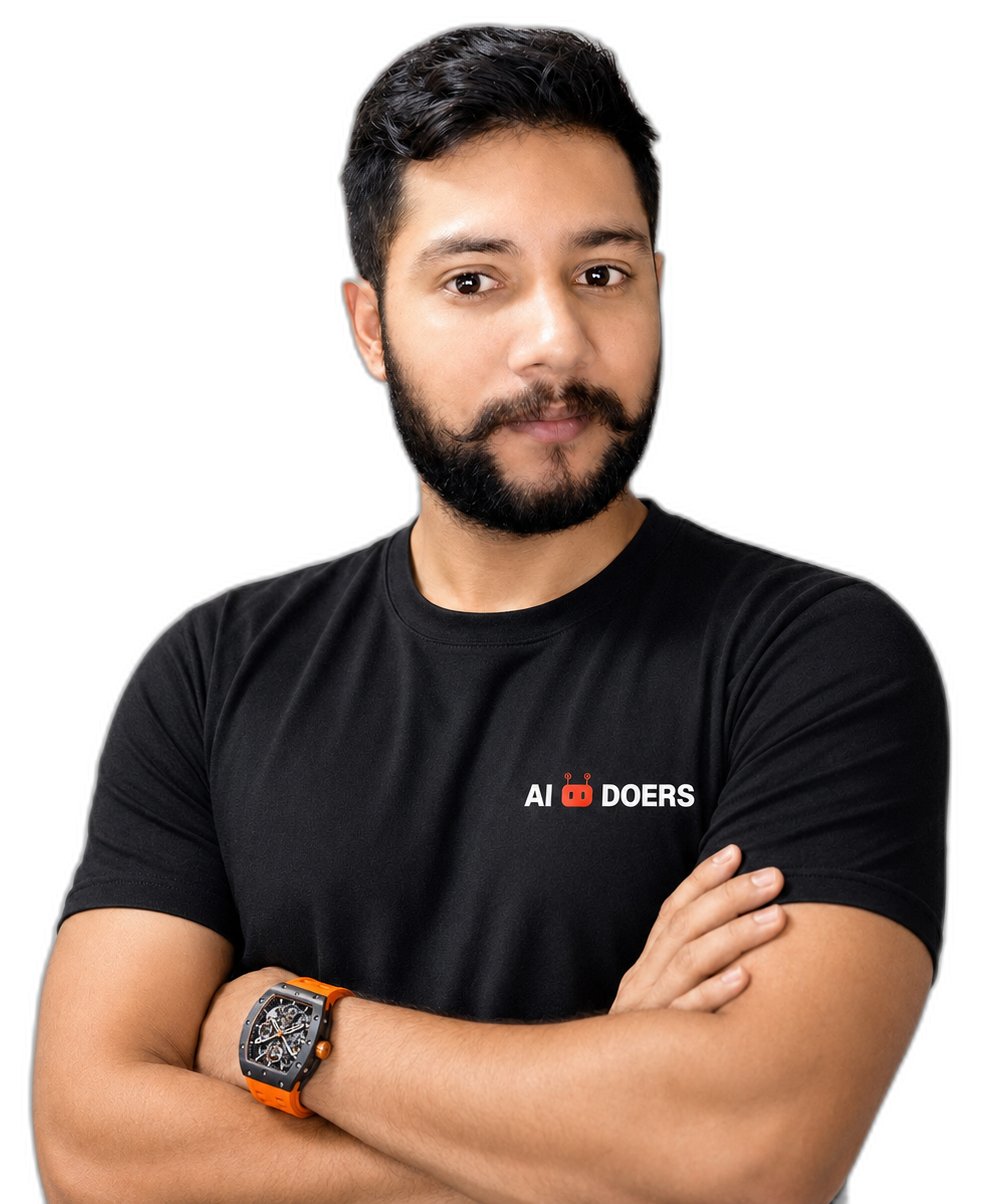
Madhuranjan Kumar
Madhuranjan Kumar brings 20 years of performance-marketing experience and has managed over $200 million in Facebook ad spend for brands across the United States and beyond. His expertise spans the full modern marketing stack: Meta, Google Ads, TikTok, email automation, CRM, and the websites that hold it together. At AI DOERS he turns that track record into lead-generation systems for businesses across every industry.