
The 6 AI Skills Worth Mastering in 2026
The six AI skills that matter most are prompt engineering, grounded research, content creation, building agents, vibe coding, and orchestration, and the last one, knowing which tool handles each step of a workflow, is what separates people still typing single prompts from those getting real leverage.

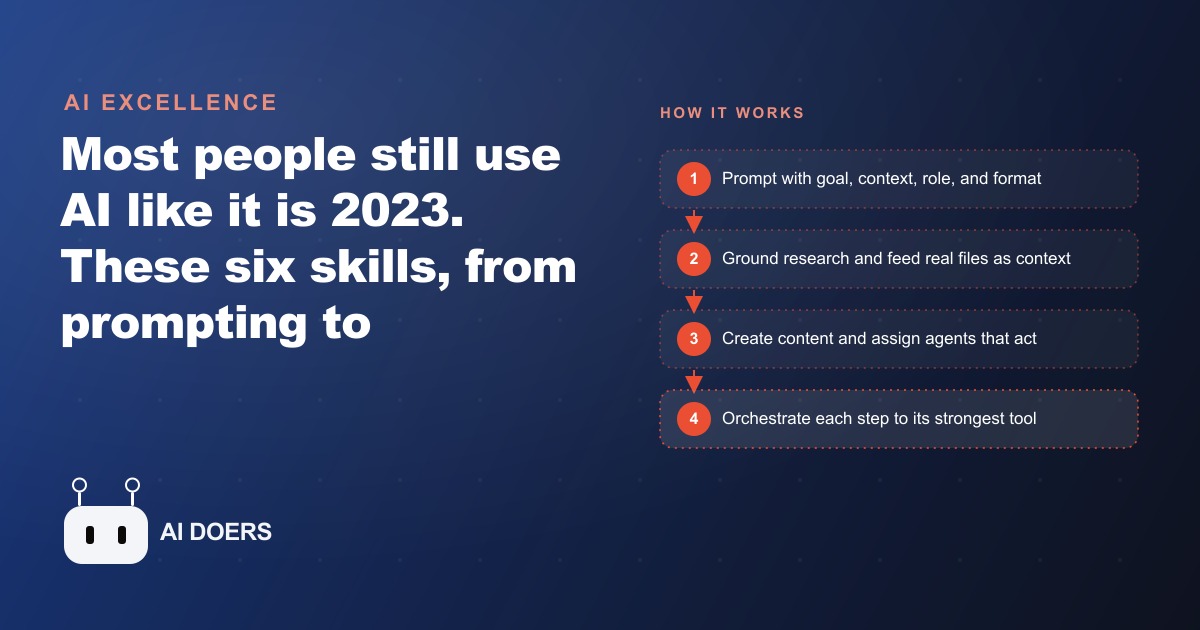
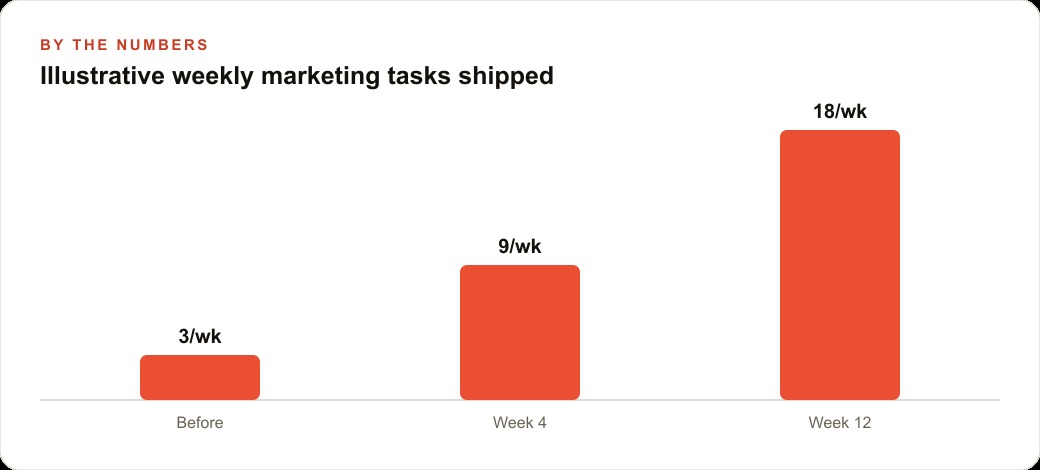
A two-person photography studio was shipping three pieces of marketing a week and hating every one of them. Twelve weeks later the same studio, still two people, was shipping eighteen, and the copy finally sounded like them instead of a robot. Nothing about the team changed. What changed was that the owner learned six AI skills in order, one at a time, and stopped treating ChatGPT as the whole of AI. I am Madhuranjan Kumar, and I want to walk you through that studio's actual journey, chapter by chapter, because the sequence is the lesson.
Where the studio started: fast prompts, generic output
The owner was already using ChatGPT, which is exactly why the work was mediocre. Every request looked like write a post about our studio, and every reply came back as the blandest thing a model could produce. That is not the model failing. That is a lazy prompt getting the average of the internet in return. The first skill, prompt engineering, fixed it, and it is the foundation everything else sits on.
The formula is four parts: a goal, the context the model needs, an optional role, and the format you want. Instead of write a post about our studio, the owner started writing prompts like: the goal is a warm Instagram caption announcing fall mini-sessions, the context is a boutique wedding and family studio known for natural light and unhurried shoots, act as a seasoned wedding photographer, and give it to me as three caption options under 60 words each. The difference was immediate. The endless back-and-forth of correcting a bad first draft collapsed into one clear answer. In week one the owner cut caption-writing time roughly in half, from about 40 minutes a post to 20, just by structuring the ask.
The two switches that deepened everything
The second and third skills are multipliers that sit on top of good prompting, and the studio turned them on in week two. The first was the thinking model. Instant models answer fast but shallow, and for anything that needed real reasoning, like planning a season of content or analyzing which past posts performed, the owner switched to the thinking or extended mode so the AI worked step by step. Then left it on by default. The outputs got noticeably more considered, and the small wait was worth it.
The second switch was context through connectors. Instead of re-explaining the studio in every prompt, the owner used the plus sign to add a small knowledge base and connected the model to the studio's Google Drive, where the pricing guides, brand notes, and past client emails already lived. From that point the model stopped needing the studio described to it. It knew. That single change removed the most tedious part of every session, the retyping of context, and it made the answers feel like they came from someone who already worked there. By the end of week two the studio was up from three pieces of marketing a week to about nine, mostly because each piece stopped needing three rounds of correction.
Grounding the research in the studio's own truth
The fourth skill, research, is where the studio stopped inventing and started grounding. Deep research mode in the major chatbots scans hundreds of sites and returns a polished report, which the owner used for broad market questions. But the real unlock was Google's NotebookLM, which grounds its answers only on sources you hand-pick, up to fifty free or three hundred on a paid plan, which sharply cuts hallucination.
The owner loaded NotebookLM with the studio's own pricing guides, a document of the questions clients actually ask, and a handful of competitor sites. Then every FAQ answer and blog draft came out accurate, because the model could only reason over sources the owner trusted, not a guess from the open web. This mattered because a wrong price or a made-up policy in client-facing copy is not a small error, it is a refund conversation. NotebookLM's studio tools also turned that grounded research into a short briefing doc and even an audio version the owner could listen to between shoots. The studio now had a reliable content engine instead of a plausible-sounding one.
One person doing the work of a creative team
Chapter five is where the numbers really moved, because the fifth skill, content creation, replaced hires the studio could never afford. The owner used ChatGPT to generate and edit strong promotional images, then Gemini's Nano Banana to drop the studio's logo onto a sample gallery and remove a stray person from the edge of a scene, then Gemini's Veo to turn a single hero shot into a short reel, all without a videographer.
Put illustrative numbers on it. A short promo reel from a freelance editor ran the studio around 250 dollars and took a week of back-and-forth. With Veo, a usable reel came out of one hero image in an afternoon at effectively no marginal cost. Across a season that is several reels the studio simply would not have made before, produced for the price of the owner's time. This is also the point where that same content foundation started feeding two channels at once: the images and captions built here fed both Facebook and Instagram ad campaigns and, over time, the studio's SEO and organic search presence, since the grounded blog posts and galleries were exactly what search wanted anyway. One creation step, two payoffs.
Handing off the morning routine to an agent
The sixth thing the studio adopted, in week eight, was agents. An agent is where you describe a task in plain language and the system picks the tools and runs it on a schedule, no supervision required. The owner built one small agent with a single job: every morning at eight, read the week's new inquiries and upcoming shoot dates and turn them into a simple plan for the day.
This is a modest agent by design, and that is why it worked. It did not try to run the studio. It removed one recurring decision, what do I need to deal with today, and handed the owner a plan before the first coffee. Small agents that do one thing reliably compound into real time savings, and they build the owner's trust in handing off more. The studio's morning admin, which used to eat 30 minutes of scattered checking, dropped to a two-minute read of the agent's plan.
Building a small tool without writing code
Around week ten the studio hit a problem no chatbot solved: it needed a simple client-facing page where couples could pick a mini-session slot and see what was left. Hiring a developer was out of budget. So the owner used the vibe coding skill, describing the app in plain words to a tool like Lovable, which wrote the code behind the scenes, with Claude Code able to do the same while keeping the files in a folder on the owner's own computer. None of it required reading a line of code.
The result was a working booking page in an afternoon, built by describing what it should do rather than programming it. This is the skill that surprises people most, because it reaches further than they expect. The studio now had a custom tool it owned, not a monthly subscription to yet another booking platform, and the leads that came through it dropped straight into the studio's CRM and website stack where follow-up reminders handled the next few touches. A capability that used to require hiring became an afternoon of clear description.
The skill that tied the whole studio together
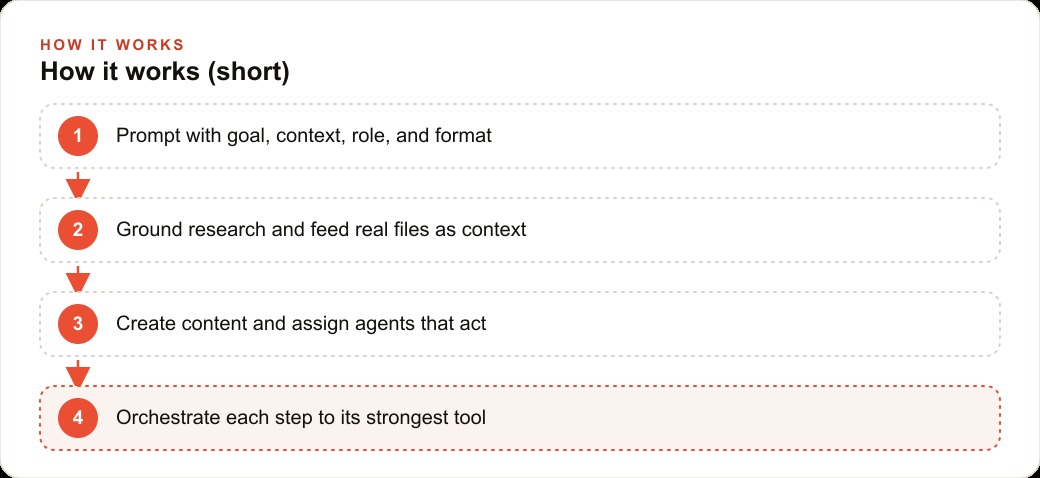
The final and most important skill is orchestration, which is workflow thinking with an AI angle, and it is what took the studio from nine pieces a week to eighteen by week twelve. Orchestration is not mastering one app. It is knowing which tool handles each step and composing them. The studio's weekly rhythm became a chain: draft the week's captions with the four-part formula in one tool, generate the social posts in another, build a short clip in a third, and hand all the assets to Claude Co-work acting as a marketing coordinator, which produced a two-week content calendar as a real Word document and a shareable calendar file in minutes.
That is the shift that separates people still typing single prompts from people getting genuine leverage. The studio stopped forcing everything through one chatbot and started letting each tool do the step it was best at. Twelve weeks in, two people were producing the marketing output of a small agency, and the owner spent the reclaimed hours behind the camera, where the money actually is. Roughly, the studio went from about three shippable pieces a week to eighteen, a six-fold jump, with no new hires and only cheap tools.
The mistakes the studio nearly made along the way
The journey looks clean in hindsight, but the studio hit two traps that are worth naming, because almost everyone hits them and they are what stall most people at week one. The first was trying to learn all six skills at once. Early on the owner watched a few videos, got excited, and tried to set up agents and vibe coding before the basics of prompting were solid. It went badly. The agent produced generic plans because the context files did not exist yet, and the whole thing felt like more work than doing it by hand. The fix was humbling and simple: go back to skill one, get prompting right, then add the next skill only once the current one was a habit. Sequence is not a suggestion here, it is the difference between momentum and quitting.
The second trap was treating grounding as optional. In the first weeks the studio let the model write FAQ answers and pricing copy from its general knowledge, and a couple of wrong details slipped into client-facing pages, including a package price that was simply invented. That is the kind of error that costs trust, or a refund. The lesson the studio learned the hard way is that for anything a customer will read and rely on, the research has to be grounded in the studio's own sources, not the open web. NotebookLM existed to solve exactly this, and once the owner made grounding the default for client-facing copy, the invented details stopped. Accuracy is not a nice-to-have in marketing, it is the floor.
There was a third, quieter mistake the studio avoided almost by luck: expecting the first output of any new skill to be great. It never is. The first agent plan was clumsy, the first vibe-coded page was rough, the first orchestrated calendar needed edits. What made the difference was treating each first attempt as a starting point to refine with feedback rather than a verdict on whether the skill worked. The owners who quit usually quit after one mediocre result. The studio kept going, gave feedback, and watched each skill sharpen over a handful of rounds. That patience, more than any single tool, is what carried the studio from three pieces a week to eighteen.
What the studio's journey teaches
The reason this worked was the order. The owner did not try to learn everything at once. Good prompting made every later skill more effective. Context and the thinking model deepened the outputs. Grounded research made them trustworthy. Content creation replaced hires. Agents removed recurring decisions. Vibe coding built what was missing. And orchestration composed all of it into a system that ran week after week. Each skill built on the one before, which is exactly why trying to start at orchestration would have failed.
If you take one thing from the studio's story, take the sequence, not the tool names, because the tools will change. Adopt one skill at a time, keep the thinking model on, ground your important research in your own files, build one small agent before adding more, and map a single weekly workflow across tools instead of forcing it all through one chatbot. The biggest shift in AI right now is moving from asking a question to assigning a goal and letting the right tool handle each step.
All of this is learnable on your own with patience, the way that studio learned it. If you would rather have someone design the workflow, wire up the tools, and hand you a system that runs on its own, that is the kind of build I do for clients. You can master these six skills yourself over twelve weeks, or bring in a hand and have the machine set up in one.
That is exactly what we do at AI DOERS. Book a private 30-minute call with Madhuranjan Kumar and we will map the fastest path to it for your specific business.
Book your call →
Madhuranjan Kumar
Madhuranjan Kumar brings 20 years of performance-marketing experience and has managed over $200 million in Facebook ad spend for brands across the United States and beyond. His expertise spans the full modern marketing stack: Meta, Google Ads, TikTok, email automation, CRM, and the websites that hold it together. At AI DOERS he turns that track record into lead-generation systems for businesses across every industry.