
The New Way to Code: Build Sites and Apps by Describing Them
How an AI agent builds real sites and apps from plain English, with a worked example for a restaurant.

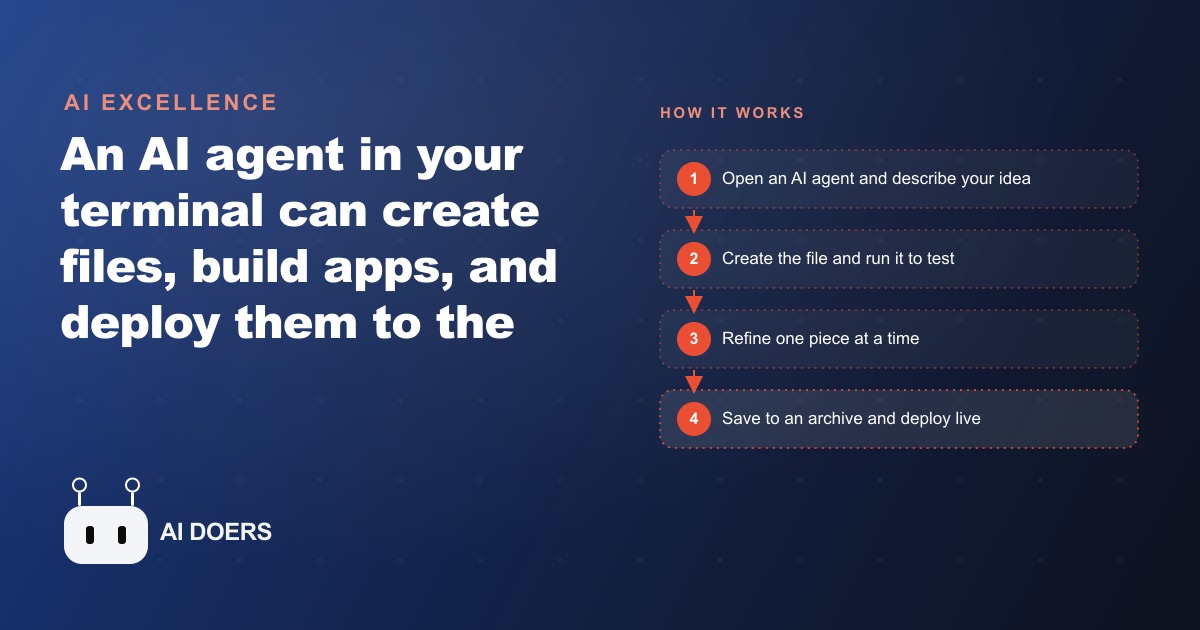
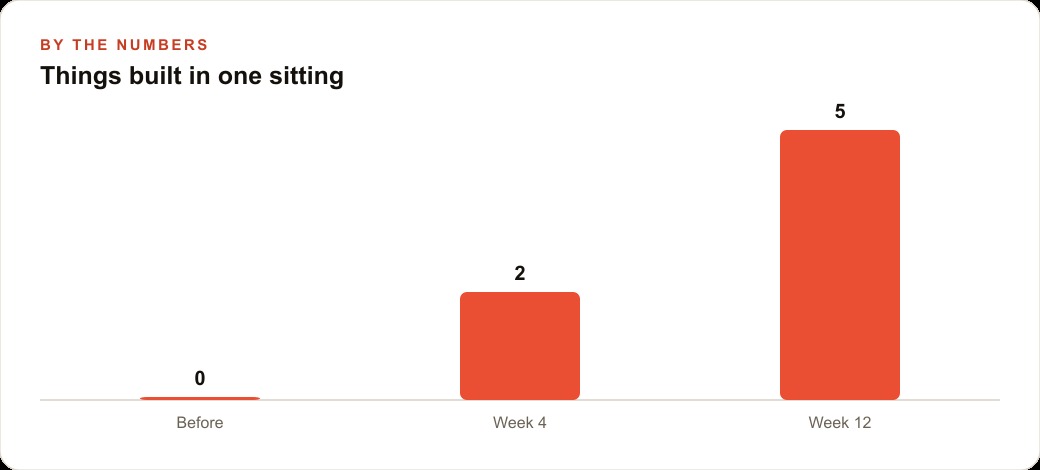
A non-developer sat down, described five different pieces of software in plain sentences, and had working versions of all five running on their computer by the end of the afternoon. A website, a Mac app, a mobile app, a terminal tool, and a small web application. I am Madhuranjan Kumar, and what happened in that session is not a demo trick. It is a description of how software gets built right now, and the implications for local businesses that have never been able to afford custom tools are significant.
The barrier that kept small businesses off the internet's front foot just got much lower
The old path to a business website or a custom internal tool had three bottlenecks. You needed someone who could write code. You needed someone who could handle deployment and hosting configuration. And you needed a budget large enough to pay for both, plus revision cycles, plus any future updates. Those three bottlenecks combined to make custom software the exclusive territory of businesses with technology budgets. Everyone else used templates that looked like everyone else's templates and got the conversions that generic presentation earns.
That path still exists. But there is now a different path that starts with a plain-language description and ends with a working piece of software, built without touching a single line of code directly. An AI agent in your coding environment creates folders, writes files, and runs commands on your behalf. Your role is to describe what you want clearly and to judge whether the result does what you intended. The agent does the typing.
The mental model that unlocks this is worth stating plainly: software is not magic. It is a collection of text files organized in folders, plus commands that run when you start the program. An AI agent that knows how to write those files and run those commands can produce working software from a description. The only remaining skill required is the ability to say clearly what you need, and that is a skill every business owner already exercises every day when explaining a task to an employee.
What this means for the web presence and lead capture side of a local business is direct. A new landing page for a new offer used to require a developer and a week of back and forth. Now it is an afternoon. A simple internal tool for tracking jobs and notes used to cost more than it was worth to build for a small team. Now it is within reach of anyone who can describe the problem clearly.
The restaurant that built two tools in a single afternoon
The worked example from the original build that prompted this piece shows how the capability translates into real business use. A restaurant with two specific operational problems, attracting diners online and keeping the front desk organized without relying on paper, built solutions to both in a single session.
For the public-facing problem, the approach was a clean landing page styled to the brand, with a menu, hours, location, and a form for visitors to join a mailing list for specials. The AI agent built the page from a plain description, styled it to match provided brand colors, embedded the form, and deployed it to the internet under the restaurant's domain. The session included going from first description to live page visible to anyone on the open web.
For the internal problem, the approach was a small desktop application for the front desk. The app had a sidebar with the sections the team actually uses: today's reservations, a prep checklist, and a notes area for staff handoff between shifts. Because it runs as a desktop app rather than a web service, all the data saves directly to the computer's files. No database to manage. No cloud subscription to pay for. No external service to go down at the wrong moment during a busy dinner rush.
The result was two tools that compound the operation going forward. The email list grows passively as visitors join from the landing page. The desktop app gets used every shift. Neither requires a developer on retainer to maintain. Updates to either one are plain-language descriptions to the AI agent followed by a simple deployment.
The restaurant example also demonstrates something about the internal tool opportunity that most business owners underestimate. The front-desk app is more valuable to the restaurant's daily operation than the website, but it would never have been affordable to build before this approach existed. Agencies and freelancers do not take small internal tool projects because the scoping, development, and revision cycle for a simple checklist app costs more than the tool justifies on an hourly rate basis. At no code, one afternoon, that calculation reverses. The internal tool that saves fifteen minutes per shift suddenly makes economic sense.
The file-to-app mental model that unlocks the whole workflow
The reason this approach works is easier to understand once you accept the foundational truth: every piece of software is files in folders plus commands that start them. A website is HTML and CSS files in a folder, served by a command that makes them accessible through a browser. A desktop app is code files in a folder, run by a command that opens a window. A mobile app is the same thing with a different command structure.
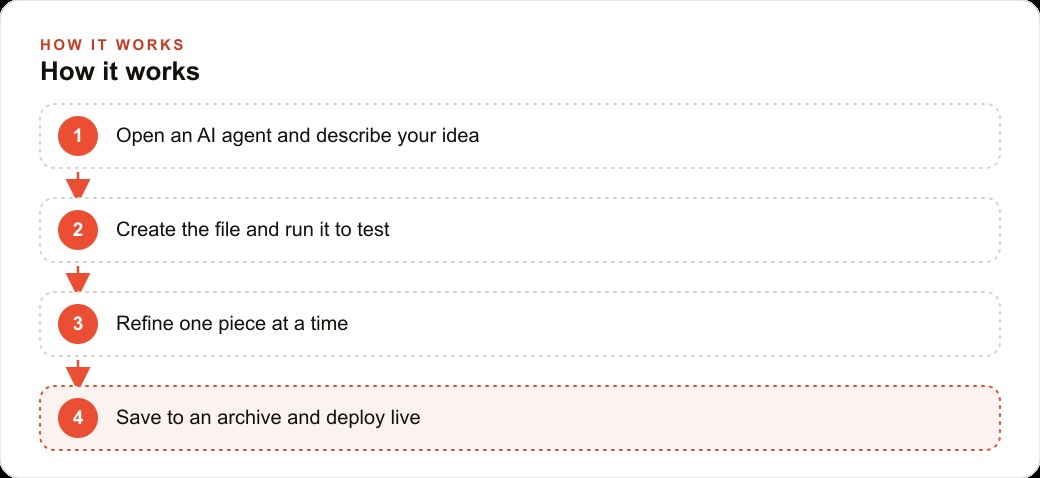
The AI agent's job is to create the right files, organize them in the right structure, and run the right commands to start the result. When you say build me a landing page with a form that collects email addresses, the agent creates a folder, writes the HTML file, writes the form handler, connects it to an email collection service, and runs the server. When you say build me a desktop app that has sections for reservations, a checklist, and notes, the agent creates the folder, writes the application files, and runs the command that opens the window.
Each edit after that is the same process: you describe the change, the agent edits the relevant file, and you run it again to see the update. The cycle of describe, edit, run, review is the entire workflow. You never need to understand which file was edited or what syntax was changed. You need to judge whether the running result matches your description, and then describe the next thing.
This also explains why version control matters. When the agent edits a file that was working and introduces a problem, having a saved version of the working state means reverting takes seconds rather than debugging what changed. The instruction to save your work to a code archive after each working version is the safety net that makes the iterative process feel low-risk rather than fragile. Every good version is preserved. Every bad change is recoverable.
What shifts when the code-typing bottleneck disappears
The most significant change is not what can be built but who builds it. When writing code was the bottleneck, the people who could build software were developers. Everyone else was a client who described requirements and waited. Now that the bottleneck is describing clearly rather than typing syntax, the people who can build software are anyone who can explain a problem in specific terms. That is a much larger group.
For local businesses, this changes the economics of custom presence and tooling permanently. A local service business spending money on Google Ads to drive traffic needs a landing page that converts that traffic efficiently. A landing page that looks custom and is built specifically for the offer it supports converts better than a generic page from a template builder. The custom page used to require a developer. Now it requires an afternoon and a clear description of the goal.
The internal tool opportunity is equally significant. The small tools that save ten minutes per shift or eliminate one manual handoff per day have always had real value. They just cost too much to build relative to what they saved at typical hourly developer rates. At no direct labor cost and one afternoon of work, the value calculation is entirely different. The accumulation of small internal tools, each solving a specific operational problem, is one of the most durable competitive advantages a local business can build. Those tools are built for the specific operation, not adapted from templates designed for generic businesses. They fit better and therefore get used more consistently.
The gap between businesses that build this capacity now and those that wait will compound. A business building one custom tool per quarter this year has four custom operational advantages by the end of the year. A competitor who waits is starting from zero next year while the first business is already in maintenance and improvement mode. The tools that get built early also generate data about what works, which improves the next build. The compounding is real and it starts at the first completed project.
That is exactly what we do at AI DOERS. Book a private 30-minute call with Madhuranjan Kumar and we will map the fastest path to it for your specific business.
Book your call →
Madhuranjan Kumar
Madhuranjan Kumar brings 20 years of performance-marketing experience and has managed over $200 million in Facebook ad spend for brands across the United States and beyond. His expertise spans the full modern marketing stack: Meta, Google Ads, TikTok, email automation, CRM, and the websites that hold it together. At AI DOERS he turns that track record into lead-generation systems for businesses across every industry.