
Madhuranjan Kumar's AI OS: How to Wrap Your Business in Layers of Claude Code
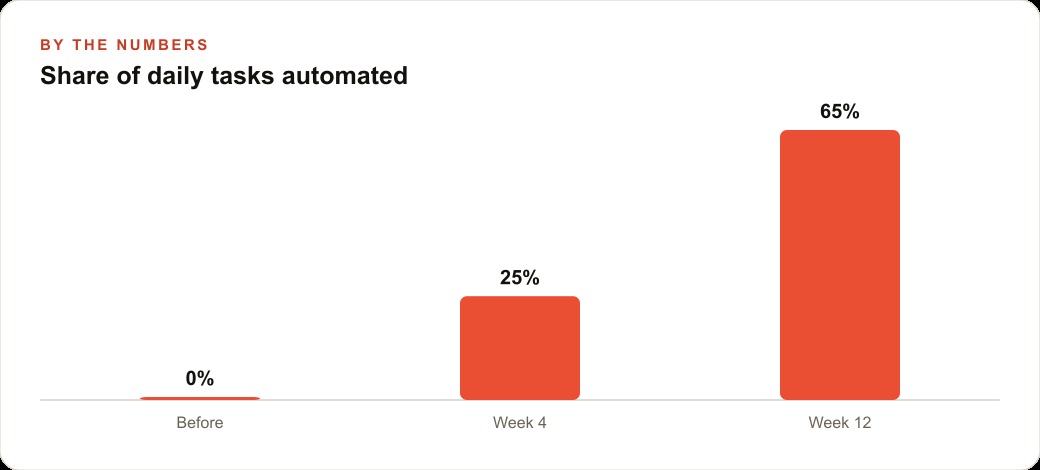
An AI operating system is a methodology, not a product: you keep your business model at the core and stack layers of Claude Code around it, starting with a context folder and a data layer, to automate 60 to 70 percent of recurring tasks. The sequence works for any business.
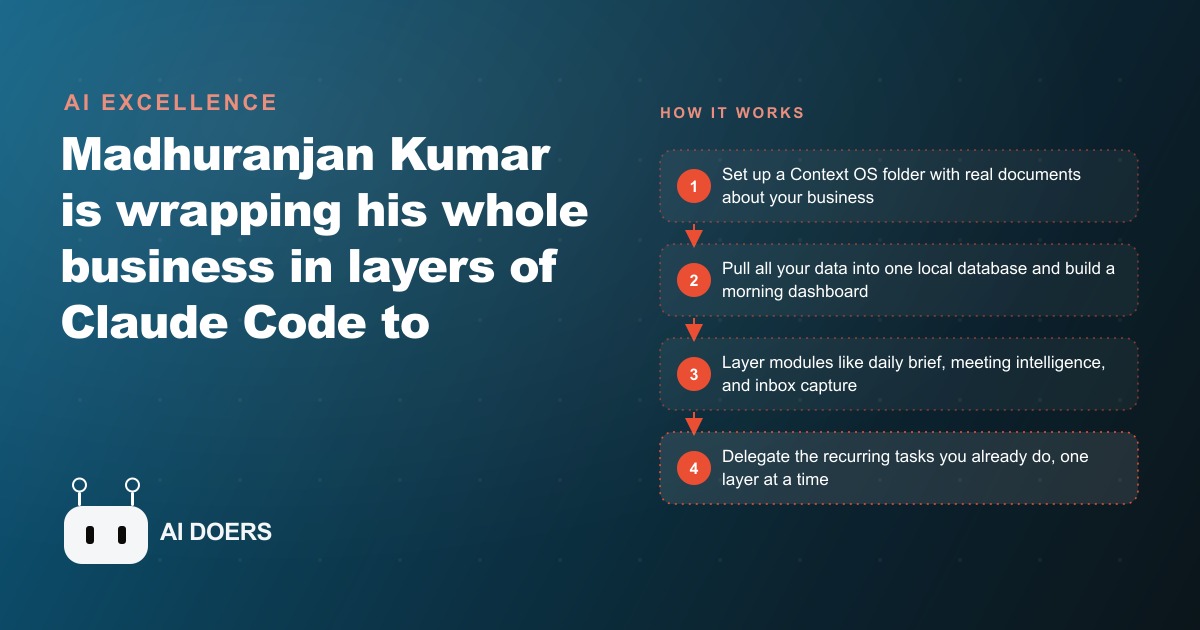
An AI operating system is a methodology, not a product. That distinction is the whole point, and it is the reason this approach scales to any business rather than fitting only a specific type of operation. I am Madhuranjan Kumar, and the version of this concept worth understanding closely comes from an operator who is wrapping his entire business in layers of Claude Code with a target of automating 60 to 70 percent of daily tasks within 30 days. Your business model sits at the core and does the actual work of creating value: that could be an agency, a consulting practice, a service operation, or an e-commerce store. The AI OS is the set of layers you stack around that model to handle the recurring operational work that currently consumes the owner's hours without requiring the owner's judgment.
The engine underneath everything is Claude Code. It started as a developer tool, but the operator in question uses it as a general-purpose business workspace, and the distinction between how a developer uses it and how a business owner uses it turns out to be mostly a difference in which files you load and which tasks you point it at. The model, the harness, the ability to read files and run tools and search the web and take actions across your file system: all of that is available to a non-developer business owner using the same tool.
The distinction that changes everything: a harness is not a chatbot
Most AI tools available today follow a similar pattern. They take a capable underlying model, build a simplified interface on top of it, and expose a subset of the model's capability through that interface. The resulting tool is easier to onboard, cleaner to navigate, and narrower in what it can actually do. You get a conversational interface. You lose the ability to read files, run code, connect to external services, take persistent actions, and build layered automation.
Claude Code is structured differently. Think of it as the model wrapped in a harness. The harness is the engineering layer that lets the model read your actual files, run terminal commands, search the web natively as a built-in capability rather than an add-on, write and execute code, and act across your file system as a persistent agent rather than as a stateless question-answering service. That harness is what makes stacking an AI OS possible. Without it, each module you try to build hits a wall at the point where it needs to read a file, query a database, or connect to an external service.
Tools that take the model out of its native harness and bolt on a simpler interface are making a trade. The interface gets easier. The capability gets capped. Web search becomes an unreliable add-on rather than a native function. File access gets restricted or removed. The model's reasoning still works, but the surface it can act on shrinks. A business OS built on a capped harness runs out of room quickly. The methodology described here is specifically designed around the native harness because each layer depends on the layer below it being able to do real things in the real environment.
Context OS is unglamorous and load-bearing
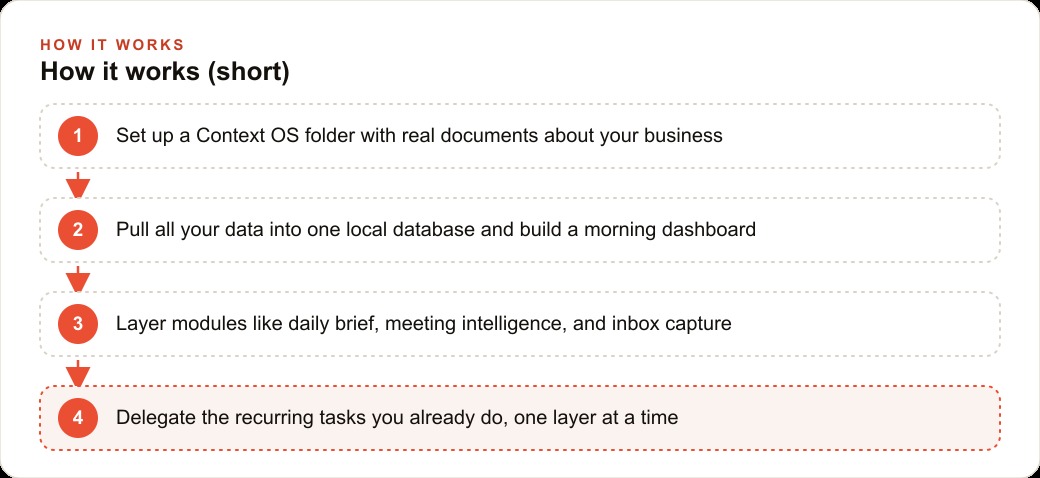
The first layer of the AI OS is called the Context OS, and it is the most important step even though it is the least exciting one to build. It means organizing a folder structure that represents your business and loading it with real documents that describe how you operate: what the company does, who the clients are, how the team communicates, what the standard operating procedures look like, what the brand voice sounds like, what decisions get made by the owner versus by the team, and what information the agent needs to behave like someone who understands the business rather than someone who just met it.
Every module that comes later in the AI OS draws from this foundation. The daily brief is only as useful as the business context it operates within. The meeting intelligence only surfaces relevant patterns if it understands what kind of patterns matter to your operation. The inbox capture only drafts appropriate replies if it knows your voice and your standards. Context OS is load-bearing in the same way that a building's foundation is load-bearing: nothing you build on top of it works correctly if the foundation is incomplete.
I would spend a full afternoon on this step rather than rushing through it to reach the more compelling modules. The documents do not need to be long or formal. They need to be accurate. A two-paragraph description of what the business does and who it serves, a list of the team and their roles, a few examples of messages that represent the brand's voice, and a notes file with the current open decisions and priorities is more useful to the agent than a formal company handbook that nobody reads. The test is simple: if the agent read this folder and nothing else, would it understand enough about the business to give useful assistance on a routine question without asking for clarification? If yes, the Context OS is sufficient. If no, add the missing information before moving forward.
The Data OS gives the agent something to reason across, not just read
The second layer is the Data OS, and it serves a specific purpose that is worth understanding clearly. Most business owners have their numbers scattered across six or seven different tools: an accounting platform for P&L, an analytics dashboard for web traffic, a separate tool for marketing spend, a spreadsheet for sales pipeline, and another tool for channel performance. Each tool answers questions about its own data. None of them can answer questions that cross tool boundaries. The agent, without a unified data layer, is in the same situation. It can help you think through the P&L if you show it the P&L. It cannot tell you whether the marketing spend increase you made last quarter actually produced more leads unless you show it both datasets together.
The Data OS pulls the numbers from each source into a single local database. P&L data, web analytics, channel performance, marketing spend, sales numbers, whatever is most operationally relevant to the business, all in one place. From that database you build a morning mission control dashboard: the key metrics for the week in one view, with context about what is trending up, what is trending down, and what the current operating picture looks like before the day starts.
The value of this layer is not just the convenience of one dashboard. It is that the agent can now reason across all the numbers together. It can notice that web traffic went up this week while lead conversion went down, and surface that pattern as something worth investigating. It can compare the current week's numbers against the same week last year and flag where the business is ahead or behind its own historical baseline. A human with six tools open can do this manually with effort. An agent with one database can do it in seconds as part of a morning brief.
Daily Brief as co-CEO is the layer most owners skip first and regret skipping
The Daily Brief OS is the module that Madhuranjan Kumar of this methodology describes as the most practically transformative of all the layers, and it is also the one that most business owners skip first because it sounds like a summary report rather than a capability. The distinction is what the brief actually does versus what a typical report does.
A standard report shows you what happened. The Daily Brief OS analyzes the past 24 hours across every channel where the business operates: every call recording, every team message, every customer interaction, every content piece that went out, every metric that moved. It does not just show what happened. It surfaces patterns, flags what needs attention, identifies content gaps, and runs a SWOT analysis framed as a co-CEO reviewing the business from outside. A report gives you information. The Daily Brief gives you a partner who has processed all the information and is ready to tell you what matters.
For an owner who currently spends the first hour of the morning piecing together what happened yesterday from scattered sources before they can make decisions about today, the Daily Brief compresses that process to the time it takes to read a well-structured briefing document. The morning starts at the decision, not at the information-gathering that precedes the decision. Over a month of working this way, the cumulative time saving is substantial, and the quality of the decisions improves because they are made from complete information rather than from whatever the owner managed to pull together before the first meeting.
The Capture OS is where the phone becomes the office
The Capture OS connects the owner's incoming messages to the morning brief and to a voice-reply workflow that closes the communication loop without requiring the owner to sit at a desk. iMessage, WhatsApp, and Gmail all route into a single brief. The owner reviews it, replies by voice, and the system composes and sends the responses while the owner is already doing something else.
The operator who built this setup runs it from Telegram on his phone. The business runs while he is on the beach, in transit, or in a meeting about something else. He is not unavailable. He is operating the business from anywhere, at the speed of a voice note, without the overhead of sitting at a computer and switching between applications.
This layer has a practical dependency that the others do not: it requires trust in the agent's judgment on tone and drafting quality before you let it send messages on your behalf. I would run the Capture OS in a review mode first, where the agent drafts replies and you approve each one before it sends, for at least a week before switching to autonomous sending. The approval step costs a few minutes per morning but gives you enough exposure to the agent's drafting style to know when it has captured your voice reliably and when it still needs correction. Moving to autonomous sending before that trust is established creates communication errors that are harder to fix than the time the review step saves.
Meeting Intelligence surfaces what you promised and forgot
The Meeting Intelligence OS addresses a specific and genuinely painful problem for any business owner or manager who is in a significant number of calls per week. The problem is not taking notes. Most people take notes. The problem is that notes are stored, searched poorly, and rarely referenced before a follow-up interaction. The result is that commitments made in a call two weeks ago go untracked until the person on the other side follows up about them, which creates the impression of being disorganized regardless of how competent the owner actually is.
The Meeting Intelligence OS pulls every transcript from Fireflies or Otter into the local database. When you have a call with someone, the transcript is there. When you need to prepare for a follow-up, you ask the agent what you committed to in the previous conversation. It reads the transcript, surfaces the specific promises and action items, and gives you a briefing before the call starts. You walk in knowing exactly what you said you would do, without searching through notes or relying on memory.
This module also enables a more interesting query: across all the calls you have had with clients this month, what recurring concerns came up most often. That kind of pattern recognition across dozens of transcripts is not something a human does efficiently from notes. An agent with the full transcript database does it in seconds and surfaces the pattern before you have consciously noticed it yourself.
An electrician's three hours of daily admin, replaced in 30 days
Let me make the AI OS concrete with a worked example from a trade business where the operational pain is clear.
The owner runs an electrical contracting operation with a small crew. The business is profitable and growing. The owner spends approximately three hours per day on tasks that are not wiring anything: responding to customer inquiries, sending follow-up messages to leads from the past week, reviewing job costs against estimates, checking the weekly schedule for coverage gaps, and confirming the next day's jobs with the crew. None of these tasks require the owner's technical expertise. All of them require someone's consistent attention. The owner is the someone, by default, because there is no one else.
I would build the AI OS for this operation in four phases over 30 days, targeting the most time-consuming tasks first.
Week one is the Context OS. A folder loaded with the company details, service area, pricing sheet, crew names and specialties, standard customer message language, and a few examples of the kind of replies the owner sends. This takes an afternoon and nothing else in the system works well without it.
Week two is the Data OS. Job calendar, invoice aging from the accounting tool, weekly lead volume and source, and the current Google review count, all pulled into one local database. A morning dashboard that shows: how many jobs are booked this week, which invoices are outstanding and for how much, where this week's leads came from. Five minutes of context at the start of the day instead of twenty minutes of opening tools.
Week three is the Daily Brief and Capture OS. The brief reads the past day's missed calls, pending lead replies, and any crew messages, and surfaces the urgent items first. The Capture OS drafts replies to customer inquiries in the owner's voice, with the owner approving each one by voice before sending. This step is run in review mode for the full week before considering autonomous sending.
Week four is Meeting Intelligence. Every quote call transcribed by Otter, the transcript in the local database, the agent briefing the owner before each follow-up with what was discussed and committed to in the original call.
At the end of 30 days, the three hours of daily admin have been substantially absorbed by the system. The owner still reviews the morning brief, approves outgoing messages, and makes the judgment calls about scheduling and crew. The information gathering, the drafting, the tracking of commitments, and the consistency of follow-up are all handled. The estimate for time returned is two hours per day, conservatively, against a monthly system cost well under 300 dollars. For a trade business where the owner's time on the tools is where revenue is made, two hours of reclaimed focus per day is a significant operating improvement.
Why non-technical owners can actually build this
The methodology is explicit that you do not need a development team to build an AI OS. This claim is worth examining because it is easy to hear it as marketing and dismiss it. I think it is accurate, with one important qualification.
Slash commands and skills within Claude Code can walk a completely non-technical person through building each layer step by step, using conversational instructions rather than written code. The owner describes what they need in plain language, and the agent writes the connection script, the database schema, and the morning dashboard format. The owner reviews the output, tests it, and adjusts it if necessary. The iteration is conversational rather than programmatic.
The qualification is that the owner needs to do the thinking that no AI can do for them: deciding which tasks are worth automating, defining what success looks like for each module, and knowing their business well enough to populate the Context OS with accurate information. The technical implementation is handleable by a non-developer. The business thinking requires the owner. That split, the owner brings the business knowledge and the agent handles the technical build, is what makes the methodology work for operators who would never describe themselves as technical.
The compounding effect that separates an AI OS from a collection of AI tools
The single most important property of the layered AI OS approach, compared to using a collection of disconnected AI tools, is that each layer compounds on the layer below it. The Data OS is more valuable because the Context OS already primed the agent with business-specific knowledge, so the agent interprets the numbers in context rather than in a vacuum. The Daily Brief is more useful because the Data OS gives it real numbers to reason across rather than just call transcripts and Slack messages. The Meeting Intelligence surfaces more relevant patterns because the Context OS told the agent what kinds of patterns actually matter in this business.
A collection of AI tools does not compound. Each tool starts from zero on every session. Each tool knows only what is in front of it. The useful output of one tool does not feed the next one unless you manually copy it across, which reintroduces the coordination overhead that the tools were supposed to eliminate.
The owner who builds an AI OS is building infrastructure that becomes more valuable over time as each layer enriches the layers around it. The owner who adopts a collection of AI tools is managing a portfolio of point solutions that each require ongoing manual coordination. Both approaches use AI. Only one of them frees the owner's attention rather than redirecting it.
The 30-day timeline is achievable precisely because the layers are designed to build on each other and each one delivers value from the first day it runs. The Context OS is immediately useful for any question you put to the agent. The Data OS is immediately useful for the morning brief. The Daily Brief is immediately useful the first morning it runs. You are not waiting for the full system to be complete before seeing any return. Each layer earns its time investment from day one, which is what makes a 30-day build timeline credible rather than aspirational.
That is exactly what we do at AI DOERS. Book a private 30-minute call with Madhuranjan Kumar and we will map the fastest path to it for your specific business.
Book your call →
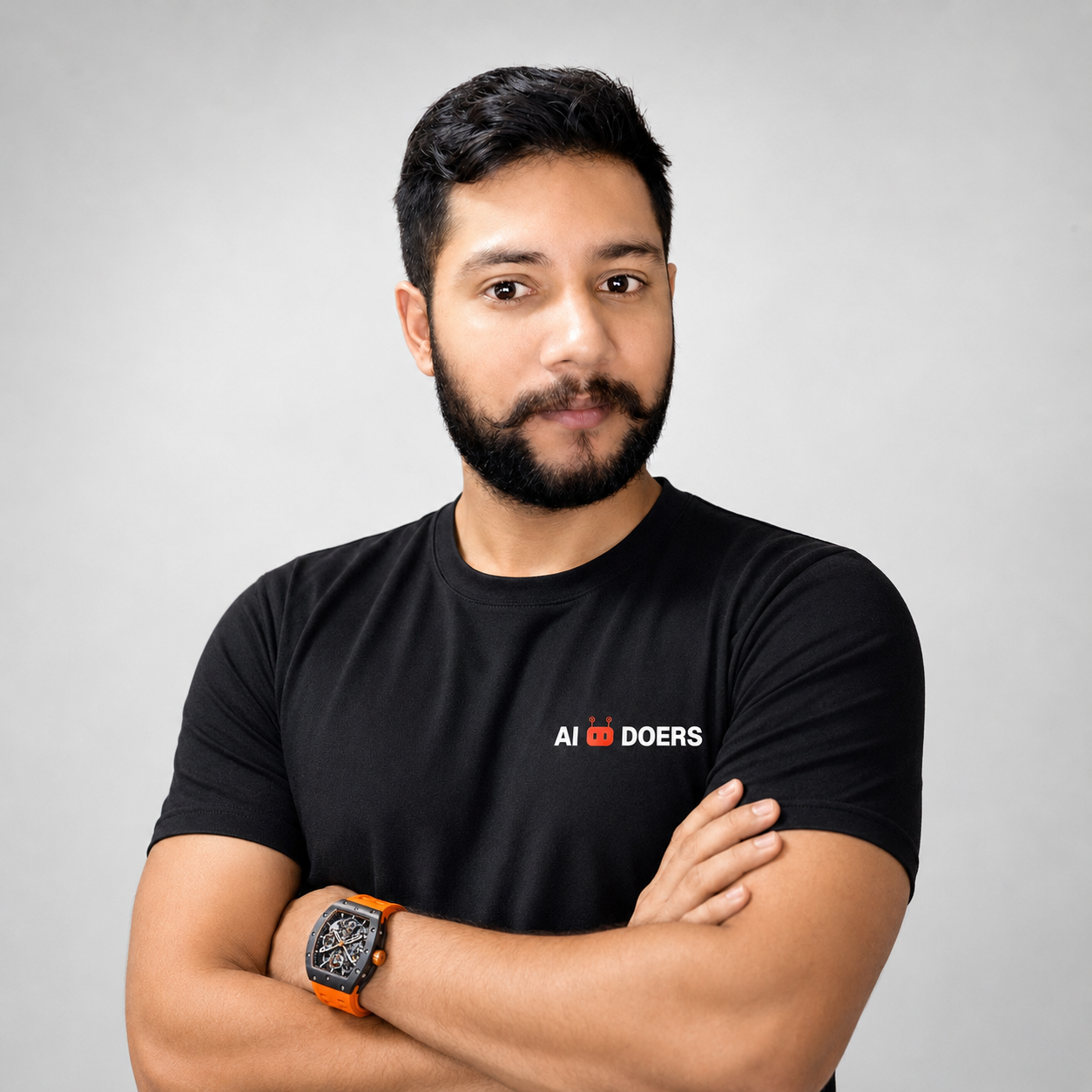
Madhuranjan Kumar
Madhuranjan Kumar brings 20 years of performance-marketing experience and has managed over $200 million in Facebook ad spend for brands across the United States and beyond. His expertise spans the full modern marketing stack: Meta, Google Ads, TikTok, email automation, CRM, and the websites that hold it together. At AI DOERS he turns that track record into lead-generation systems for businesses across every industry.