
How to Start an AI Career in 2026 Without Learning to Code
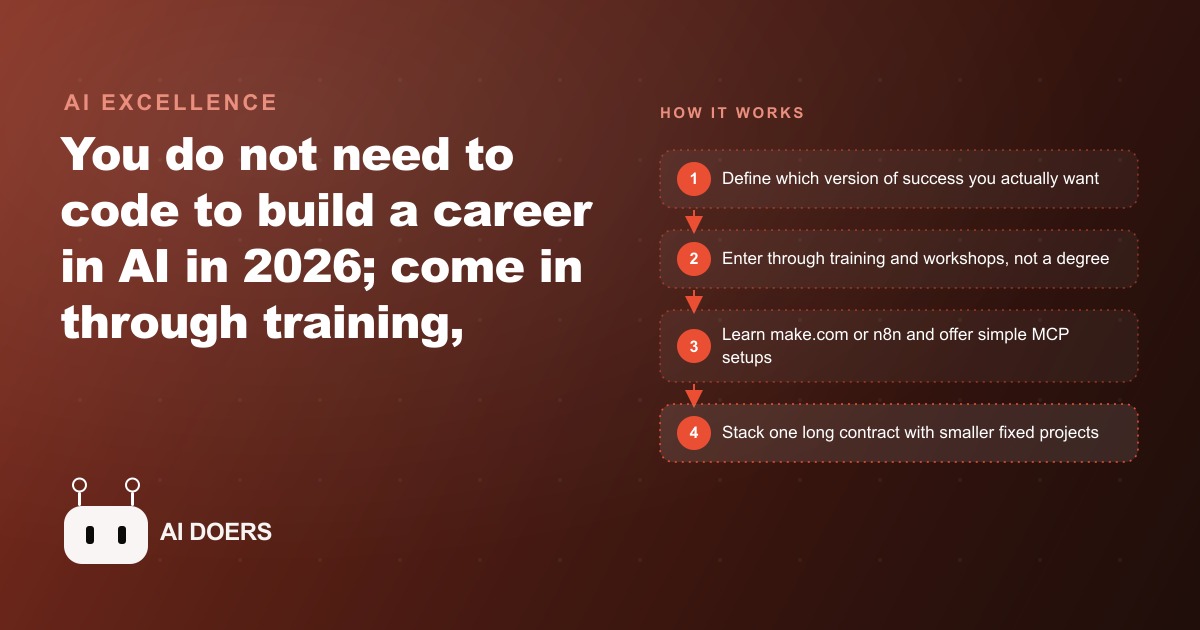
You do not need to code to succeed in AI in 2026. Enter through training and workshops, move into consulting, and learn make.com or n8n plus MCP server setup as your first paid offers, with development optional later.

Learning to code first is the slowest way into AI in 2026
Here is a claim that will annoy a certain kind of purist: if you want a career in AI in 2026 and you are not technical, the worst thing you can do is spend six months learning to code before you earn a cent. I am Madhuranjan Kumar, and I am going to argue that the code first instinct, however respectable, is now the long way around. The most reassuring evidence for this is who says it. People whose entire background is engineering are the ones being blunt that coding is not required to succeed in AI, and when the experts tell you the credential they hold is optional, it is worth listening.
The reason this is contrarian is that the whole culture around tech careers has trained people to believe the ladder starts at the bottom, with syntax and data structures, and that consulting or teaching is something you earn the right to do later. That order made sense in a world where the technology was hard to use and the value was in building it. It makes much less sense now, when the tools are usable by anyone and the scarce skill is knowing where to point them. Insisting on learning to code first is not rigor. It is often just delay wearing the costume of rigor.
The ladder got flipped, so climb it from the top
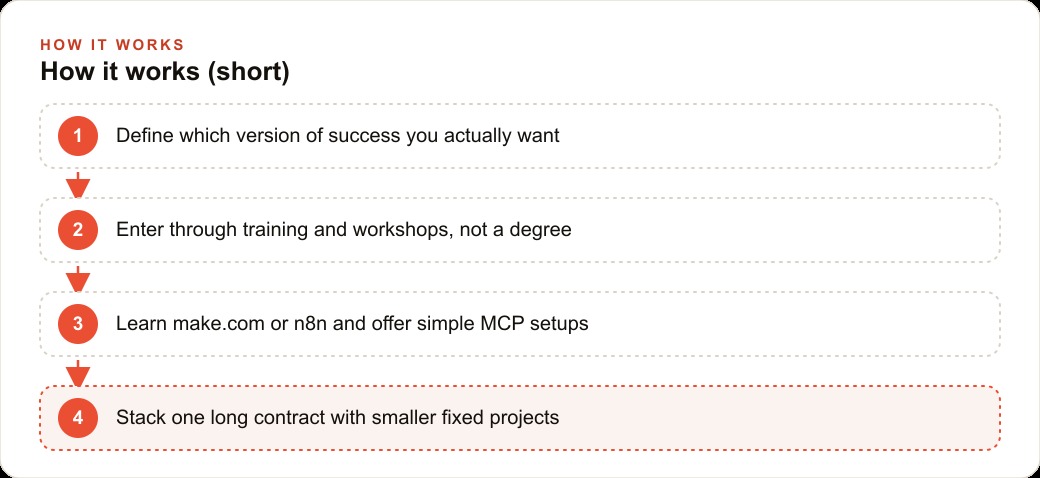
The old route into AI was code first, then layer consulting on top once you had technical credibility. The structural shift that makes this the right moment is that you can now flip the order. You start at the top with education and workshops, you move into consulting as you build trust, and you drop into development only if and when you actually want to. For a non technical person that is a far gentler on ramp than a computer science degree, and it pays sooner, which matters more than pride.
I want to defend this against the obvious objection, which is that starting at the top sounds like starting without substance. It is not, because there is real substance in the top layers. Knowing which everyday tasks a team should hand to AI, being able to demonstrate the productivity gain, and being able to wire the tools into where people already work are genuine, valuable skills. They are just not coding skills. The mistake is assuming that because they are more accessible they are less real. The market pays for outcomes, and a workshop that makes a team measurably faster is an outcome, degree or no degree.
Decide what winning looks like before you pick a rung
Before any of this, one decision has to come first, and skipping it is why so many people drift. Success in AI ranges from landing a job, to quitting one, to building an agency, and each answer points to a different starting move. If you want client income, the path runs through automation and small paid offers. If you want a job, it runs through building a couple of real projects that solve actual problems and showing them. Get clear on which version you want, because everything downstream depends on it.
This is where I part ways with the generic advice to just start learning. Starting without a target is how people spend a year busy and broke. The contrarian discipline is to be almost cynical about it: pick the outcome first, then reverse engineer the single most direct move toward it, and ignore everything that does not serve that move. A person aiming for agency clients does not need the same first steps as a person aiming for a salaried role, and pretending there is one universal curriculum is how the code first myth persists.
Teaching is the lowest hanging fruit, and nobody wants to admit it
The entry point almost everyone overlooks because it feels too simple is training. Going into a business and teaching the staff to use the everyday tools they already have is the lowest hanging fruit in the entire field, because the productivity gain is easy to demonstrate and the data sells itself. There are people making a full living doing nothing but running these workshops, and yet it gets dismissed as not real AI work, which is exactly the snobbery that leaves the opportunity open.
I lean on this hard because it is the fastest way to earn credibility and income at once. When you walk a team through using ChatGPT well and they visibly get faster in the first week, you have proven value before you have written a line of code. That proof is what opens the door to everything after it. The purist who insists you must build before you teach has the causality backward: teaching is how you build the trust that lets you sell the building later.
The first paid offers a non-technical starter should actually sell
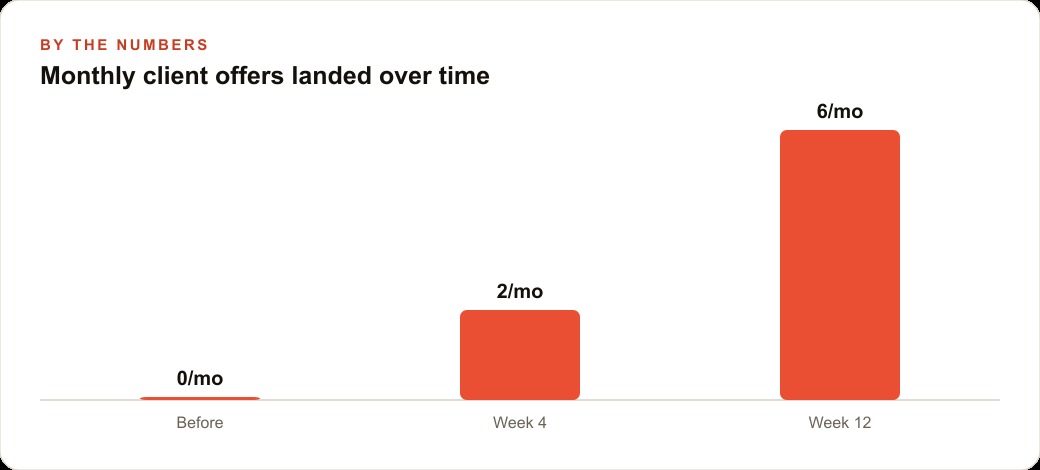
Once teaching gets you in the door, two concrete offers turn the relationship into ongoing work, and neither requires deep engineering. The beginner base skill is no code automation on platforms like make.com or n8n, with make.com usually recommended first for being friendlier. The honest framing, and I want to keep it honest, is that you spend three to six months bashing your head against it before clients start coming. That learning curve is not a warning to avoid. It is the moat. If it were easy, the offer would be worthless.
The standout offer is setting up MCP servers inside the ChatGPT and Claude tools a team already uses. Instead of a big top down rebuild, you embed AI exactly where people already work, which keeps a human in the loop automatically and lowers resistance. A sales rep can pull calendar and CRM data right inside their chat window, and the pitch becomes simple: I can make your team noticeably more productive in two weeks with a few custom connections. It is small, standardizable, and it spirals into consulting and larger builds. If you do eventually go technical, the road to a production ready system runs through six things, language model fundamentals, system design, packaging an app with Docker, retrieval pipelines, monitoring with guardrails and evaluations, and deployment, and the last brutal stretch from good to reliable is exactly why it pays. But that is optional, and it comes last, not first.
A worked example: a pest control company
Concrete beats abstract, so take a pest control company. The owner runs a small office team plus field technicians, and the daily friction is scheduling, follow ups, and quoting. Here is how I would set this up, and notice it follows the flipped ladder exactly. I would start with a half day training so the office staff can use ChatGPT to draft customer emails, summarize call notes, and answer common treatment questions in the company's voice. That alone wins trust because the time savings show up in the first week, before anything technical is built.
Next I would add a small MCP connection so the office can pull the scheduling calendar and customer history directly inside their chat tool, which means a rep answering the phone sees a property's service record without switching apps. After that, a simple make.com automation handles the repetitive flow of turning a finished job into a follow up message and a reminder for the next seasonal treatment, feeding cleanly into the company's CRM and website stack so lapsed customers get pulled back automatically. None of this requires the owner to hire an engineer or rebuild their software. It is training first, one small connection second, and one automation third, each proving itself before the next. That same trust, once earned, is what lets you later help them get more from their Google Ads or their Facebook and Instagram ad campaigns, because the relationship started with a visible win rather than a big risky build.
The objection I hear most, and why it is backwards
Whenever I make this argument, someone pushes back that starting non technical means you will always be shallow, forever dependent on people who can actually build, and that the durable career belongs to the coders. I understand the fear, but the sequence disproves it. Nothing about entering through training and automation stops you from learning to code later. It just changes when you learn it and why. The person who codes first learns in a vacuum, with no clients and no sense of which problems are worth solving, and a large share of them never find a client at all. The person who enters through training earns while they learn, meets real businesses with real problems, and by the time they choose to go deeper they know exactly which technical skills are worth acquiring because a paying client is asking for them.
That is the reversal I want to leave you with. Learning to code is not the entry ticket, it is an optional upgrade you buy once demand has told you it is worth buying. Approaching it that way, you never spend six months studying something a client did not ask for, and you never learn a framework that is outdated before you finish it. You let the market pull you into technical depth exactly where it pays, instead of pushing yourself into it on faith. The purist route front loads all the risk. The flipped route front loads the income and defers the risk until it is informed. Once you see it that way, learning to code first stops looking rigorous and starts looking like the expensive habit it usually is.
The window is open precisely because the myth persists
The hybrid model is worth copying as you grow. You stack one longer secure contract at solid engineer rates with smaller, higher paid fixed projects on top, which avoids the feast or famine cycle that wrecks most freelancers. But the deeper point I want to leave you with is why the opportunity exists at all. It exists because most people still believe you have to learn to code first, so they either never start or they disappear into a six month course while the market moves. Every person who accepts the myth is one less person competing for the training and automation work that is sitting right there.
So the contrarian move is also the practical one. Pick your goal, take the single entry move that matches it, and ship something small this week. Watch what builders are publishing, copy a working pattern, and land one real offer before you worry about credentials. It helps to be blunt about what actually gets rewarded here, because the myth survives partly on a misunderstanding of value. Businesses do not pay for your knowledge of a model's architecture. They pay for a problem going away. When a team stops losing an hour a day to a task because you showed them how to hand it to a tool, that hour has a price, and it is a price they can feel, which is why training sells so easily. The technical route eventually pays more per project, but it pays for the same underlying thing, a problem solved, just a harder one. Understanding that keeps you focused on outcomes instead of credentials at every stage, and it is the mindset that lets a non technical starter out earn a credentialed one who cannot connect their skills to a business result.
You do not need to be technical to begin, and the window is still wide open for the people who actually start instead of preparing to start. You can absolutely build this career yourself, step by step, and I would encourage you to land that first small offer this week. If you would rather have someone help you pick the right entry path, build the first repeatable offer, and wire up the automations and connections so they work for a real client, that is exactly the kind of guidance I give, and you can bring me in to map it with you.
That is exactly what we do at AI DOERS. Book a private 30-minute call with Madhuranjan Kumar and we will map the fastest path to it for your specific business.
Book your call →
Madhuranjan Kumar
Madhuranjan Kumar brings 20 years of performance-marketing experience and has managed over $200 million in Facebook ad spend for brands across the United States and beyond. His expertise spans the full modern marketing stack: Meta, Google Ads, TikTok, email automation, CRM, and the websites that hold it together. At AI DOERS he turns that track record into lead-generation systems for businesses across every industry.