
How to Build and Sell an AI Software Product Without Overcomplicating It
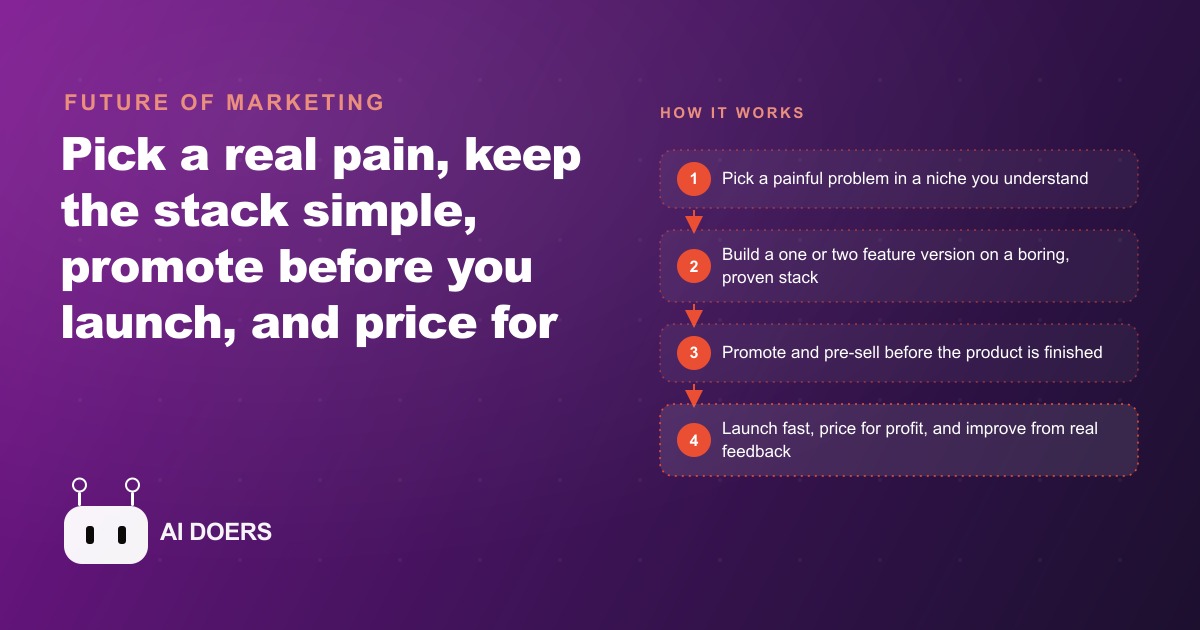
Pick a real pain, keep your stack and payments simple, promote before launch, and price for profit. Here is the practical playbook and how I would apply it to a real local business.

Most people who want to build a software product spend their energy on the wrong half of the problem. They agonize over the tech stack, the architecture, the clever feature, and then launch to silence because nobody was waiting for it. I am Madhuranjan Kumar, and I want to argue that building the product is now the easy part, and that almost everything that decides whether you make money happens before and around the code, not inside it.
The build is no longer the hard part, and pretending otherwise is the trap
For a long time, the ability to build software was the scarce thing, so it made sense to treat building as the main event. That is no longer true. AI coding tools can now turn a clear description into working software, which means the mechanical act of building has become cheap and fast. The scarcity moved, and most people did not notice it move, so they are still guarding a gate that no longer keeps anyone out.
This is the trap almost everyone falls into: they pour their attention into the build because it feels like the real work, and they starve the parts that actually determine success. The real work now is choosing the right problem, reaching the people who have it, and pricing so the business actually makes money. If you get those right and the build merely adequate, you win. If you get the build beautiful and those wrong, you launch to no one. The rest of this piece is about the decisions that sit on either side of the code, because that is where the outcome is decided, and because those decisions are the ones no AI tool will make for you.
Build a painkiller, and build it where you already have an edge
The first decision is what to build, and it is the one that quietly kills most products before a line of code is written. The rule is simple to say and hard to obey: build a painkiller, not a vitamin. A painkiller solves a problem people already feel and already want gone. A vitamin is a nice-to-have that people agree sounds good and never pay for. Nice-to-have features do not get paid for. Painful problems do, and they get paid for quickly, because the person feeling the pain is already looking for relief.
The second half of this decision is where. Build in an industry where you already have an edge, because you understand the pain, you speak the language, and you know where the buyers gather. The people best positioned to build a profitable product are often the ones already inside an industry, not outsiders chasing a trend. If you have spent years inside a trade and you know exactly where a particular group loses time or money, and you know they would pay to fix it, you are holding the raw material for a product. You do not need a computer science background. You need to know a pain deeply, and that kind of knowledge cannot be faked or borrowed.
The third decision, once you know what and where, is to narrow. Targeting everybody makes your copy vague and your features unfocused. Pick one niche, dominate it, and expand later. A tool that is clearly built for one specific audience sells itself to that audience in a way a general tool never can, because the buyer reads the copy and thinks, this was made for me. A vague tool for everyone reads as a tool for no one, and it forces you to compete on price against products that are sharper than yours.
Keep the stack boring, because boring is what the models know best
Here is a decision that feels technical but is really strategic. Keep your tech stack boring and popular. Choose the proven, widely used tools, not the clever esoteric ones.
The reason is direct and often missed. The AI models that help you write the software know the popular tools deeply, because they were trained on mountains of code that used them. An esoteric stack starves the very assistant you are relying on, and it slows you down and invites bugs at exactly the moment you want to move fast. Boring is not a compromise here. Boring is leverage. The dull, popular stack is the one where the agent is most capable, which means it is the one where you ship fastest and break least, and where a fix is a quick request rather than a research project.
This connects back to the theme. When the build is the cheap part, you want to keep it cheap, and a boring stack is how you keep it cheap. Save your creativity for the problem and the offer, not for the framework. Nobody ever bought a product because of the language it was written in, and nobody ever refused to buy because it used the popular one.
Sell before you build, then price like you mean it
This is the decision order that separates products that make money from products that make lessons. Promote before you launch. Your biggest problem on day one is not missing features, it is not having customers, and the way you solve that is to prove demand before you build the thing.
A simple wait list or a pre-sale does this. If you cannot get people to join a list or put down a small deposit based on a one-page description of the painkiller, that is not a signal to build harder. It is a signal that the problem is not painful enough, and you just saved yourself months of building the wrong thing. If people do sign up or pre-pay, you now build with certainty instead of hope, and that certainty changes every decision that follows. Then focus on one acquisition channel where your audience already spends time, and lead with genuine value instead of self-promotion. Master one place before you spread yourself thin across five, because presence on five channels usually means being ignored on all of them.
On the money, most founders charge far too little, and it strangles the business before it can grow. Price for healthy margins. Sell annual plans rather than cheap monthly toys, and target businesses rather than racing to the bottom on consumer pricing, so a single sale actually funds growth. Wire payments through a merchant of record so global tax and compliance are handled for you instead of drowning you in VAT and sales tax across dozens of countries. And ship fast with one or two strong features, not twenty. A first version needs to do one thing well. Set a deadline, launch even if it feels unfinished, and let real usage, not your guesses, tell you what to build next.
An electrician's quoting tool, start to finish
Let me put every one of those decisions into one concrete build, because a theme is only as good as the example that carries it. Picture a residential electrician in one region who understands the trade cold and loses evenings to two tasks: writing quotes and chasing follow-ups. That is not a vitamin. Quoting and follow-up eat evenings, and the electrician understands the work better than any outside developer ever could. That is the painkiller, and it sits exactly where they have an edge.
Here is how I would set this up. The product is narrow on purpose: it turns a few job details and a photo into a clean, code-aware quote and a scheduled follow-up, built specifically for residential electricians in one region. Not a general app for every trade. One audience, one pain. I would keep the stack boring and proven so the AI coding tools move fast and break little, and I would wire payments through a merchant of record so tax across regions is never my problem.
Now the order that matters. Before writing much code, I would put up a one-page offer and collect a small pre-sale or a wait list from electricians in nearby towns. If a dozen of them will put down a deposit on a quoting tool that saves their evenings, I know there is real demand and I build with confidence. Then I would launch with just the quote-and-follow-up feature, resisting the pull to add a scheduler and an invoicing module and ten other things nobody asked for. I would price it as an annual plan aimed at busy shops, not a cheap monthly subscription, so a single sale funds growth. For the one channel, I would pick a trade group or local outreach where these electricians already gather, and lead with useful advice before ever mentioning the product.
And I would not treat distribution as an afterthought once the tool works, because that is where most of these products stall. I would drive early signups with tightly targeted Facebook and Instagram ad campaigns aimed at electricians in the region, publish genuinely useful content on quoting and code that builds SEO and organic search so buyers find the tool for free over time, and make sure every trial and inquiry lands in the CRM and website stack where a follow-up sequence turns interest into paid annual plans. Then I would watch real users, cut anything they ignore, and add only what they ask for. That last habit, building from evidence instead of imagination, is what keeps a small product sharp while bloated competitors drown in features nobody uses.
Why this beats waiting for the perfect idea
A last point on mindset, because it decides whether any of this happens. Many people never start because they are waiting for a brilliant, original idea, some untouched market nobody has spotted. That wait is another version of the build trap: it keeps the attention on the wrong thing. You do not need an original idea. You need a real problem, felt by a specific group, that you understand well enough to solve better than the current option. Plenty of profitable products are the tenth tool in a category, but sharper for one narrow audience than the nine generalists ahead of them. Originality is overrated and focus is underrated. The electrician quoting tool in the example above is not a novel concept, quoting software exists, but a version built for one region's residential electricians, in their language, priced for their shops, beats a generic quoting app for those buyers every time. Start from a problem you already understand, aim it at people you can actually reach, and let the narrowness be your advantage instead of waiting for lightning to strike.
Where people stall, and how to not
The pattern in all of this is that the decisions outside the code decide the outcome, and the decisions outside the code are where people stall. They stall on choosing the right problem, because it means committing to a narrow audience instead of a comfortable everyone. They stall on writing the offer, because a one-page pitch that has to earn a deposit is scarier than another week of building. And they stall on restraint, because adding a feature feels like progress while shipping the small version feels like exposure.
Notice that every one of those stalls is emotional, not technical. The build no longer stops anyone. What stops people is the discomfort of committing to a niche, asking for money before the product exists, and shipping something that feels incomplete. Those are the exact places where a little courage separates the founders who get paying users from the ones who tinker forever on a product no one is waiting for. If you can push through those three discomforts, you have already done the hard part, because the coding, the thing everyone fears most, is the part the tools now handle for you.
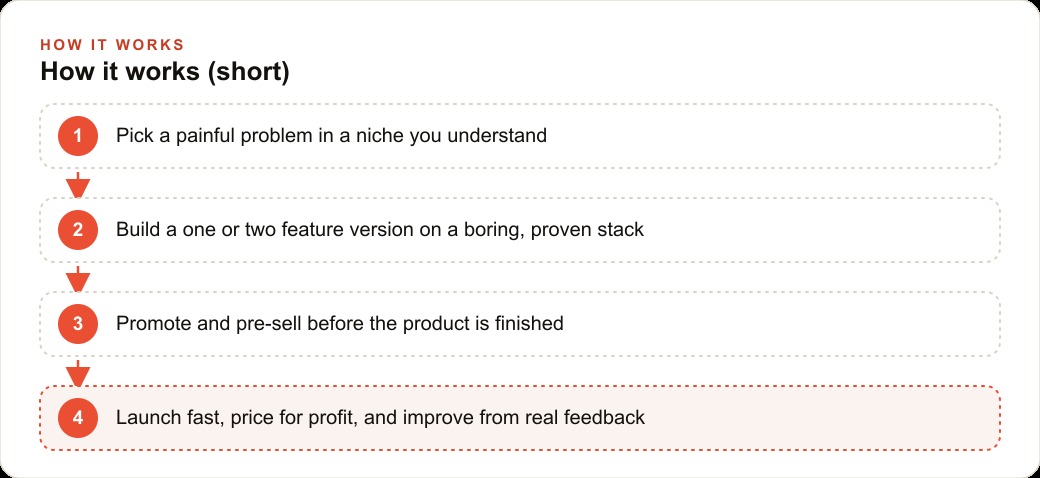
So here is the honest starting move. Write down one painful problem in a field you actually know, and confirm people will pay to solve it before you build anything. Sketch the smallest version, one or two features, on a popular stack. Put up a simple page, collect a wait list or a pre-sale, and only then build. Wire payments through a merchant of record, set a launch deadline, and ship even if it feels unfinished. Then let real feedback, not your own guesses, drive the next features.
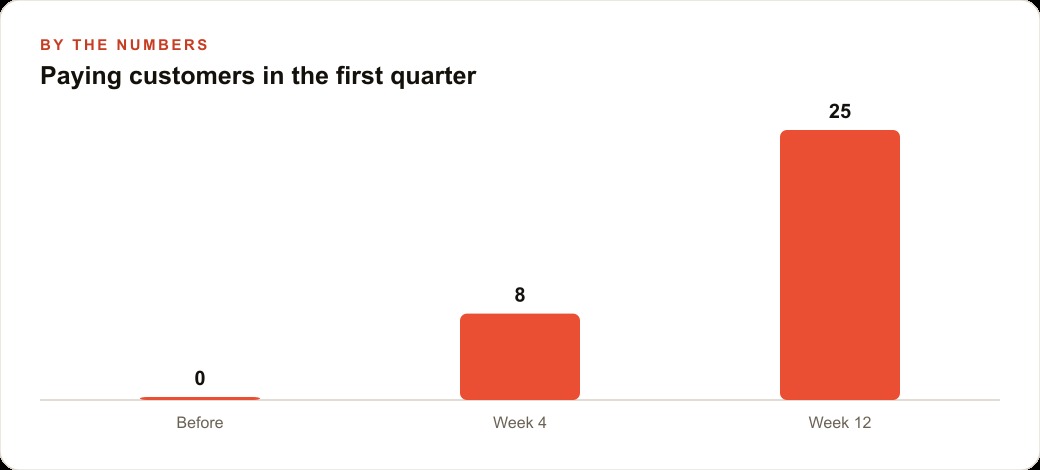
A focused owner can get a first version and a few paying users inside a month by staying narrow. The harder part is the judgment: choosing the right problem, writing the offer, and resisting the urge to add features nobody asked for. That is where most people stall, and it is exactly the part that does not require any coding skill at all. If you would rather have the product scoped, built, and launched alongside you instead of guessing alone, that is the kind of setup I do for clients. You can take the do-it-yourself path above, or bring in someone who has shipped this shape of thing before.
That is exactly what we do at AI DOERS. Book a private 30-minute call with Madhuranjan Kumar and we will map the fastest path to it for your specific business.
Book your call →
Madhuranjan Kumar
Madhuranjan Kumar brings 20 years of performance-marketing experience and has managed over $200 million in Facebook ad spend for brands across the United States and beyond. His expertise spans the full modern marketing stack: Meta, Google Ads, TikTok, email automation, CRM, and the websites that hold it together. At AI DOERS he turns that track record into lead-generation systems for businesses across every industry.