
How to Build an Interactive 3D Website With Claude Design and Ship It Live
Have Claude Chat spec the brand, sketch the layout on the Claude Design canvas, generate a looping hero video, then export to Claude Code, push to GitHub, and let Vercel deploy it automatically.

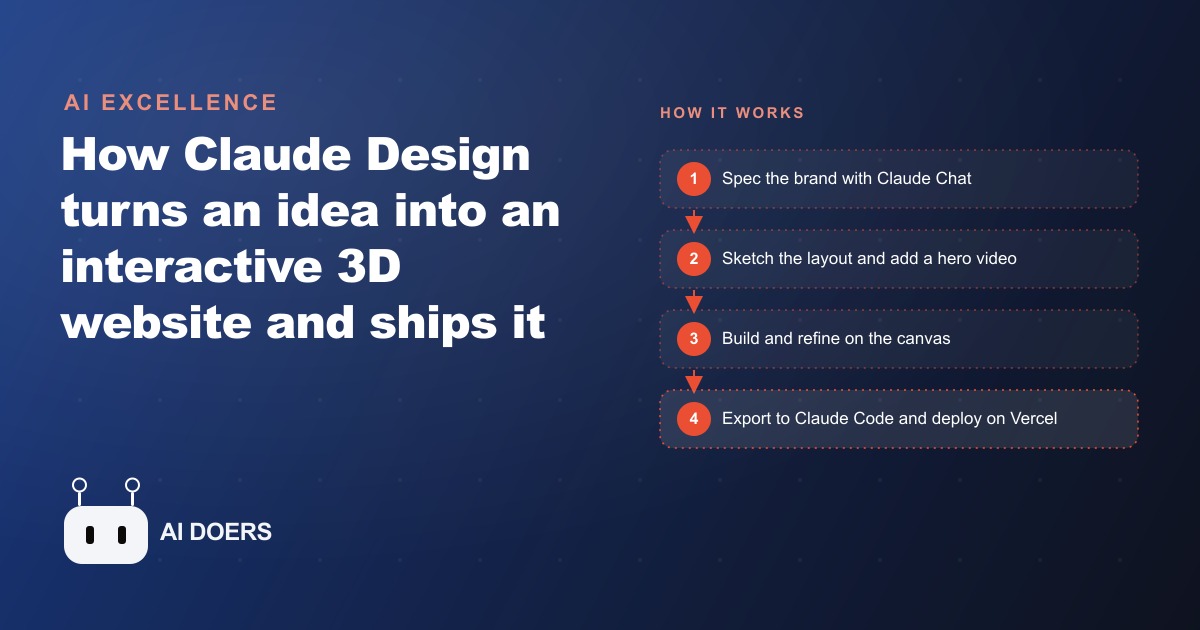
Claude Design shipped a capability this week that changes the economics of distinctive web presence for small businesses: the ability to go from a brand description to a deployed interactive 3D website in a single afternoon, without writing code or hiring a designer. I am Madhuranjan Kumar, and the story behind a flat static site rebuilt into a 3D scroll experience in about twenty minutes is worth understanding in detail, because the mechanics of the workflow are the part that makes it practical rather than just impressive.
Claude Design now ships interactive 3D experiences that most agencies cannot match for the price
The first thing to establish is what Claude Design actually is and why this week's build is notable. Claude Design is a canvas-based tool that takes descriptions and visual references and produces working website code. The 3D aspect is not a visual gimmick layered on top of a standard layout. It refers to scroll-triggered three-dimensional transformations, parallax depth effects, and animated transitions that create a sense of physical space as the visitor moves through the page. These effects used to require specialized WebGL development skills and hours of custom animation work.
A real estate agency that wants visitors to feel like they are moving through a luxury property as they scroll, rather than reading a flat list of listings, previously faced a binary choice: pay a specialist agency significant money for a custom site with those capabilities, or accept a template that looked like every competitor in the market. Claude Design removes that binary by making the interactive experience buildable from a description in an afternoon.
This matters competitively because first impressions from a website influence trust decisions within seconds. A site that does something memorable when a visitor scrolls, that feels considered and custom, creates a different response than a site that looks like the same Wix or Squarespace template the visitor has seen on every other business in the category. In markets where services are hard to differentiate on features alone, the first impression can be the deciding factor in whether a visitor makes contact or clicks back to the search results.
The workflow has a specific order and skipping any step wastes tokens and time
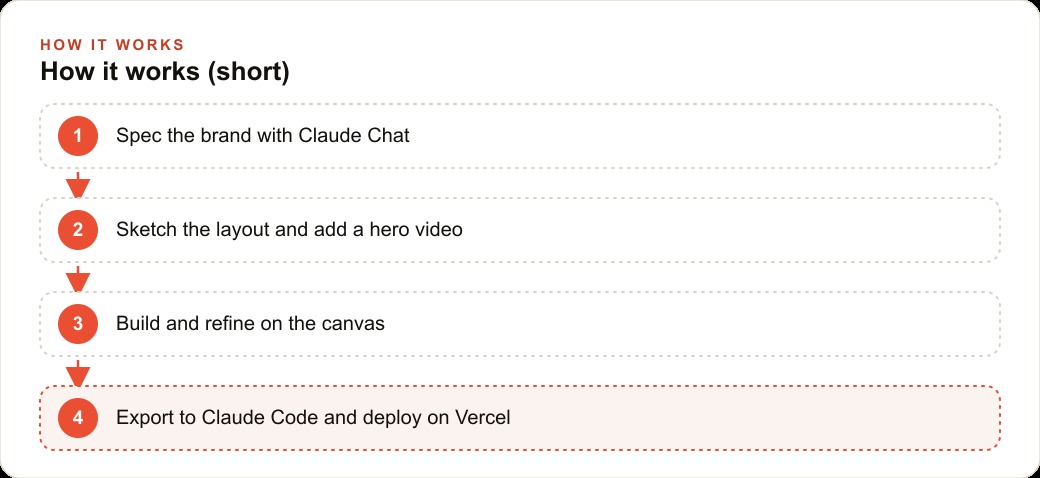
The build approach that produced the twenty-minute result follows a precise sequence, and the precision is not accidental. Each step in the sequence removes constraints on the next step, which is why the sequence produces better results than doing things in a different order.
The first step is creating the brand specification. Before opening Claude Design, the builder spent time with Claude Chat to establish the product, the positioning, the voice, and the visual identity of whatever the site was representing. This specification gets pasted into Claude Design as the first context it receives. A tool that builds from a clear brief produces a first version that is close to the target. A tool that builds from a vague idea produces a first version that requires many correction rounds. Each correction round in Claude Design costs tokens because the tool runs on a capable, expensive vision model. The brief investment in specification before the build starts pays back in reduced token cost during the build.
The second step is the layout sketch. Claude Design has a canvas where you can place rough boxes representing the sections of the page before any code is generated. A navbar box, a hero video box, a hero text box, and a subtext box placed on the canvas give the tool a visual structure to aim at. Without the sketch, the tool infers layout from common patterns, which produces a competent generic result rather than the specific layout you had in mind. The sketch takes five to ten minutes and prevents the misalignment that produces multiple rounds of layout corrections.
The third step is generating the hero video. The builder had Claude Chat write an image prompt and a video prompt, generated the source image using the appropriate tool, converted it into a looping video clip, and then uploaded the resulting MP4 as the hero background. The file upload has a practical constraint: the tool accepts uploads up to approximately 30 to 40 megabytes. A 15-second high-quality clip comfortably fits this constraint. A longer clip will not. The short clip generates more visual interest than a static image and establishes the atmosphere of the site from the moment the page loads.
The hero video is the difference between a page that scrolls and one that stops people
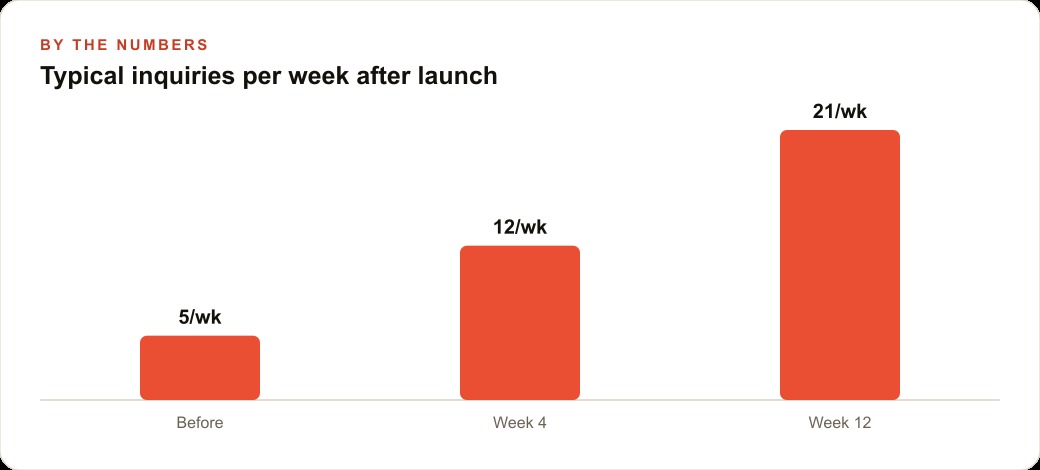
In the real estate context where this workflow is most directly applicable, the hero video makes the difference between a site that records visit time in seconds and one that records it in minutes. A looping video of a beautifully filmed property, even a short one, creates visual engagement that a static image cannot match. The visitor's attention is held while the opening text loads. The impression formed in those first seconds is qualitatively different.
The generation tools that produce the best results for real estate hero videos are the ones that handle single-subject transformation well. A still image of an exterior shot, with the camera appearing to slowly move inward, creates the sense of approach that high-end real estate marketing aims for. That effect used to require a camera operator and video editing. The current generation of video models can approximate it from a single photograph, and the result is sufficient for a hero background at typical monitor viewing distances.
The canvas editing tools that come after the first version is generated deserve specific attention. Clicking any element in the design produces commenting and editing options. You can circle a region, describe what should change within it, and the tool updates the specific region without reformulating the surrounding design. This targeted editing is what makes iteration fast. The alternative, submitting full-page replacement prompts, produces changes that improve the targeted area while inadvertently altering elements elsewhere. The targeted canvas edits keep the stable parts stable while improving the specific things that need changing.
The tweaks panel is where palette, typography, and spacing adjustments happen without spending generation tokens. Sliders adjust these properties in real time and the changes are visible immediately. Using the tweaks panel for visual refinements and reserving generation prompts for structural changes is the habit that keeps the token budget under control across a long build session.
Real estate is where this tool has an immediate, measurable payoff
The business case for Claude Design is strongest in markets where the first digital impression directly influences whether a potential client makes contact. Real estate is the clearest example, but the same logic applies to premium local services, creative agencies, hospitality businesses, and any market where the website is the first thing a potential client sees before a conversation begins.
For a real estate agency, the calculation is direct. The agency spends money on Google Ads and social media campaigns to drive qualified traffic to its website. Those campaigns have a cost per click. The website's job is to convert those clicks into inquiries. A site that creates a stronger first impression converts a higher percentage of those clicks into actual contacts. At a typical cost per click in the real estate advertising market, even a modest improvement in conversion rate represents significant reduction in effective cost per lead.
The illustrative numbers: an agency spending a reasonable monthly budget on paid search and social driving visitors to its website, and converting those visitors into inquiries at a typical rate for the category, earns a specific revenue per visitor. Moving that conversion rate up by even a few percentage points from a more impressive, interactive site increases the revenue generated by the same ad spend. The site improvement pays for itself through the improved return on advertising investment rather than as a standalone line item.
Export to Claude Code is the step that makes the deployment permanent and maintainable. Downloading the project and pushing it to a private GitHub repository gives the agency a version-controlled codebase they own. Connecting that repository to Vercel provides automatic deployment on every push, creating a clean separation between the local development version and the live production version. Every future change to the site, every new neighborhood section, every updated listing feature, deploys through the same commit-and-push flow without any manual deployment process.
The mobile check is a non-negotiable step before the site goes live. Claude Design builds for desktop dimensions first. Mobile browsers represent a substantial portion of web traffic in real estate, because homebuyers frequently browse on their phones during evenings and weekends. Opening the deployed site in a mobile browser and checking every section before any ad budget points at the URL is the difference between a site that serves most visitors correctly and one that serves the largest segment of visitors with a broken layout.
The real estate agency that builds this site, deploys it, and keeps it updated at the pace the market moves, with new neighborhood content the week a new area becomes relevant and updated pricing data the month the market shifts, is positioned differently than the agency waiting on an outside developer to make those changes on a timeline the agency does not control. The speed of iteration, from idea to live update in an afternoon, is the operational advantage that compounds over the months and years the site is running.
That is exactly what we do at AI DOERS. Book a private 30-minute call with Madhuranjan Kumar and we will map the fastest path to it for your specific business.
Book your call →
Madhuranjan Kumar
Madhuranjan Kumar brings 20 years of performance-marketing experience and has managed over $200 million in Facebook ad spend for brands across the United States and beyond. His expertise spans the full modern marketing stack: Meta, Google Ads, TikTok, email automation, CRM, and the websites that hold it together. At AI DOERS he turns that track record into lead-generation systems for businesses across every industry.