
GPT-5.5 Explained: Why Efficiency Beats Raw Power This Time
GPT-5.5 reaches GPT-5.4 quality in far fewer tokens, tops Claude Opus 4.7 on Terminal Bench, and self-tests its own work. The list price doubled, but real workflows cost less. Here is what that means for a working business.

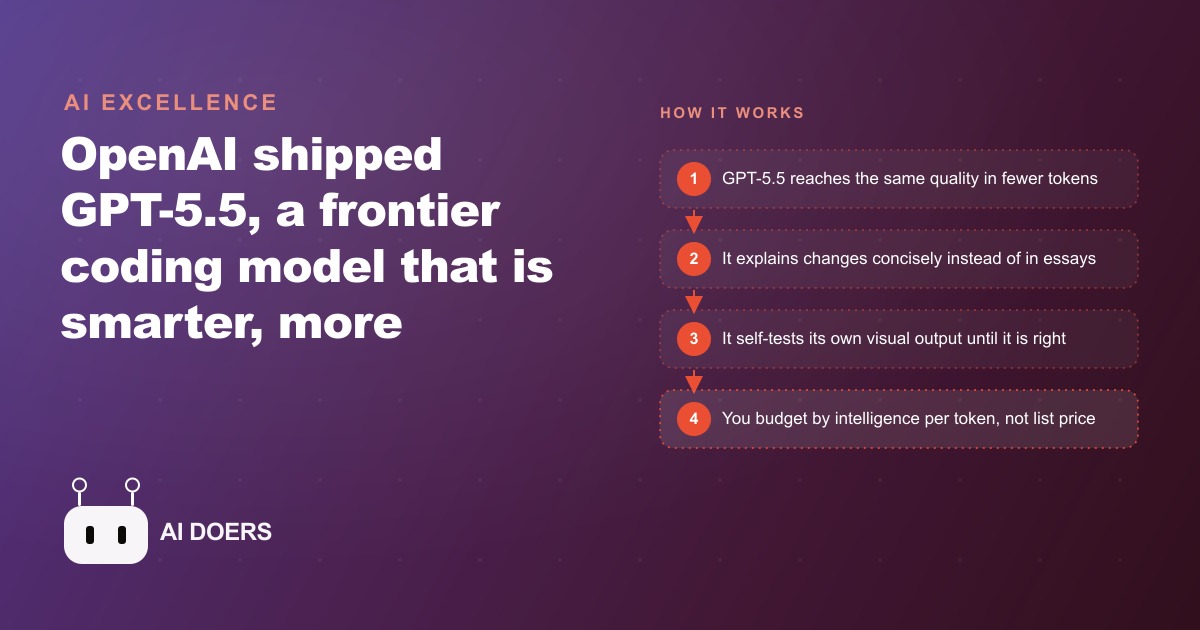
GPT-5.5 is out, and the interesting number is not a benchmark. It is that the model reaches the previous version's quality using far fewer tokens, which means the smarter model can actually cost you less to run on real work. OpenAI doubled the list price and the tool still ends up cheaper for most workflows, because efficiency, not raw power, is the story this time. I am Madhuranjan Kumar, and this is a practical path for a small business to turn that efficiency into hours back in the week, using a restaurant as the worked example.
Budget by intelligence per token, not by sticker price
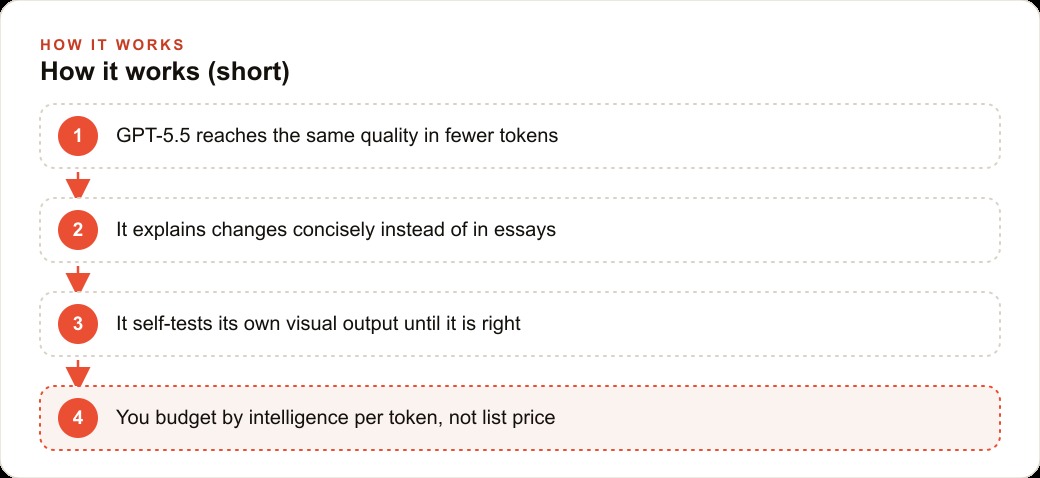
Start by throwing out the instinct to read the list price and flinch. The headline price rose to five dollars per million input tokens and thirty per million output, roughly double the last version. But GPT-5.5 reaches the same quality in significantly fewer tokens and finishes the same task with less waste, so most real workflows land cheaper overall. The right unit to budget in is intelligence per token, the amount of useful work you get per dollar, not the price on the page.
Practically, that means you stop rejecting the better model on a headline number and start measuring what a real task actually costs to complete. Run one of your genuine jobs, look at the total spend to finish it, and compare that to what the older, cheaper-per-token model cost to do the same work. In most cases the newer model wins on the total, because it does not ramble to get there. A cheaper-per-token model that pads every answer with three paragraphs you did not need can easily cost more to finish a real task than a pricier model that answers in two clean sentences. Getting this framing right first is what makes everything below affordable.
There is a speed angle too. GPT-5.5 matches the older model's speed while performing at a higher level, so you are not trading responsiveness for quality. You get a sharper answer in the same wall-clock time, for a lower total cost. For a busy operator, that combination is the whole point, because the tool has to keep up with the pace of the day or it will not get used.
Point it at the writing that never gets done
Every small business carries a pile of small written work that slips. For a restaurant that is menu updates across delivery apps, daily specials, review replies, and social posts. This is where GPT-5.5 earns its place first, because it explains itself concisely and produces clean output instead of the bloated essays older models gave for one small change.
Have it rewrite dish descriptions in the restaurant's voice, translate them, draft the day's specials from whatever came in fresh, and produce a consistent post for each platform in one pass. The tighter tone is deliberate in this release, so you get exactly what you need rather than a wall of text to trim. This is the fastest visible win, and it builds the owner's trust before you point the tool at anything heavier. It also quietly strengthens the SEO and organic search side, because consistent, well-written descriptions and posts are the same content that helps the business get found.
The review-reply case is worth calling out on its own. Replying to every review, good and bad, in a calm and specific voice is exactly the kind of task that never gets done because it is emotionally draining and time-consuming. Handing the first draft to the model, with the owner approving the tone before it posts, turns an ignored chore into a steady habit, and steady review responses are one of the cheapest ways to lift a local reputation.
Turn the messy numbers into a short, plain answer
The next target is the data work owners avoid because it is tedious. GPT-5.5 builds clean documents and spreadsheets, so it can turn a messy supplier list into a tidy ordering sheet, and it can read a sales export and tell you what actually matters. Point it at the numbers and ask specific questions: which menu items quietly lose money after food cost, which combos lift the average ticket, where a price tweak is safe.
The key is to demand a short, plain summary rather than a data dump. Because the model is concise by design, it will hand back a few clear findings you can act on that afternoon, not a report you have to decode. For a thin-margin business this is where real dollars hide, in the dish that has been sold at a loss for months because nobody had the time to check. A restaurant living on single-digit margins does not need a beautiful dashboard. It needs someone to say plainly, this item loses money every time you sell it, and here is the price that fixes it. The model can be that someone, at a cost of pennies per report.
Let it draft the operations, then have a person approve
Beyond content and analysis sits the operational grind. The model can draft the weekly staff schedule from availability notes and flag conflicts, then a manager approves it. The rule across all of this is simple. The model does the first pass and a person signs off before anything goes live, especially anything customer-facing.
If the restaurant ever wants a simple online ordering page or a small tweak to a reservations flow, GPT-5.5 in Codex can build it and, importantly, self-test its own visual output. It keeps looking at what it built and iterates until the buttons land in the right place, which means fewer rounds of back-and-forth fixes. That self-inspection is one of the genuine upgrades in this release, and it lowers the risk of putting the model on real customer-facing work, as long as a human still approves before launch. Early testers describe it seeing around corners on this kind of task, understanding why a layout fails and where the fix belongs, rather than guessing and hoping. For an owner with no coder on staff, that self-correcting behavior is the difference between a tool that helps and one that creates more work.
Use full thinking effort only for the rare hard problem
One efficiency habit ties the whole approach together. Keep the default thinking effort for almost everything, because it comfortably covers the large majority of tasks, and reserve the maximum setting for the rare genuinely hard problem. Burning the highest effort on a menu rewrite wastes money for no gain. Saving it for the once-in-a-while thorny question is how you keep the running cost sensible while still having the ceiling available when you need it. Most owners overspend here out of caution, cranking every task to maximum just in case, when the default already handles the daily grind. Discipline on this one setting is a large part of why real workflows stay cheap.
A restaurant, run through the playbook with numbers
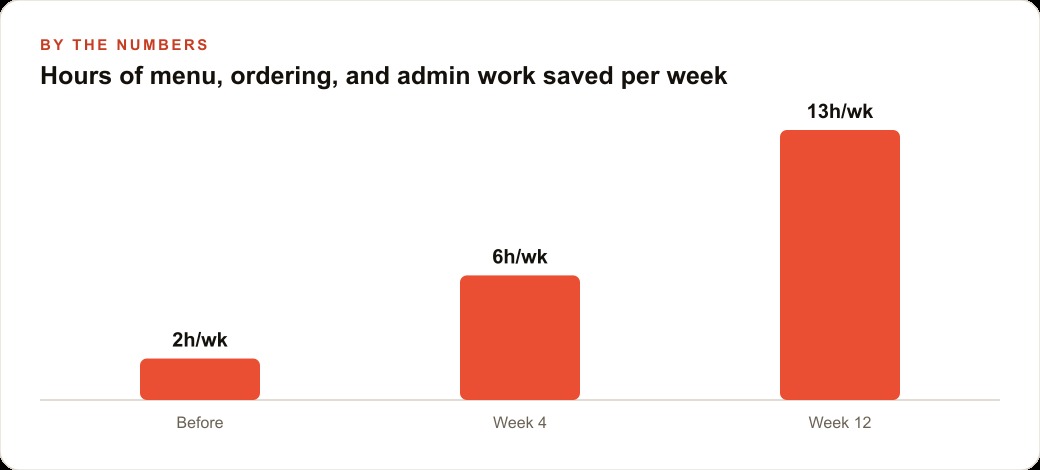
Put illustrative figures on it. Before any of this, the owner loses maybe two hours a week to menu edits, specials, review replies, and schedule wrangling, and that is on a good week when it gets done at all. In the first month, handing the writing and the review replies to GPT-5.5 pulls that toward six hours of work handled by the model rather than the owner, because the concise output needs little cleanup. By around week twelve, with the sales analysis, the ordering sheet, and the schedule draft added, the model is absorbing something like thirteen hours a week of admin that used to eat evenings.
On cost, the owner runs a real week of this work and finds the total spend on the newer model comes in below what the older, cheaper-per-token model charged, because it stopped padding every answer. The maximum thinking effort gets used only twice that month, for a tricky pricing question and a supplier dispute summary, so the bill stays flat. If those thirteen weekly hours were the owner's own evenings, the real return is not a line on an invoice. It is three or four nights a week back, spent on the floor or at home instead of at a laptop. Those numbers are illustrative, not a promise, but the pattern is the one to expect: the admin that swallowed evenings shrinks steadily while the owner keeps running the kitchen.
Where the saved hours actually go
The point of clawing back thirteen hours a week is not to do more admin. It is to move that time to the parts of the business that grow it. With the writing and reporting handled, the owner can finally look at whether the Facebook and Instagram ad campaigns are bringing in first-time diners at a sensible cost, and whether the leads and orders are being captured cleanly in the CRM and website stack so repeat business gets a follow-up instead of being forgotten. Efficiency at the desk is only worth it if it frees you for the work that actually moves revenue, and for most owners that work is customer relationships and marketing, not spreadsheets.
Automate one weekly task this week
Do not try to wire up everything at once. Open ChatGPT or Codex on a paid plan, pick the single weekly task that annoys you most, writing specials or replying to reviews or summarizing last week's sales, and have GPT-5.5 do a first pass while you check it. Budget by the total cost to finish, not the list price. Keep default thinking effort for the routine and save the maximum for the rare hard problem. Let the model self-test anything customer-facing, and keep a human approving before it ships. Then add the next task. Built one workflow at a time, the model quietly takes over the admin that used to own your evenings.
Why the tone upgrade matters more than it sounds
One change in this release gets dismissed as cosmetic and should not be. GPT-5.5 fixes the rigid, soulless feel that people complained about in the previous version, and it explains itself concisely instead of burying a small change under an essay. For a business owner who is not a technical user, tone is not a luxury. It is the difference between a tool you actually reach for and one you abandon after a week because talking to it feels like a chore.
The concise personality has a direct cost effect too. Every extra paragraph the model generates is tokens you pay for and time you spend reading. A model that answers in two clean sentences instead of two padded pages is cheaper and faster on every single interaction, and those small savings add up across hundreds of tasks a month. So the tone improvement is not separate from the efficiency story. It is part of the same thing. A model that respects your time with a tight answer is a model that respects your budget with fewer wasted tokens.
There is a trust effect as well. When a tool over-explains, it feels like it is hedging, padding, unsure. When it answers plainly and directly, and self-tests its own work before showing you, it feels like a competent colleague. That feeling matters for adoption, because the owner who trusts the tool uses it for more, and the owner who uses it for more gets more of their week back. The businesses that win with AI are not the ones with the fanciest setup. They are the ones whose people actually reach for the tool a dozen times a day, and a better tone quietly drives exactly that.
The bottom line
GPT-5.5 is a lesson in a shift that is easy to miss. The headline price went up, and the real cost went down, because the model got efficient rather than just powerful. For a small business the move is simple: automate one weekly task, budget by the total cost to finish rather than the sticker price, save the maximum effort for the rare hard problem, and keep a human approving anything customer-facing. Do that and the smarter model pays you back in hours and margin at the same time.
You can absolutely do this yourself, and I would tell any owner to automate one weekly task this week to feel the payoff. If you would rather have someone choose the right setup, wire your menus, reviews, and sales data into a clean workflow, and make sure the running costs stay sensible, that is the kind of build I do for clients, and you can bring me in to handle it.
That is exactly what we do at AI DOERS. Book a private 30-minute call with Madhuranjan Kumar and we will map the fastest path to it for your specific business.
Book your call →
Madhuranjan Kumar
Madhuranjan Kumar brings 20 years of performance-marketing experience and has managed over $200 million in Facebook ad spend for brands across the United States and beyond. His expertise spans the full modern marketing stack: Meta, Google Ads, TikTok, email automation, CRM, and the websites that hold it together. At AI DOERS he turns that track record into lead-generation systems for businesses across every industry.