
Gemini 3.1 Pro and Seven Claude Updates: The Week's Best AI Releases
Google shipped Gemini 3.1 Pro plus music and slide tools, while Anthropic dropped seven Claude updates in a week. Here is what to use, with a restaurant example.

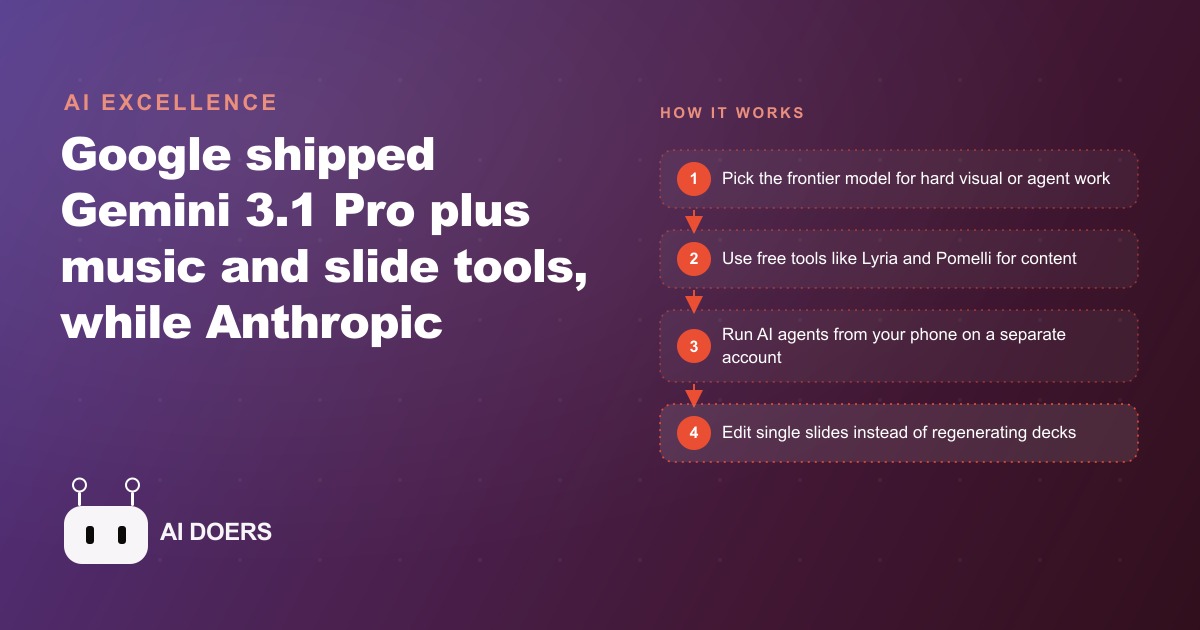
Google and Anthropic released more useful AI updates in a single week than most businesses will implement in a quarter. Here is what actually shipped, what works right now, what does not yet, and the concrete move to make from each release.
Gemini 3.1 Pro Shipped as the New Benchmark for Visual and Agent Work
Google's Gemini 3.1 Pro is the company's new flagship model, and the performance gains are visible rather than theoretical. On a benchmark that tests visual reasoning with complex SVG tasks, including architectural rendering and multi-element scene construction, Gemini 3.1 Pro shows clear improvement over its predecessor. The scores on the Arc AGI benchmark, which tests how models handle genuinely novel problems they were not trained on specifically, are also notably stronger.
The agentic performance numbers matter more for business users than the visual benchmarks. Agentic capability is how well the model handles multi-step tasks with real tools, which is the use case that produces the most time savings in an actual workflow. Gemini 3.1 Pro posts competitive scores in this category.
The most direct demonstration of what the model can do came from a single prompt that produced a working interactive web application. A visual display of magazines that open and display content on click, built from one instruction. Six months ago that kind of output required a development studio and a week of iteration. It now requires a well-constructed prompt and a minute of waiting. The practical implication for any business that needs a simple interactive tool, a landing page prototype, or a basic internal application is that the cost and timeline for a first working version has collapsed.
Gemini 3.1 Pro is available inside the Google products most businesses already pay for. It is not a separate subscription on top of an existing stack. That integration point is what makes the model upgrade immediately actionable rather than requiring any new vendor decision.
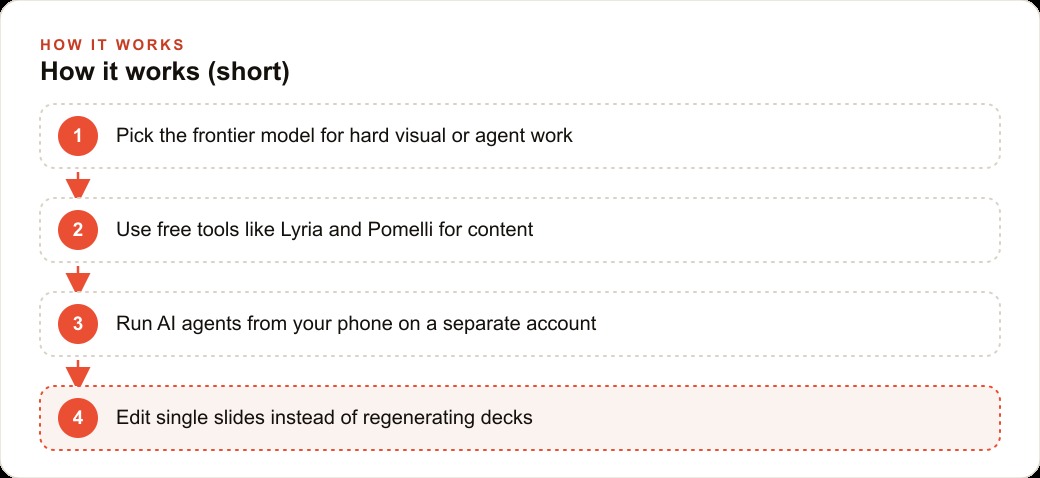
Free Music Generation Just Arrived Inside Gemini and It Beats the Paid Alternative
Lyria, Google's music generation model, is now built directly into Gemini and it generates soundtracks from image input on the free plan. This is the detail that matters most from this release: unlike Suno and other music generation tools that charge monthly subscriptions for commercial-quality output, Lyria's core capability is available without a paid tier.
The workflow is direct. Open Gemini, upload an image that captures the mood you want, and ask Lyria to generate a matching soundtrack. A photo of a busy kitchen at dinner service produces a high-energy background track suitable for a behind-the-scenes reel. A styled product photo of a cocktail on a marble bar produces something atmospheric and ambient. A table set for a private dining event produces something that fits the formality of the occasion.
For businesses producing regular short-form video content for social media, music licensing has been a recurring cost and compliance risk. Using a song without the right license results in muted or removed content. Using royalty-free libraries means competing with thousands of other businesses that are using the same tracks. Lyria produces original audio, removes the licensing problem, and costs nothing on the free plan.
The quality is not at the level of a professionally composed score. For background audio in a thirty-second reel or a social video, the quality is more than sufficient, and the zero-cost access changes the economics of producing video content consistently. A business that was previously skipping background audio on social content because the licensing overhead felt too complex can now generate something fitting in under a minute.
Single-Slide Editing in NotebookLM Finally Solves the Biggest Presentation Frustration
NotebookLM's presentation feature has been a useful but frustrating tool since it launched. The core capability, turning a body of notes or source documents into a structured presentation, was valuable. The execution problem was that fixing a single slide required regenerating the entire deck, which was slow and often introduced new problems in sections that had been working correctly.
That limitation is now addressed. NotebookLM presentations support single-slide editing, meaning you can target one slide for revision without touching the rest of the deck. The edit can come from a text prompt: change the headline on slide four, add a bullet point to slide seven, replace the example in slide nine with a different one from the source material.
Export to PowerPoint is also live, though the current version exports slides as images rather than editable text blocks. This means the final refinements still need to happen inside PowerPoint, but the structural work of generating and revising the deck content happens inside NotebookLM from the source material you upload. For presentations built from existing notes, reports, or research documents, the workflow is materially faster than building from a template.
The combination of single-slide editing and PowerPoint export makes NotebookLM practical for presentation workflows that previously required going back to a blank slide deck every time a significant revision was needed.
Pomelli Generates On-Brand Product Photos From Your Website for Free
Pomelli is the release from this week that will produce the most immediate practical value for businesses that sell physical products. It reads your company website, identifies your brand fonts, colors, and logo automatically, and then generates clean product images in your brand's visual style. The photo shoot feature, now live, takes a product description or an existing product photo as input and produces styled, on-brand output.
The access restriction worth noting is that Pomelli is currently limited to US-based users at launch. A VPN addresses this for teams outside that geography, and the restriction is likely to expand as the product scales.
For a business that currently pays a photographer for product shots, the workflow question becomes which images require professional photography and which can be handled by Pomelli. Hero images for the homepage and flagship product pages benefit from professional photography. Secondary catalog images, social content variations, and seasonal promotions are exactly where generated images reduce cost without reducing quality in ways the audience notices.
The brand extraction step is what separates Pomelli from general AI image generation tools. Rather than producing generic product photography that could belong to any brand, Pomelli applies the specific visual identity it read from your site. The output looks like it belongs to your brand rather than looking like a stock photo with your product placed inside it.
Claude for Excel Works; Claude for PowerPoint Does Not Yet
Anthropics shipped two Office integrations in the same week, and they are not at the same level of readiness.
Claude for Excel has received strong early reviews. The integration lets users prompt Claude directly inside a spreadsheet, ask it to clean data, build formulas, generate structured tables from unstructured text, and explain what a given formula does. For teams that work in spreadsheets daily, the ability to handle these tasks through a natural language prompt rather than by looking up formula syntax reduces the time cost of spreadsheet work significantly. The integration behaves reliably enough to use for work that matters.
Claude for PowerPoint is a different situation. Early reviews are predominantly negative, with most feedback citing reliability issues: slides that do not build as described, formatting that breaks between slides, and revisions that produce unexpected changes elsewhere in the deck. The capability described sounds valuable, but the current execution does not deliver it consistently. The right move is to wait a release cycle before depending on this integration for anything important.
The asymmetry between the two integrations is useful information. Anthropic's engineering capacity is not infinite, and shipping two integrations simultaneously means each one receives less pre-launch polish. The Excel integration landed at a quality level that makes it immediately useful. The PowerPoint integration did not. Understanding which new AI releases are ready for production use and which need more time is a critical part of evaluating this week's news rather than adopting everything at once.
Claude Code Got a Phone Remote, a Figma Connection, and Tighter Admin Controls
The three Claude Code updates that matter most this week came together and collectively represent a significant expansion of where and how the agent can operate.
Phone-based remote control of Claude Code is the update that pulled users back. The capability to direct a code agent from a mobile device at a production-grade security standard makes the agent genuinely useful for professionals who are away from their desk and need to initiate a task, check status, or redirect an ongoing process. The comparison point in the market, OpenClaw's Telegram integration, has a similar concept but at a lower security standard. Claude Code's implementation is closer to what teams with actual security requirements need.
The Figma connector closes a gap that creative and product teams have been waiting for. Claude Code can now read a Figma design file, understand the layout and component structure, and act as a graphic designer inside the design environment rather than producing code that approximates a design through a separate interpretation step. This shortens the loop between design intent and working output significantly.
Admin plugin controls inside Claude Co-work address a practical governance question that becomes relevant as team size grows. When an organization deploys Claude Co-work as a shared tool, not every team member should have access to every available plugin. A junior team member should not necessarily be connecting DocuSign or Workday to their Claude environment. The admin controls let the organization define which plugins each role or team member can access, which is the kind of control that makes a tool deployable across a company rather than just usable by individuals.
For teams already running Google Ads campaigns or managing ad accounts, the admin control layer matters when an AI agent has the ability to take actions inside connected marketing platforms. Restricting which team members can connect sensitive integrations reduces the risk of unintended automated actions.
The fake account enforcement action Anthropic reported this week is worth noting in context. Tens of thousands of accounts making millions of API calls to extract model behavior and replicate it are a signal about how quickly frontier model capability spreads across the industry. The practical message for businesses is that the advantage from using a frontier model is temporary. The durable advantage is in how deeply you have integrated AI into your actual workflow, not in access to any single model.
Lovable's cross-project reference feature is a quieter release worth flagging. The ability to pull a specific component or design from an earlier project into a new build addresses the consistency problem that plagues teams building multiple products. A quiz format that performed well in one product, or an onboarding flow that converted well in another, can now be referenced and adapted for a new context rather than rebuilt from scratch each time.
The Restaurant That Went From Three Pieces of Content to Twelve
Madhuranjan Kumar maps the practical combination of this week's releases for a restaurant, where the content production and presentation challenges are immediately recognizable.
Before this week's tools, a restaurant producing consistent branded content faced a set of distinct production costs. Professional product photography for the menu and social content: several hundred dollars per shoot, with scheduling overhead. Music licensing for reels and short-form video: a recurring monthly subscription, with compliance risk if a track falls out of license. Presentations for catering pitches, private dining proposals, and partnership conversations: built manually in a slide tool, rebuilt from scratch for each new prospect. Interactive tools or simple web applications for online reservations or seasonal menus: requiring a developer or a long turnaround on a freelancer.
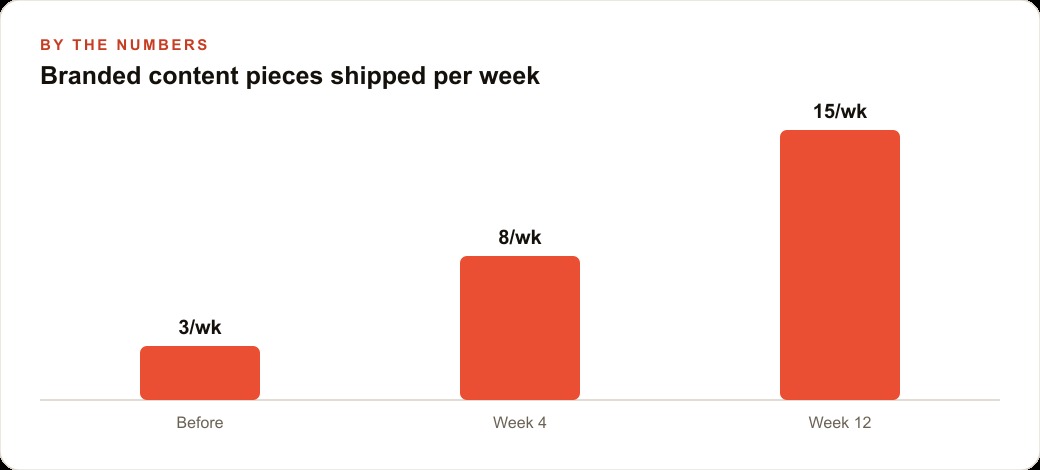
A restaurant previously producing two to three pieces of branded content per week, constrained by the time and cost of each piece, is realistically shipping ten to twelve pieces per week with the same staff after these tools.
Pomelli generates on-brand dish images for new menu items, seasonal specials, and social content variations from the restaurant's existing brand identity without scheduling a shoot. Lyria scores a thirty-second kitchen reel with original audio on the free plan, matched to the visual mood of the footage. NotebookLM builds a catering proposal from the restaurant's standard menu and event information and lets the owner correct a single slide rather than starting over for each new client.
The restaurant running Facebook and Instagram ad campaigns for reservation promotions and private event bookings has Pomelli-generated images available as ad creative without adding a photography line item to the campaign budget. The same images that appear in organic social content feed directly into the paid campaign creative without additional production cost.
For the SEO and organic search side, consistent content production feeds the blog and the menu pages that drive organic search traffic for terms like private dining in the neighborhood or seasonal tasting menu. The volume increase from three to twelve pieces per week compounds in search visibility over a quarter in a way that sporadic content production cannot achieve.
Gemini 3.1 Pro handles the harder tasks: generating a working prototype for an online reservation tool from a prompt, building the structured data markup for the restaurant's schema.org listings, or analyzing customer feedback data in bulk and returning a structured summary of the patterns. These are the tasks that required either developer time or hours of manual work before the frontier model capabilities landed at their current level.
The combination of free content tools and a more capable frontier model, available in products the restaurant already pays for through Google Workspace, changes the production economics without adding a new vendor or a new monthly bill. That is the practical case for paying attention to a week of AI releases that might otherwise look like industry news rather than business decisions.
That is exactly what we do at AI DOERS. Book a private 30-minute call with Madhuranjan Kumar and we will map the fastest path to it for your specific business.
Book your call →
Madhuranjan Kumar
Madhuranjan Kumar brings 20 years of performance-marketing experience and has managed over $200 million in Facebook ad spend for brands across the United States and beyond. His expertise spans the full modern marketing stack: Meta, Google Ads, TikTok, email automation, CRM, and the websites that hold it together. At AI DOERS he turns that track record into lead-generation systems for businesses across every industry.