
Everything Perplexity Can Actually Do for a Business, Explained Simply
Perplexity is a research engine grounded in cited sources, not just a search chatbot. Model switching, deep Research, Labs, Spaces, scheduled Tasks, and connectors turn it into a system where every answer comes with sources you can verify.

There is a version of using AI for business decisions where the tool is confident, fast, and wrong, and you do not find out until three weeks later when the decision you made based on its answer turns out to have been built on a fact the model invented. I am Madhuranjan Kumar, and the business problem this describes is not a marginal edge case. It is the default experience of using a language model that answers from training memory rather than from live sources. The model speaks with the fluency of expertise whether it is working from accurate information or from a plausible-sounding pattern it constructed during training.
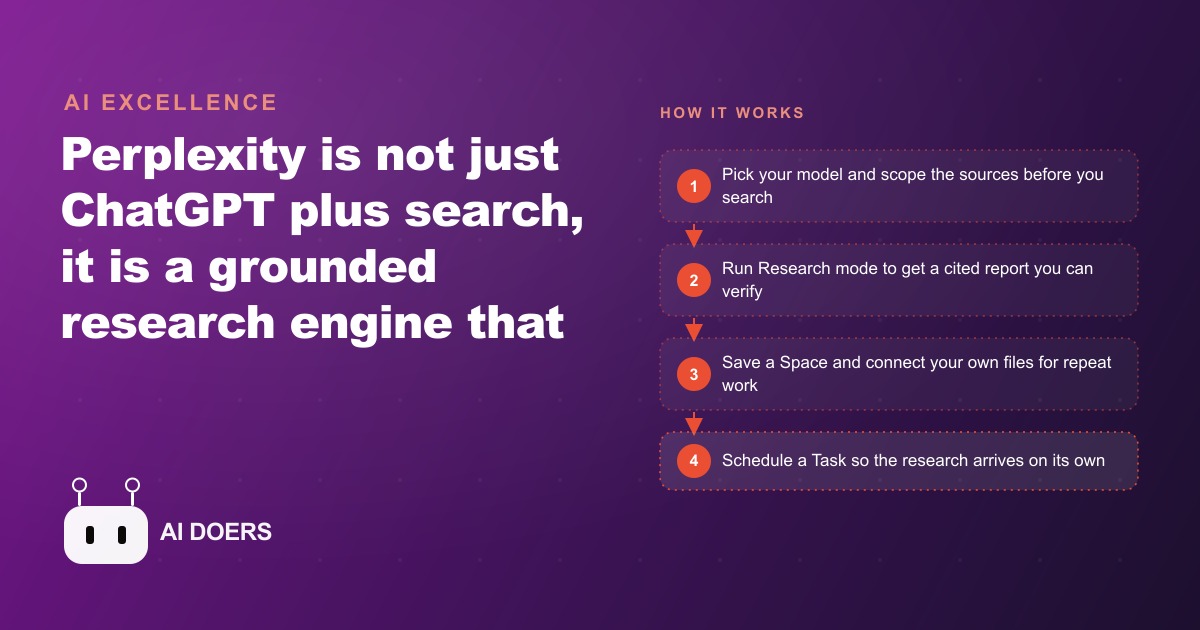
Perplexity is a research engine built around a different design principle. Every answer it produces is grounded in sources it searched in real time, and those sources appear alongside the answer so you can click through and verify any claim that matters to you. The difference sounds like a feature distinction. In practice it is a different kind of trust relationship between you and the tool.
Getting an answer is not the same as getting a citable conclusion. Getting an answer lets you move forward. Getting a citable conclusion lets you move forward with confidence, and for a business where a wrong decision has real cost, that distinction is the entire value proposition.
The structural choice that defines Perplexity is that grounding is not an option you activate. It is the architecture. Every query goes out to live sources. Every response comes back with numbered citations you can open. The model cannot decide not to cite because the answer itself is the synthesis of what the sources actually said, not a recall from training memory. This makes the tool behave differently from a regular language model even when the surface of the interaction looks similar. You ask a question, you receive an answer, but the answer carries evidence rather than assertion.
For a business owner, the practical implication is that Perplexity is the right tool for a specific category of question: any question where you need the answer to be accurate rather than merely plausible, any question where you will be held accountable for the information you act on, and any question where the cost of a wrong answer exceeds the cost of spending an extra few minutes verifying the right one. Most consequential business decisions fall into at least one of those categories.
The pricing research you do before setting a rate for a new service needs to reflect actual market conditions, not a model's memory of what market rates looked like during its training period. The regulatory information you rely on before making a compliance decision needs to reflect current rules, not rules as they existed when the model's training data was collected. The competitive intelligence you gather before launching a campaign needs to reflect what competitors are actually doing today, not what they were doing a year ago. Language models that answer from training memory are genuinely excellent at many tasks, including drafting, restructuring, editing, and reasoning through problems where you supply the inputs. They are structurally unreliable for factual claims about the current state of the world, and that is not a flaw. It is a design consequence of how they work. Perplexity is designed specifically for the category of questions where that limitation matters most.
The feature set compounds in a way that is worth understanding fully rather than sampling casually. The model selector is the first thing worth learning. Rather than locking you into one model, Perplexity lets you choose between its own Sonar model and leading alternatives including Claude, Gemini, GPT, and Grok, which means you access the reasoning capabilities of multiple leading systems through one subscription rather than paying each separately. The source filters let you narrow where the search looks before the query runs: the open web, academic papers, social discussions, or financial sources. Enabling the discussions filter pulls in forum threads and Reddit conversations alongside formal sources, which is often where you find the genuine practical experience that a formal article will not give you.
Research mode is the feature to learn first and rely on most. Rather than returning a single synthesized answer, it spends more time gathering sources across the web, evaluating them, cross-referencing claims, and producing a multi-section cited report with citations attached to each substantive finding. One documented example involved a query about hardware investment exposure: Research mode gathered 49 separate sources, verified claims across them, and produced a table of findings in a downloadable format. Because every line of the report traces back to a specific source you can open and read, the output is verifiable in a way that a confident-sounding assertion from a model's memory is not. That verifiability is not a nice-to-have. In many professional and business contexts, it is the difference between an output you can use and one you cannot.
Labs extends this further by going beyond fact-gathering to actual analysis and output creation. Where Research mode produces a cited document, Labs can generate an interactive dashboard from the data it collected, or a structured data export you can import directly into a spreadsheet. The distinction matters for any business that needs not just the information but a processed version of it that is already in a usable format.
Pages converts any research thread into a formatted document with sections and images that can be published as a public link or shared internally. For a business that regularly produces research summaries, competitive briefings, or market analysis documents, this removes the step of taking research output and manually reformatting it into something readable. The research and the publishing live in the same tool.
The Space feature saves a configured research assistant with custom instructions for a specific recurring job: a market analysis assistant that prioritizes industry-specific sources, or a regulatory monitoring assistant focused on a specific jurisdiction, or a competitive intelligence assistant that follows a defined set of competitor websites and news sources. Spaces can be shared with a team so everyone works from the same configured starting point rather than reinventing the research setup every time someone sits down to work.
The scheduled Task feature is where the tool shifts from being useful to being systematic. A Task runs a query on a timer and delivers the results by email or notification on whatever schedule you set. The team no longer has to remember to run the research. The research arrives. A weekly competitive briefing that previously required someone to set aside time, remember to do it, and format the output manually now delivers itself every Monday morning with sources attached.
An accounting firm configured Perplexity to handle two recurring research burdens that were consuming staff time without generating billable hours. The first was client inquiries about recent tax law changes. A client would call asking whether a specific deduction still applied, or whether a new rule affected their situation. The staff accountant would spend thirty to forty minutes researching the question, verifying the current state of the rule, and drafting a response the partner could review before it went out. With a Research mode session, the same accountant runs a precisely scoped query, reviews the cited sources, verifies the two or three claims most consequential for the client's situation, and has a draft memo ready in eight to ten minutes. The quality of the research is higher because it references the actual current text of the rules rather than the accountant's memory of what the rules said during an earlier training period. The time spent is a fraction of the manual process.
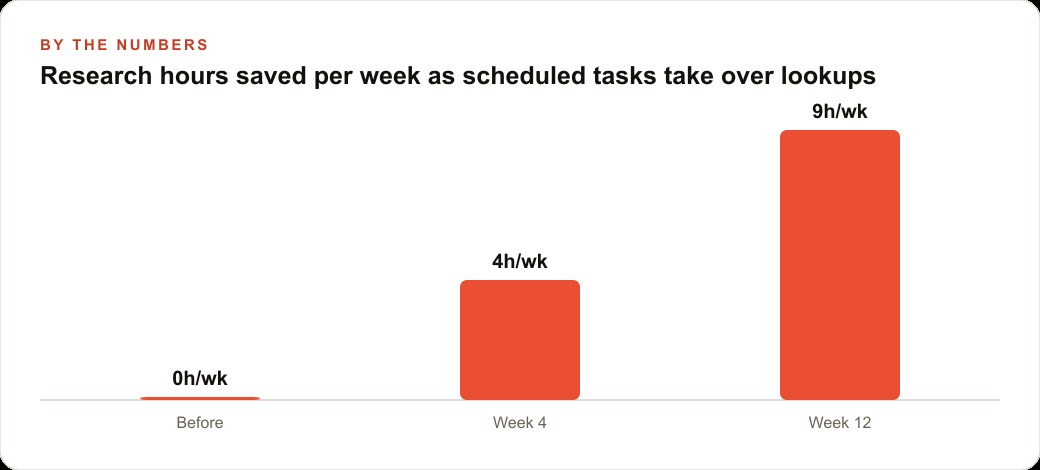
The second application was regulatory monitoring. The firm's practice areas included several that generate regular updates from regulatory bodies, and staying current had previously meant subscribing to multiple email newsletters and allocating time each week to read through them. The firm set up scheduled Tasks for each practice area: queries that run every Monday morning, gather developments from the previous week across the relevant regulatory sources, and deliver formatted summaries to the attorneys and accountants who need to stay current. The research that used to take two to three hours of collective staff time per week now arrives automatically, pre-organized, with sources linked. Staff reads the summary, clicks through to any source that needs a closer look, and the monitoring work is done.
The connectors that link Perplexity to Google Drive and Dropbox let the search extend into your own document library alongside the public web. A query that might reference both an internal document and a current regulatory source can draw from both in the same response. This is the point where the tool starts to feel less like a research assistant and more like a knowledge system for the business, one that knows both what you have produced internally and what is happening externally, and can synthesize across both in a single cited answer.
The Comet agentic browser feature, which can take actions in a browser on your behalf, is worth mentioning because it is genuinely useful for public-web research tasks and genuinely needs careful scoping for anything involving sensitive logins or confidential systems. The accounting firm used it only for public-web tasks, keeping it well away from any client portal or system that carries confidentiality obligations. That boundary is the right one for any business where confidentiality is a professional requirement rather than just a preference.
For businesses running Facebook and Instagram ad campaigns who need to understand what competitors are spending on and what messaging is resonating in a category, the ability to search social discussions and verified sources simultaneously produces more actionable competitive intelligence than a training-data answer. For any business building an SEO and organic search strategy, the difference between a cited finding about what currently ranks and a model's confident but outdated memory of the same question is the difference between a strategy built on current evidence and one built on last year's reality. For teams using a CRM and website stack that needs accurate product or service information to personalize messages, the grounded answer is the one you can actually use in customer-facing content without a verification step that defeats the efficiency you were trying to gain.
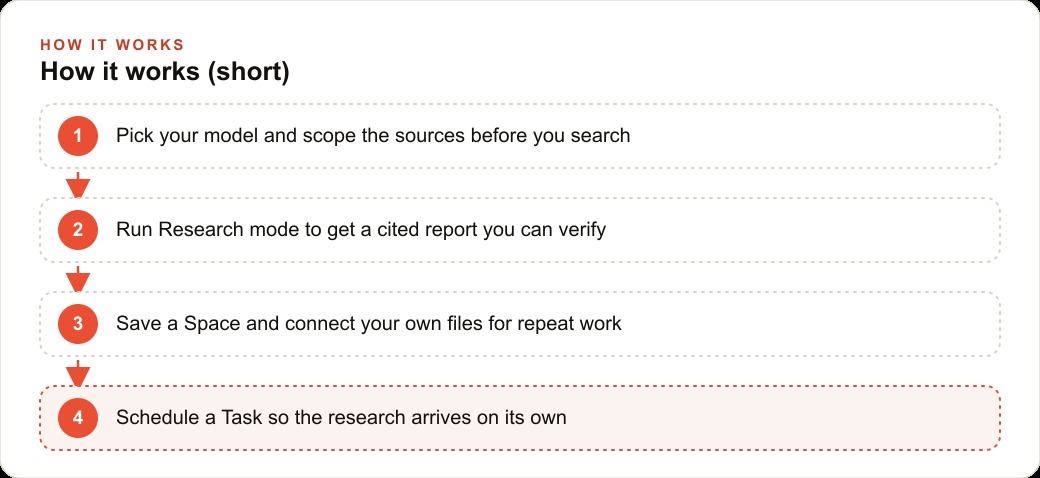
The practical workflow that produces the most value from Perplexity is simpler than the feature list suggests. Start with Research mode and one real question you would normally spend thirty minutes researching manually. Review the output, click through to the sources for the three or four most consequential claims, and evaluate whether the sourcing is solid. If it is, you have compressed thirty minutes of work into ten. Once you trust the Research output for that category of question, set up a Space for your most common research type with specific instructions about your industry, your geography, and the types of sources it should prioritize. Then add a scheduled Task for the research you currently do manually on a set schedule and let it deliver automatically for two weeks before evaluating the quality. Build those three layers, and the tool shifts from something you consult to something that runs.
The API access that comes with a Pro subscription adds one more layer of practical value. Perplexity's API lets you plug the search-grounded engine into automation tools such as n8n or Make, so you can build research-powered workflows that run on a schedule, pull results into a spreadsheet, or feed cited answers into a document template automatically. A business that produces regular industry briefs, client research summaries, or competitive monitoring reports can automate the entire research stage while keeping a human in the review loop for the editorial judgment that automation cannot replace. The API includes credits on the Pro plan, making this practical to test without an additional budget commitment.
The difference between getting an answer and getting a citable conclusion is not always consequential. Sometimes a plausible answer is enough to move forward, and for those tasks a regular language model is faster and simpler. But when the answer will inform a decision that costs money if it is wrong, or when the answer will be shared with a client, a regulator, or a customer who will check it, the citation-first design is not a nice-to-have. It is the point. The tool exists for exactly those situations, and for any business where those situations are common, it belongs in the regular workflow.
That is exactly what we do at AI DOERS. Book a private 30-minute call with Madhuranjan Kumar and we will map the fastest path to it for your specific business.
Book your call →
Madhuranjan Kumar
Madhuranjan Kumar brings 20 years of performance-marketing experience and has managed over $200 million in Facebook ad spend for brands across the United States and beyond. His expertise spans the full modern marketing stack: Meta, Google Ads, TikTok, email automation, CRM, and the websites that hold it together. At AI DOERS he turns that track record into lead-generation systems for businesses across every industry.