
What The o1 Reasoning Model Actually Does And How Your Business Can Use It
The o1 model thinks before it answers. Here is what that means in plain words, where it wins, and a pet grooming example that puts it to work.

The reasoning model is impressive on the wrong tasks, and that is how most businesses are using it
I am Madhuranjan Kumar, and I want to stake a clear position before going further: the o1 reasoning model is genuinely powerful, and the majority of businesses using it are wasting most of that power on tasks that do not need it. The problem is not the model. The problem is a mental model of AI that treats a more capable tool as better for every job, the same way someone might use a high-precision instrument to measure something that a ruler would handle perfectly.
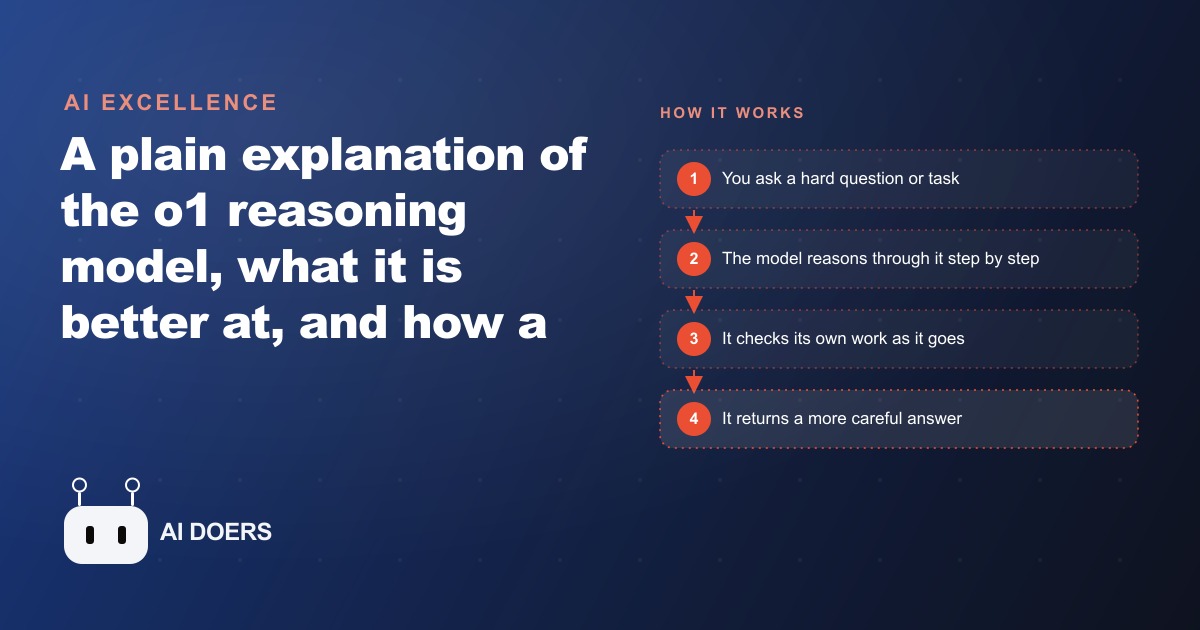
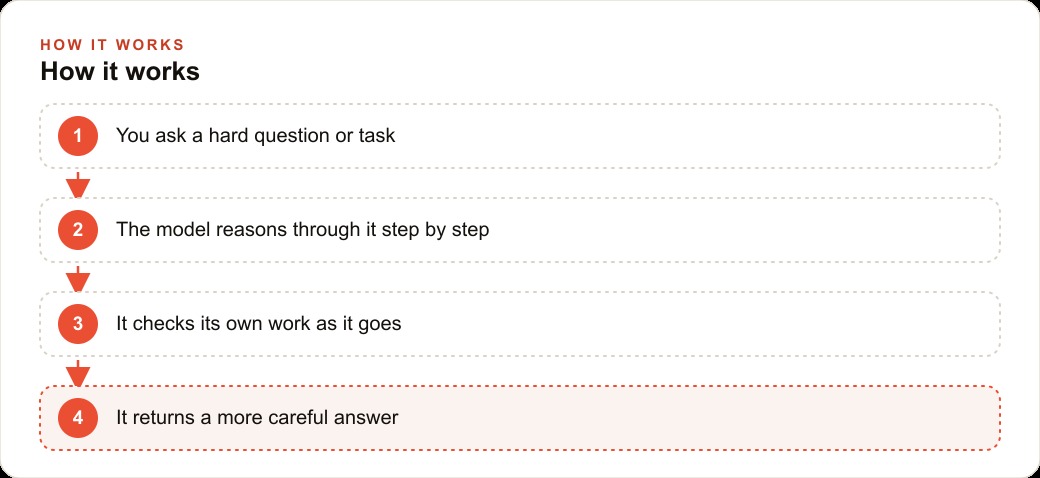
The reasoning model thinks before it answers. That is the real distinction from older, faster models, and it is worth being precise about what that means. When you send a prompt to a conventional model, it begins generating tokens almost immediately, producing text that is statistically likely given what it has seen. It is optimized for fluency and coherence. When you send a prompt to the reasoning model, it takes a pause, works through the problem in stages, checks its own intermediate steps, and then returns an answer. That process takes ten to twenty seconds for many tasks. The result is more reliable on problems where getting the answer right requires genuine logical work rather than pattern completion.
The contrarian claim is this: for most of what a typical small business does with AI, the conventional model is the right tool, the reasoning model is the wrong tool, and using the more impressive option for routine tasks is an expensive habit that does not improve outcomes.
Fluency and correctness are different goals, and most tasks only need fluency
The clearest way to see the distinction is to ask what a wrong answer actually costs you on any specific task. For writing a client email, a wrong answer might mean a slightly off-tone sentence that you catch on review and fix in thirty seconds. For scheduling a complex week with competing constraints, a wrong answer might mean a conflict you do not catch until someone arrives to an appointment that was double-booked. For calculating the profitability of a job with several variables, a wrong answer might mean quoting a price that loses money. Those three tasks have very different consequences for being wrong, and they should therefore be routed to very different tools.
The conventional model, optimized for fluency and coherence, writes the client email faster and at lower cost with equivalent quality for the purpose. You catch any minor tonal issue on review before it sends. The reasoning model, optimized for correctness on hard logical problems, builds the complex schedule with proper attention to every constraint and catches conflicts before they become appointments. It works through the profitability calculation step by step and shows its reasoning so you can verify the price before committing to it.
Using the reasoning model to write client emails does not make the emails better. The task does not require careful logical work. It requires pattern-following and tone matching, both of which the conventional model handles with speed and low cost. Using the conventional model to calculate job profitability with multiple variable costs produces an answer that sounds confident but may have gotten a step wrong, and because the reasoning is not shown, you cannot catch the mistake before it costs you on a real job. The assignment matters. The model is a tool, and tools should be matched to the job.
The pet grooming case that shows where reasoning earns its keep
Let me give you the concrete example that makes the distinction tangible. A pet grooming shop receives a tangle of bookings each morning: dogs of different sizes and coat types, appointment requests from clients with specific preferences, time constraints based on who picks up when, and gaps in the schedule that need to be filled without creating bottlenecks. Getting the schedule wrong has consequences. A large double-coat breed booked back to back with another large double-coat breed with no gap makes the second appointment physically impossible to complete on time. A small trim squeezed into a gap that is actually twelve minutes too short means the client waits, gets frustrated, and sometimes cancels their next booking.
A conventional model produces a schedule that looks right. It reads the inputs, recognizes the pattern of a booking schedule, and produces something in the correct format. The problem is that it may not have actually reasoned through the dependencies. It may have put the two large double-coat dogs back to back because that ordering looked locally correct rather than because it checked the time constraint at the appointment level.
The reasoning model approaches the schedule differently. It breaks the problem down: sizes and coat types first, then time requirements for each, then pickup constraints, then the gap logic. It checks whether each proposed placement satisfies all the constraints before committing to it. If it finds a conflict, it backs up and tries a different arrangement. The final schedule it returns has been checked rather than estimated, and the owner can read through the reasoning to verify that the constraints were applied correctly. That verification step, available because the reasoning is shown, is what makes the tool trustworthy rather than just useful.
For the shop owner, the value is not just the schedule. It is the forty-five minutes of doing-it-again time that is recovered when the schedule does not need revision after the first person arrives and notices a conflict. Over a week, avoiding one scheduling conflict that would otherwise produce a frustrated client and a rescheduled appointment is worth more than the difference in cost between the two models.
What a smart AI stack actually looks like when you stop using one model for everything
A business that uses AI tools well does not have one model that handles everything. It has a small number of models assigned to specific task categories based on what those tasks actually require. The assignment logic is simple and applies universally regardless of what business you are in.
Routine communication tasks, drafting emails, writing social posts, summarizing a document, composing a project update, belong on a fast, inexpensive model. These tasks require fluency and voice consistency. They do not require logical reasoning. The conventional model produces the output faster, at lower cost, and with equivalent quality for the purpose. Running these through the reasoning model adds cost and time without adding value.
Hard analytical tasks, scheduling with multiple constraints, pricing a job with several variable costs, extracting a specific clause from a contract, cross-referencing data sets to find inconsistencies, belong on the reasoning model. These tasks require correct logical work rather than fluent approximation. The conventional model produces plausible-sounding outputs on these tasks that may be wrong in non-obvious ways. The reasoning model checks its work and shows the reasoning, which lets you verify the result before acting on it.
The third category, planning, sits between the two in an interesting way. Mapping out the steps of a project, deciding the sequence of a complex job, or figuring out the right structure for a new process benefits from the reasoning model's step-by-step approach. But the execution of each step, writing the email that kicks off a step, filling out the template for a specific sub-task, belongs back on the conventional model. The pattern is: use the reasoning model to plan, use the fast model to execute each step of the plan.
Routing is the skill; the model is just the raw material
The practical implication of everything I have argued here is that the skill worth developing is not prompt engineering. It is routing. Routing means looking at a task before you send it and asking one question: does getting this right require careful logical work, or does it require fluent pattern completion? The answer to that question tells you which model to use, and the decision takes about five seconds once it becomes habitual.
Building a library of standard prompts for each category helps. The client email template, the review response framework, the social post structure all live in the fast-model workflow. The schedule template, the job cost calculator, the contract clause extractor all live in the reasoning-model workflow. When a task surfaces, you reach for the right template and the right model simultaneously, rather than routing everything through whichever model you used last.
The investment in routing also compounds in a way that undifferentiated usage does not. Every task you route correctly costs less than it would have cost with the wrong model and produces equivalent or better quality. Over a month of daily AI use across a small business, the savings from routing correctly rather than defaulting to the premium option for everything are material. That saved cost either goes back to the budget or buys more AI capacity for the tasks where it is genuinely needed.
The businesses that get the best return from AI tools are not the ones with access to the most powerful models. They are the ones most disciplined about matching the model to the task. The reasoning model is genuinely powerful, and it is the right tool for the problems where being wrong is expensive. For everything else, the fast, fluent, inexpensive model is not a compromise. It is the correct answer, and using anything more is the mistake.
That is exactly what we do at AI DOERS. Book a private 30-minute call with Madhuranjan Kumar and we will map the fastest path to it for your specific business.
Book your call →
Madhuranjan Kumar
Madhuranjan Kumar brings 20 years of performance-marketing experience and has managed over $200 million in Facebook ad spend for brands across the United States and beyond. His expertise spans the full modern marketing stack: Meta, Google Ads, TikTok, email automation, CRM, and the websites that hold it together. At AI DOERS he turns that track record into lead-generation systems for businesses across every industry.