
ChatGPT Just Changed: GPT 5.5 Is Built For Agents, Not Chat
OpenAI shipped GPT 5.5, a model it openly says is not made for chat but for long agentic work like coding, research, and turning messy notes into finished documents, plus a free image tool that turns one graphic into three social formats from a single prompt. Here is what it means for a real business.

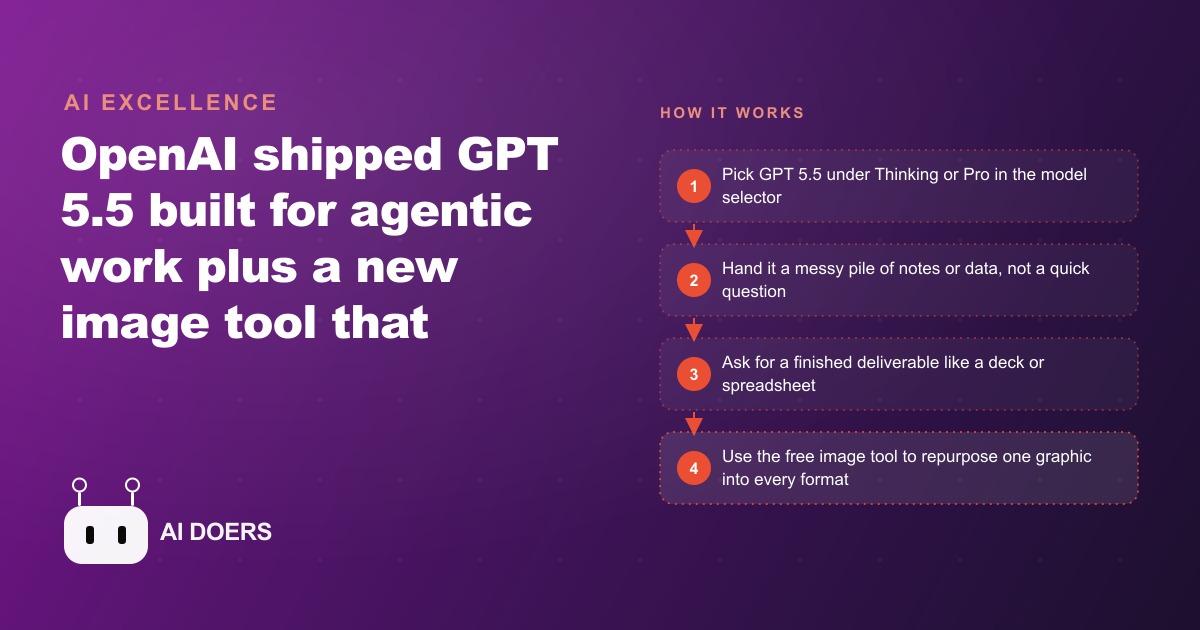
OpenAI shipped a model and openly said it is not optimized for chat. That sentence is more significant than it sounds. Madhuranjan Kumar's read: the most popular chat application on the internet just told its users that the product is evolving away from chatting, and the businesses that understand what it is evolving toward are the ones positioned to take advantage of it before the conversation shifts to how to adopt it rather than whether to.
The problem that made listing copy a half-day task
A small real estate agency was running eight listings a month. For each listing, the workflow was the same: the agent would tour the property, record a voice memo on the drive back, take notes on the feature list during the tour, and then sit down at a desk to turn those fragments into finished marketing material. Listing description for the MLS. A brochure outline with a headline and three selling points. A short email to the buyer list with a subject line and a clear call to action. Three separate documents from two raw inputs that were both, frankly, a mess.
The writing took between four and five hours per listing. Not because the agents were slow. Because going from scattered observations to polished copy is genuinely difficult work that requires sustained concentration, multiple passes, and real judgment about what buyers in this market want to read. Eight listings a month at four hours each is thirty-two hours of writing time, from a team whose revenue depends on showings, negotiations, and relationships, not on writing.
The cost of that time was not measured in salary alone. It was measured in the prospecting calls that did not happen while someone was rewriting a listing description for the third time. In the follow-up emails that went out a day late because the writing was still in progress. In the deals that progressed more slowly because the listing went live two days after it should have.
What happened when the agency first encountered GPT 5.5
The agency brought GPT 5.5 into the workflow during the first week of a new listing cycle. The first thing the agent discovered was that the model behaves differently from anything she had used for writing before. Simple back-and-forth questions produced outputs that were more deliberate and sometimes slower than expected. The model seemed to think more carefully than was necessary for a quick lookup. One agent described it as the model taking the long route when you just wanted to cross the street.
That observation was accurate and also irrelevant to the task at hand. GPT 5.5 is openly described by OpenAI as not optimized for chat. It is calibrated for sustained, multi-step work, the kind where careful deliberation is an asset rather than a delay. When the agency stopped using it for quick questions and started using it for the actual writing task, the difference was immediate.
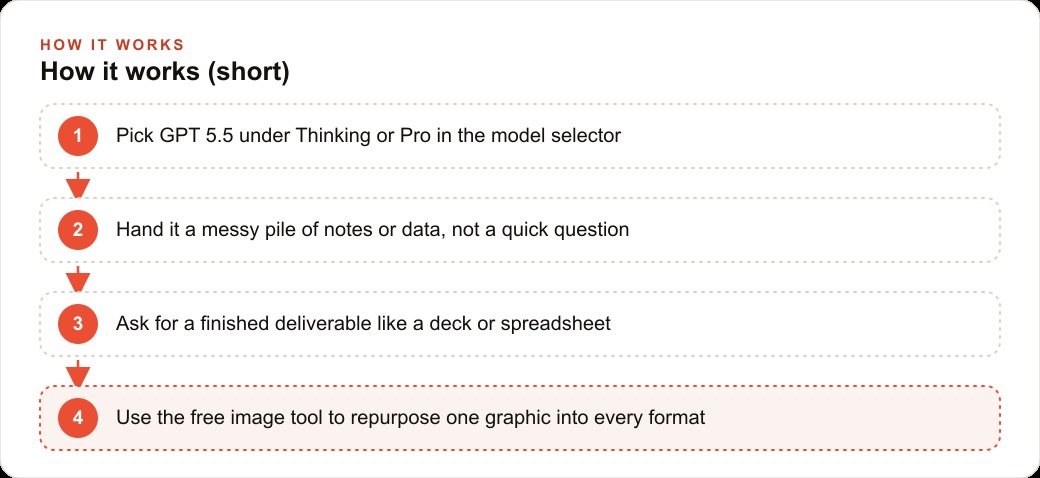
The agent opened a new GPT 5.5 session, dropped in the voice memo transcript and the notes from the tour, and wrote a clear specification of the deliverables: a polished listing description for the MLS with all key features structured logically, a one-page brochure outline with a headline and three primary selling points, and a short buyer-list email with a subject line and a clear call to action. The messy input-to-structured output capability that OpenAI keeps emphasizing is exactly what this task required, and it delivered.
The first draft of all three documents came back in about ninety seconds. The listing description was structured correctly and used the right register for the market. The brochure outline organized the features in a hierarchy that made sense. The email subject line was strong. All three needed light editing for tone and for a few property-specific details the model could not know from the notes alone, but the structural work was done. The agent spent about twenty minutes on review and refinement rather than four hours on construction.
Running the first listing through the new process
The first listing processed through the new workflow was a three-bedroom property in a neighborhood the agency knew well. The voice memo was seven minutes of observations recorded in the car, not organized, with some repetition and a few false starts. The feature list was handwritten notes with abbreviations and shorthand that only made sense to the agent who wrote them.
All of it went into GPT 5.5. The specification was explicit: produce a polished MLS listing description that leads with the best feature of the property, surfaces the kitchen and master bathroom prominently because those are what buyers in this price range prioritize, and ends with a sentence about the neighborhood and proximity to good schools. Then a brochure outline with a strong headline, three selling points in order of importance, and a line about the asking price positioned as value relative to comparable recent sales. Then an email to the buyer list with a subject line under fifty characters, a two-sentence opener that creates urgency without sounding desperate, and one clear call to action.
The output was usable on first pass for the MLS description with minor edits. The brochure outline needed one structural change where the agent wanted to lead with the outdoor space rather than the kitchen. The email required a tone adjustment in the opener. Total editing time: eighteen minutes. Total time from raw notes to finished, reviewed, publication-ready materials: under twenty-five minutes.
The agency ran the second and third listings through the same process. Each one came back with a similar result. The pattern held across different property types, different note-taking styles, and different agent writers. The structural work was consistent. The specific editing needs varied by property. The total time was consistently under thirty minutes.
Discovering GPT Image and the one-prompt-three-formats workflow
The image tool arrived as a separate discovery midway through the first week. OpenAI released GPT Image as a free tool available to all users, including those on free plans, which made it immediately available to the full agency team without any subscription decision.
The feature that mattered most for the agency's workflow was format repurposing. Every new listing required a branded graphic for social media, and that graphic needed to appear in at least three formats: an Instagram square, a Facebook banner, and a Pinterest pin with portrait dimensions. Previously, a designer or a VA would take the source graphic and manually resize it for each platform, adjusting the layout to accommodate the different proportions, repositioning text elements so they remained readable at each size, and exporting each version separately. This took between thirty and sixty minutes per listing and was the kind of repetitive, low-judgment work that nobody enjoyed doing.
The agent uploaded the source graphic for the new listing and wrote a single prompt specifying all three output formats, including the exact text that needed to appear in each one: the address, the price, and the number of bedrooms and bathrooms. GPT Image returned all three formats in one response. The fonts were resized proportionally. The text elements were repositioned to fit each format. The overall look was consistent across all three without requiring manual adjustment.
For professional headshots of the agents themselves, the face-preservation feature produced clean portraits that looked like the actual person rather than a generated composite. This mattered for the agency because headshots appear in listings, on the website, and in email signatures, and a headshot that does not resemble the agent is worse than no headshot at all.
The steady state at week three: what the numbers looked like
After three weeks, the workflow had stabilized across the full team. Every new listing went through the same process: raw notes and voice memo into GPT 5.5, structured deliverables reviewed and edited, source graphic into GPT Image, three format outputs approved and scheduled.
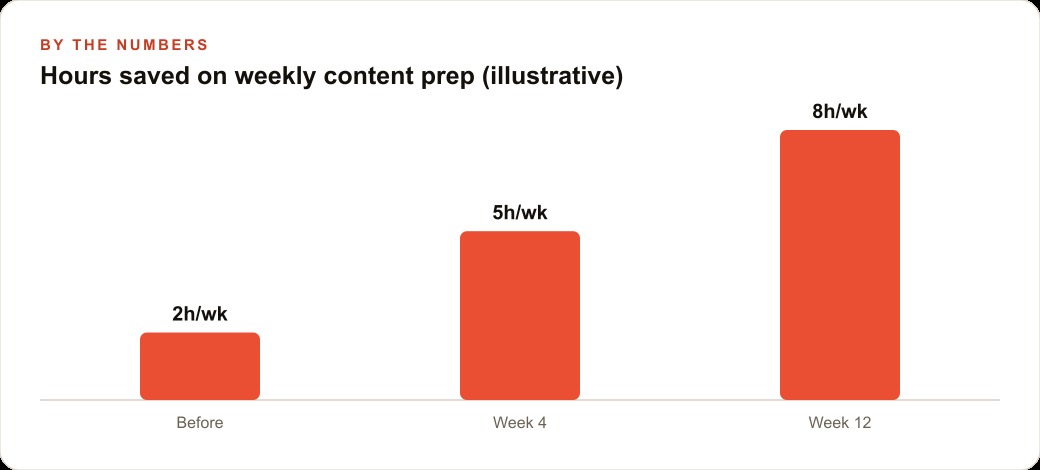
Time per listing before the new workflow: four to five hours across writing and design tasks. Time per listing after three weeks: under forty-five minutes across the same tasks. The agency was running eight listings a month. The time saving per listing was roughly three and a half to four hours. Across a full month, that was twenty-eight to thirty-two hours recovered from a team whose time was genuinely scarce.
The cost of the workflow change was twenty dollars per month for a ChatGPT Plus subscription. The GPT Image tool was free. The ROI on twenty dollars per month, calculated against recovered staff time at any reasonable hourly rate, is not a close comparison.
Where the recovered time went
The thirty-plus hours recovered per month did not disappear into overhead. They went to the activities that the team was already understaffed on. More prospecting calls in the hours when leads were most likely to pick up. More follow-up on inquiries that had gone quiet. More time at showings to build the kind of relationship that turns a showing into an offer. More capacity to take on a ninth and tenth listing in months where demand was there.
This is the part of the productivity conversation that often gets reduced to a cost-saving story when it is actually an opportunity story. The agency was not looking to reduce headcount. It was looking to do more with the team it had, and doing more meant recovering the hours that were going to repetitive structured writing work and redirecting them to the relationship-driven activities that only humans can do and that directly drive revenue.
Madhuranjan Kumar's consistent framing on this: the value of AI tools in a service business is rarely in doing the same amount of work with fewer people. It is in doing more of the work that actually grows the business with the same people. When a skilled agent spends thirty hours a month writing listing descriptions and those hours drop to seven, the other twenty-three hours are not a cost reduction. They are capacity that was previously locked inside a writing queue.
What this workflow requires to work well
The workflow described above does not run without two things that take deliberate effort to build. The first is a clear output specification. GPT 5.5's messy-input-to-structured-output strength activates fully only when the output structure is defined explicitly in the prompt. Dropping in raw notes without specifying the format, length, required sections, and intended audience of each deliverable produces something imprecise. The quality of the specification drives the quality of the output directly, and writing a good specification is a skill that improves with each listing until it becomes automatic.
The second is the discipline to edit rather than accept. The model's first draft is structurally strong but always contains details that only the listing agent knows: the specific thing about the kitchen that photographs beautifully but does not come through in the notes, the neighborhood detail that matters to buyers at this price point, the angle on the outdoor space that previous listings in the area have used successfully. Those are not things the model can supply from a voice memo. They are the professional judgment that makes the listing competitive, and the editing pass is where that judgment gets applied. The model does the construction. The agent does the craft.
The businesses that benefit most from this shift treat GPT 5.5 and the image tool as operational infrastructure to be designed deliberately rather than as features to explore casually. The design work is not heavy: identify the task, write a clear specification of the output you need, run it several times on real inputs, edit until the workflow is reliable, and then use it consistently. That discipline, applied to the right task, is what produces the thirty-hour monthly time recovery the real estate agency found rather than a marginal gain that does not justify the effort.
Madhuranjan Kumar's observation on adoption timing: the businesses doing this now, building the prompts and the editing habits while it still takes some deliberate setup, will have a significant workflow advantage over the ones waiting for it to become completely turnkey. The advantage is not in access to the tools. Access is already equal. It is in accumulated workflow knowledge that competitors cannot shortcut.
That is exactly what we do at AI DOERS. Book a private 30-minute call with Madhuranjan Kumar and we will map the fastest path to it for your specific business.
Book your call →
Madhuranjan Kumar
Madhuranjan Kumar brings 20 years of performance-marketing experience and has managed over $200 million in Facebook ad spend for brands across the United States and beyond. His expertise spans the full modern marketing stack: Meta, Google Ads, TikTok, email automation, CRM, and the websites that hold it together. At AI DOERS he turns that track record into lead-generation systems for businesses across every industry.