
Vibe Coding Reached the Phone: Building Real Mobile Apps From a Prompt
Mobile was always the hard part of building software, but a new wave of tools turns a couple of prompts into a working app you can share to a real phone. Here is how it works and how I would use it.

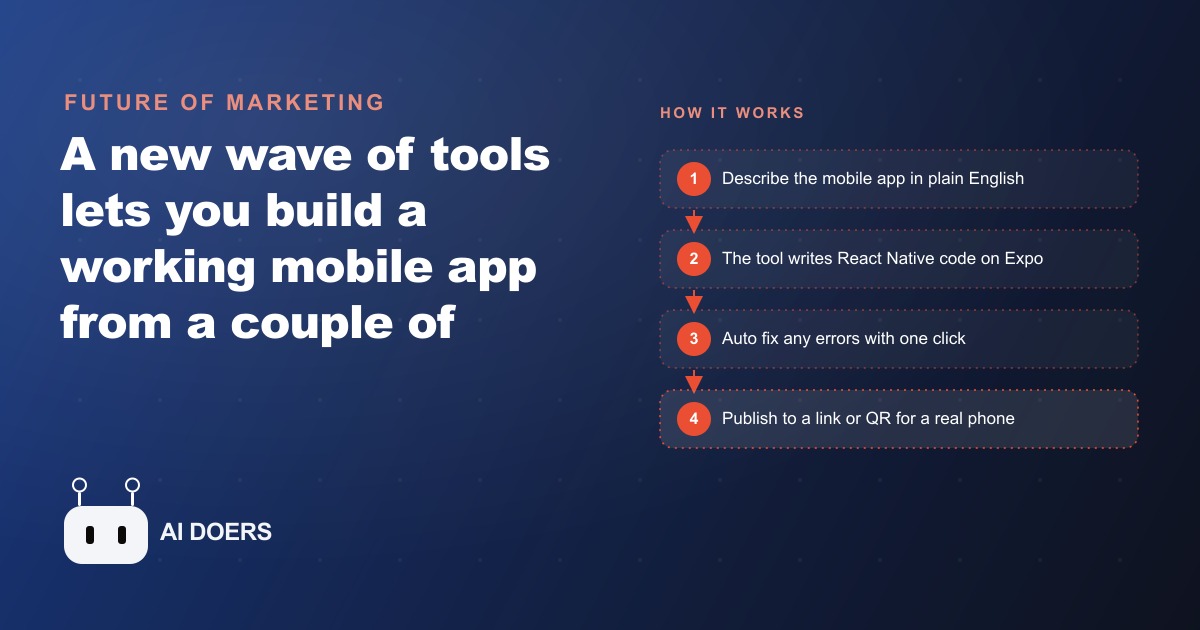
For years the build-it-with-AI wave washed over everything except the one place software actually lives. You could describe a landing page, a dashboard, or an internal tool in plain English and watch it appear. But the apps people open every single day, the ones with real retention, the ones that earn their keep, live on the phone, and the phone was the last wall standing. Now that wall is coming down. In one demo I keep thinking about, a calorie tracker with a camera was built in roughly two prompts, and it correctly identified a banana, returned its calories, and saved the photo to a history, all running on a real phone. I am Madhuranjan Kumar, and I want to make an argument in this essay: the fall of the mobile wall does not hand the future to the biggest AI companies. It hands it to the people who care most deeply about one specific problem for one specific audience.
Why mobile was the hard wall, and why that matters
To understand why this shift is a big deal, you have to appreciate why mobile resisted the wave for so long. Web apps are relatively forgiving. Mobile is not. Native APIs, device emulators, the whole ritual of app store publishing, all of it added friction that the web never had. Generating a real mobile app by hand would mean writing platform specific code, wrangling build tools, and fighting a review process, which is exactly the kind of thing that kept small ideas from ever becoming apps. So the tools took the easy road and stayed on the web, and an entire category of software that people would genuinely use every day went unbuilt because the cost of building it was absurd for anything small.
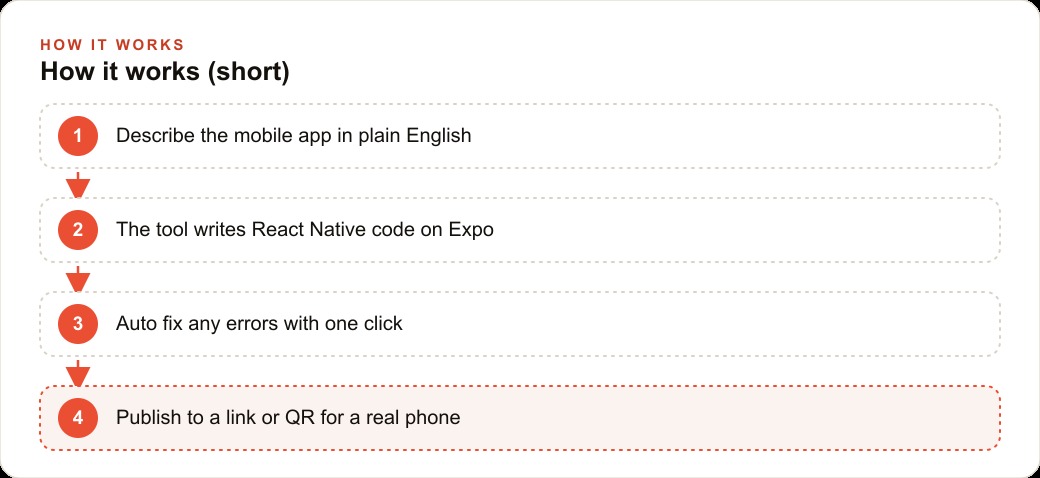
The new tools clear that wall by standing on years of groundwork that someone else already did. They generate mobile apps on React Native and Expo, and the reason this works at all is that Expo spent years wrapping the messy native world so cleanly that a large share of the top app store apps already run on it, somewhere around a third by common estimates. That foundation is the quiet hero of this whole story. Without it, no prompt in the world could produce a working phone app, because the hard native problems would still be sitting there unsolved. With it, a tool can write the React Native code for you, show you the whole codebase, let you edit it or hand it to a developer if you want, and mostly just let you keep prompting. Errors get caught automatically, and often a single word like fix is enough to clear them.
The part that genuinely feels like magic
Two capabilities push this from impressive to transformative, and both remove a wall that used to stop non-technical builders cold. The first is sharing without the app store. A publish feature bundles your app behind a link or a QR code, so anyone can open it on a real phone through a companion app, no TestFlight, no store review, no waiting. For getting a working version into someone's hands to test, the entire apparatus that used to take days or weeks simply evaporates. The second is AI features without the setup tax. You can build an app that analyzes a photo of food, or does any number of intelligent things, with no API keys and no developer account to configure, because the hosting and the model wiring are handled for you. When you are ready for a serious release, a one click path to the actual app store is there too, but the point is that you can go a very long way before you ever need it.
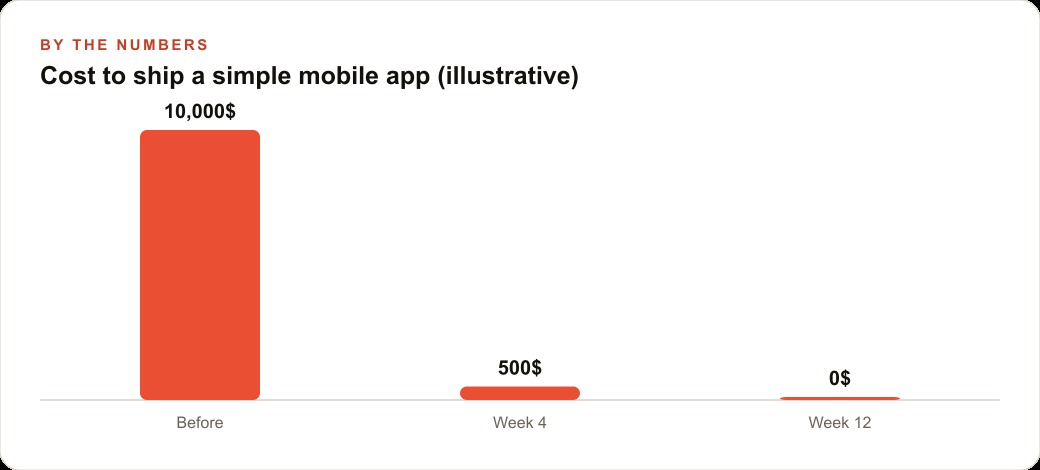
I want to be honest about what this does and does not mean, because the hype around tools like this always overshoots. It does not mean everyone will suddenly ship polished, profitable apps. It means the cost of trying collapsed. Paying native developers ten or twenty thousand dollars just to release a simple app priced most small ideas out of existence, and that price tag is precisely why so much unique, specific, personal software never got built. When the cost of a first working version drops toward nothing, the ideas that were never worth the old price suddenly become worth building. That is the real change, and it is a change in who gets to build, not just in how fast.
The throughline: personal and niche beats big and generic
This is where I want to plant my flag. The most inspiring builds coming out of these tools are not ambitious platforms. They are tiny personal apps that solve one real problem for one person, and some of them turn into a business once other people want the same thing. A calorie tracker built exactly the way its maker eats. A tracker for one specific diet. A custom tool for one small community. This looks unambitious next to the giant general purpose AI apps, and that appearance is exactly the opportunity, because the giants cannot serve every specific need. They are built to be broad, and broad is generic, and generic leaves enormous room underneath it for something personal.
The edge, in other words, is no longer access to the technology. Everyone can reach the same powerful models now. The same intelligence that sits inside a huge app is available to a solo builder on a mobile tool. So access is not the moat. The moat is caring enough about a specific problem, for a specific audience, to build something that fits them precisely. This is why the advice to be your own number one user matters so much. Founders who build mobile apps for themselves catch the small details that separate good from great, the tiny frictions a distant product team would never notice, because they feel those frictions every day. Deep care about the problem is the edge, and it is an edge the big generic apps structurally cannot copy, because they are trying to serve everyone and therefore serving no one perfectly.
What this looks like for a mobile app studio
Let me ground the argument in an unnamed mobile app studio, because it shows how the economics flip. Picture a small studio that used to spend weeks and serious money, often ten thousand dollars or more, turning each client concept into a native build before anyone could even see it working. That cost shaped everything. It meant long quotes, long waits, and a business that could only take on a few projects at a time, each one a heavy bet.
Now the studio prototypes a client's app in an afternoon. It describes the screens in plain English, lets the tool generate the React Native code on Expo, and auto fixes the errors as they appear. Instead of a long quote followed by a long silence, the client sees a working version on their own phone the same day through a shared link. Consider what that does to the numbers. If a first working prototype used to cost the studio, say, ten thousand dollars in developer time and now costs a few hundred, the studio can afford to prototype ten ideas for the price of what one used to cost. That is not a small efficiency gain. It changes the business model entirely.
The studio can now validate a niche app, a personalized tracker for a specific diet or a custom chat tool for one community, before committing to a full build, because shipping a testable version is cheap. It can clone a proven app pattern and then add the one personal twist that makes it worth paying for, since the big generic apps cannot serve every specific need. And crucially, the studio still earns its keep on the things the tools do not do: taste, polish, deployment, and the native details that separate a good app from a great one. What changes is throughput. The same small team can now serve many more clients and explore many more ideas, and the studio needs a way to fill that expanded capacity, which is where a steady flow of leads from Facebook and Instagram ad campaigns and Google Ads turns the newfound speed into actual revenue rather than idle capacity.
The wall that is left is judgment, and that is good news
I do not want to pretend the hard part is gone. It has moved. When the cost of building drops to nearly nothing, building is no longer the constraint, and something else becomes the bottleneck: judgment. Choosing a problem actually worth solving. Being your own number one user so you catch the details that make an app feel personal instead of generic. Deciding which features earn their place and which just add noise. This is exactly where most people stall after the first exciting demo, because the demo makes the building look like the whole job, and it never was. The building was just the wall in front of the real work.
That is why I find this shift optimistic rather than threatening. When building was expensive, judgment was wasted, because you could not afford to act on most of your ideas anyway. Now that building is cheap, judgment finally pays. The person who deeply understands a niche, who feels a specific frustration every day, who knows exactly which detail would make a tool click for their audience, can now act on that understanding for a few hundred dollars instead of tens of thousands. The technology equalized. The differentiator is now insight and care, which are the things that were always supposed to matter and were previously drowned out by the cost of code. A working app also needs a place for its users to land, sign up, and be followed up with, so the studio's own CRM and website stack becomes part of the product story rather than an afterthought.
Where this leaves you
So here is the essay's argument in one line: mobile was the last wall, the wall fell because of years of native groundwork that the new tools stand on, and the winners will not be the biggest companies but the people who care most about a specific problem for a specific audience. If you have ever wanted a mobile app and stalled at the cost, that reason is gone. The practical path is small and honest. Sign up for one of these mobile focused tools and build something tiny for yourself first, a single screen app that solves one real annoyance in your day. Write a clear prompt, let it generate the app, use the one click fix when errors appear, publish it to a link or QR code, and open it on your own phone to feel how fast the loop has become. Only once the small version works should you add features, wire in AI, or think about the app store.
A motivated person can get a working app on their phone in an afternoon now, which would have sounded impossible a few years ago. Think about what that collapse in cost really unlocks. Every niche too small for a ten thousand dollar build, every personal frustration that was never worth a developer's time, every specific audience the giant apps ignore, all of it is suddenly addressable by the one person who understands it best. The market did not shrink for the big players. It exploded for the small ones. What remains scarce is the judgment to pick the right problem and the care to build it personally. You can walk that path yourself, and I would encourage anyone with a specific frustration and a specific audience to try. Or you can bring in someone who has built and shipped many mobile apps and have the whole thing handed over working and ready for real users, so your energy goes into the insight and the care, which are the only parts the tools cannot do for you.
That is exactly what we do at AI DOERS. Book a private 30-minute call with Madhuranjan Kumar and we will map the fastest path to it for your specific business.
Book your call →
Madhuranjan Kumar
Madhuranjan Kumar brings 20 years of performance-marketing experience and has managed over $200 million in Facebook ad spend for brands across the United States and beyond. His expertise spans the full modern marketing stack: Meta, Google Ads, TikTok, email automation, CRM, and the websites that hold it together. At AI DOERS he turns that track record into lead-generation systems for businesses across every industry.