
How to Build and Sell Real Products with Claude Code
Learn to build automations, websites, and apps with one AI coding assistant, then turn that skill into paid work for local businesses.

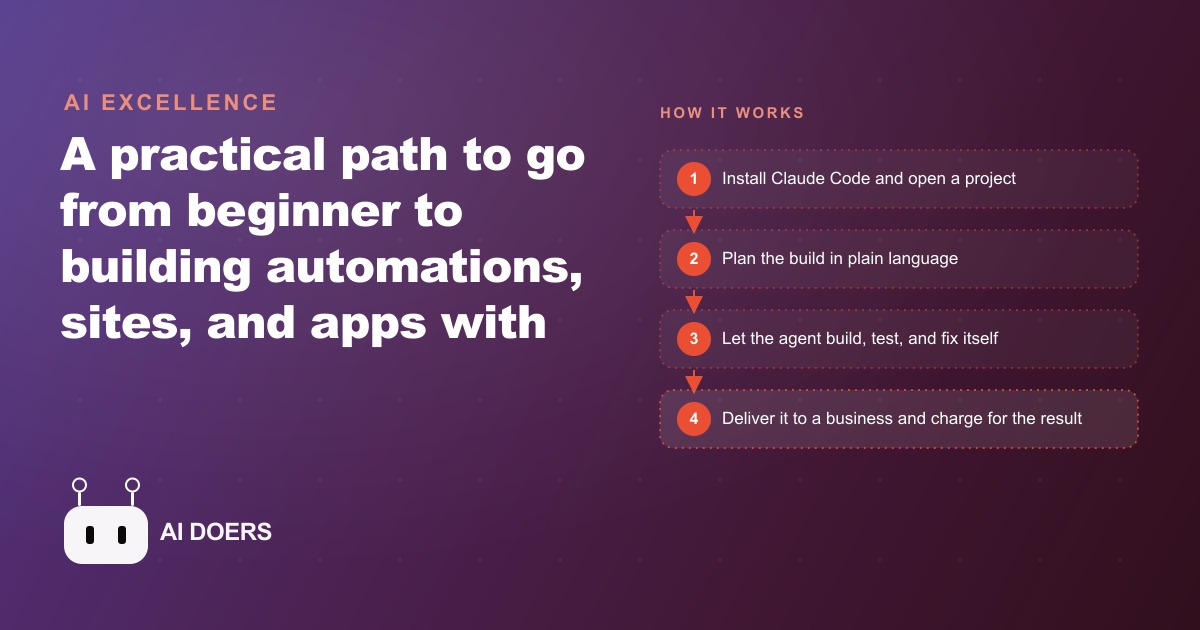
A year ago, building a working web app meant hiring someone or spending months learning to code. This week I watched a person with no programming background stand up a booking site, an automated reply system, and a small assistant in a single afternoon, and then get paid for it. I am Madhuranjan Kumar, and I want to argue something that sounds like hype but is not: the hard part of building software has quietly disappeared, and almost nobody has updated their plans to match.
The barrier everyone still assumes is there
For twenty years the wall in front of building software was the code itself. You either learned it, which took years, or you paid someone who had. That wall shaped who got to build things. It meant the person who understood a business problem best, the owner who lived the pain every day, almost never got to build the fix. They had to describe it to a developer, wait, describe it again, and hope the result matched what was in their head. Most of the time it did not, and the gap between what was asked for and what got built is where budgets and patience went to die.
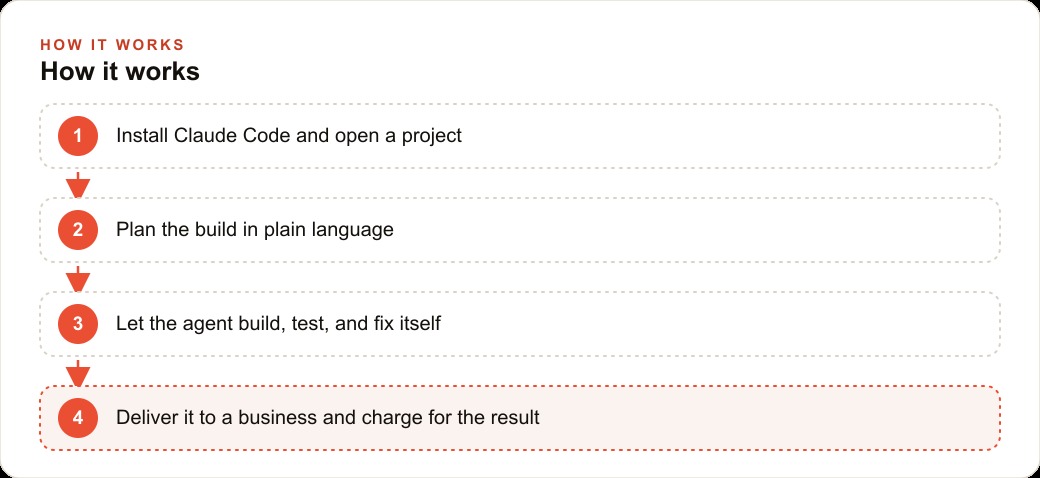
Claude Code, and tools like it, remove that translation layer. You open a project folder, describe what you want in plain English, and an agent writes and runs the code, tests its own work, takes screenshots of what it built, finds its own mistakes, and corrects them. You are not memorizing syntax. You are describing an outcome and steering. The agent is the developer, and it never gets tired of your revisions. When something looks wrong, you say so in ordinary words, and it goes back and fixes it, then shows you the result again.
I want to be careful here, because this is where people either overclaim or dismiss. The claim is not that you can build anything with no thought. The claim is narrower and more useful: the mechanical skill that used to gate everything, writing correct code, is now cheap and abundant. What is left over, once that skill is no longer scarce, is the thing that was always the real work anyway. And that is the part almost nobody has adjusted to, because they are still treating the coding as the mountain when the coding has become a foothill.
The scarce skill is judgment, not syntax
If the machine can execute, then the value moves to the person who knows what should be executed. That is judgment, and it does not come from a computer science degree. It comes from understanding a problem deeply, explaining it clearly, and knowing exactly where a process leaks time or money. A developer who cannot see the business problem builds the wrong thing beautifully. A person who sees the problem clearly and can describe it now builds the right thing, and the agent handles the beautiful part.
This reframes what you are actually selling when you build with an agent. You are half consultant, half builder. The consultant half listens to a business, finds the one broken process that costs them the most, and scopes a fix small enough to finish. The builder half turns that scope into a working product with the agent doing the typing. Most people are decent at one half and terrible at the other. The people who win pair them, and neither half requires you to have shipped software before.
There is a set of features inside the tool that make this practical rather than magical, and they are worth naming because they change how confident you can be. Planning mode lets you and the agent agree on an approach before a single line is written, which keeps a project cheap to change while it is still just words. Skills let you save the tasks you repeat as reusable recipes, so the tenth booking site comes out cleaner than the first. Sub agents let you hand a research job to a separate context, sometimes on a cheaper model, so you are not paying premium rates for a lookup. Hooks can ping you when a long job finishes, and you can even schedule tasks to run on their own. None of these are impressive on their own. Together they turn a clever demo into a repeatable way of working, which is what separates a one-off trick from an actual service you can sell over and over.
A portrait studio, and the evenings it gets back
Let me make this concrete, because arguments about capability are cheap and worked examples are not. Picture a portrait photography studio run by one owner and a part-time assistant. The photography is excellent. The business around it leaks everywhere. Inquiries sit in an inbox for two or three days before anyone replies, and by then the lead has booked someone faster. Client galleries get delivered through clunky links that confuse people. The owner spends three or four evenings a week writing the same booking emails, the same deposit reminders, the same day-before checklists, by hand, from scratch. None of that is photography. All of it is the reason the owner is exhausted.
Here is how I would set this up. First, a clean booking website where clients pick a session type and a time slot, dressed in the studio's own photos and brand colors, not a generic template. Second, an automation that watches the inbox and sends a warm, on-brand reply within a few minutes of any new inquiry, so no lead goes cold while the owner is behind a camera. Third, a skill that drafts the studio's standard emails, the deposit reminder, the day-before checklist, the gallery-delivery note, so the owner reviews and sends instead of writing from a blank page. Fourth, a small morning assistant that summarizes new bookings and flags anything that needs a human decision, so the day starts with a briefing instead of a scramble.
For me, that is a few days of work with the agent doing the heavy lifting. For the studio it is the difference between losing half its leads and booking them. And notice where the pieces connect to the wider marketing picture, because this is where a build stops being a toy and starts compounding. The fast auto-reply only matters if leads are actually arriving, which is why I would pair it with Facebook and Instagram ad campaigns that send local parents and couples straight to the new booking page. The booking site itself, written with real copy about the studio's style and neighborhoods, quietly feeds SEO and organic search so some of those leads arrive for free over time. And every inquiry, whether paid or organic, lands in the CRM and website stack where the follow-up automation handles the next five touches without the owner lifting a finger. One build, wired into the channels that were already running, instead of a clever tool sitting in a corner.
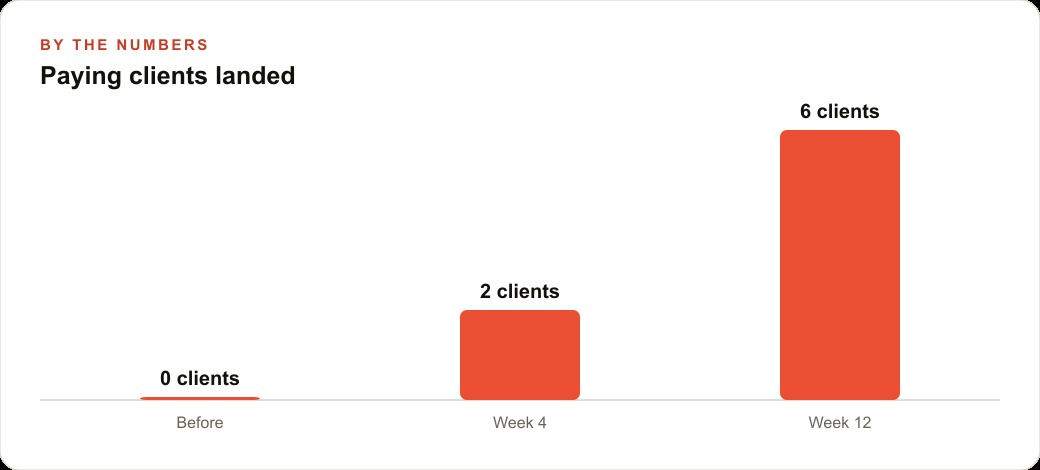
I would charge for the build, then offer a small monthly fee to keep it tuned as the studio's needs shift. That single finished project becomes something more valuable than the fee: it becomes proof. It is the case study I show the next studio, and the wedding photographer after that, and the family portrait business after that. Nothing sells a build like a build that already worked, and the second sale is always easier than the first because you are no longer asking anyone to imagine the result.
Selling without sounding like a salesperson
The building side is now the easy half. The selling side is where most people freeze, and I think it is because they imagine selling has to feel like pressure. It does not, and pretending otherwise is exactly what makes it fail.
The approach that actually works is almost embarrassingly plain. You reach out to a business and say the true thing: you have been building a lot with these tools, you are a little obsessed with them, and you noticed a specific gap in how they handle something. Not a pitch about revolutionizing their business. A specific observation about one broken process, and an offer to fix that one thing. You do not overpromise. You solve a single real pain, charge a fair price, and let the working result bring the next client. People can feel the difference between someone reciting a script and someone who genuinely understands their problem, and that difference is most of the sale.
Trust here comes from sounding like a human who understands their problem, not a vendor running a script. The businesses most open to this are the ones an agency would never bother with, or would charge too much to serve: salons that need an online booking flow, accounting firms that need a client intake automation, gyms that need a lead follow-up system, real estate agents who need a listing site. Every local business has a process that is slow, manual, or missing. Most of them cannot hire an agency to fix it. If you can listen and stand up a simple working solution, you are worth paying, and you are competing against nobody, because the businesses that could serve them are chasing bigger accounts.
The honest truth is that the barrier is no longer coding ability. It is the willingness to start, and the discipline to scope a project you can actually finish. Overpromising and disappearing is how you burn the trust that makes this work. Solving one real thing well is how you build a referral engine that fills your calendar without you ever running a cold campaign.
The objection worth answering
The reasonable objection to all of this is quality. If anyone can describe an app and get one built, does the result actually hold up in front of real customers? The honest answer is that it holds up exactly as well as your judgment about scope and your willingness to review. The agent will happily build something sloppy if you ask for something vague, and it will build something clean if you plan the shape first and check its work. That is why the discipline matters more than the tool. A booking flow that loses a customer's date, an auto-reply that goes out with the wrong name, a gallery link that breaks on a phone, these are not coding failures, they are review failures, and they are entirely inside your control. The people who ship embarrassing work with these tools are the ones who skipped the planning and never looked at the output. The people who ship work a client is proud of are the ones who treated the agent like a fast junior developer who needs a clear brief and a careful check. Neither of those habits requires you to know how to code. Both of them require you to care about the result, which, if you are charging money for it, you already do.
Where to actually begin
If any of this lands, the worst thing you can do is treat it as inspiration and go read three more articles. The whole point is that the doing is now within reach. So begin by building exactly one real thing.
Install the tool, open a fresh project folder, and pick a single concrete build. A booking site. An inquiry auto-reply. Something with a clear finish line. Describe it in plain language, use planning mode so you and the agent agree on the shape before it writes code, and then let it build, test, and fix itself while you steer. Save the parts you repeat as skills. Lean on a sub agent for research. Add a hook so you get pinged when a long job finishes and you can step away. Keep the scope small enough that you actually reach the end, because a finished small thing teaches you more than an abandoned ambitious one.
Once you have one polished, finished build, find a business with that exact problem and reach out honestly. Tell them what you have been building, name the gap you noticed, and offer to close it. Scope something small enough that you will actually deliver it, deliver it well, and let it become the proof that wins the next client. That is the entire loop, and it does not get more complicated as you scale. It just gets more valuable, because every finished project makes the next sale easier.
You can learn this and run the loop yourself by following those steps, and I would genuinely encourage anyone to try, because the first finished build changes how you see every business around you. Suddenly every slow inbox and every manual spreadsheet looks like a project you could take on. Or, if you would rather have the first system delivered for you and the pieces explained so you can run with it, that is exactly the kind of work I do. Either way, the wall came down. The only question left is whether you build something on the other side of it.
That is exactly what we do at AI DOERS. Book a private 30-minute call with Madhuranjan Kumar and we will map the fastest path to it for your specific business.
Book your call →
Madhuranjan Kumar
Madhuranjan Kumar brings 20 years of performance-marketing experience and has managed over $200 million in Facebook ad spend for brands across the United States and beyond. His expertise spans the full modern marketing stack: Meta, Google Ads, TikTok, email automation, CRM, and the websites that hold it together. At AI DOERS he turns that track record into lead-generation systems for businesses across every industry.