
Anthropic Files for an IPO and Opus 4.8 Reasons More Like a Human
Anthropic reportedly filed to go public at nearly a trillion dollars, which forces the first real look at AI economics, while Opus 4.8 leaped on a fluid-reasoning benchmark. Here is what it means for a business and how a law firm can use it.
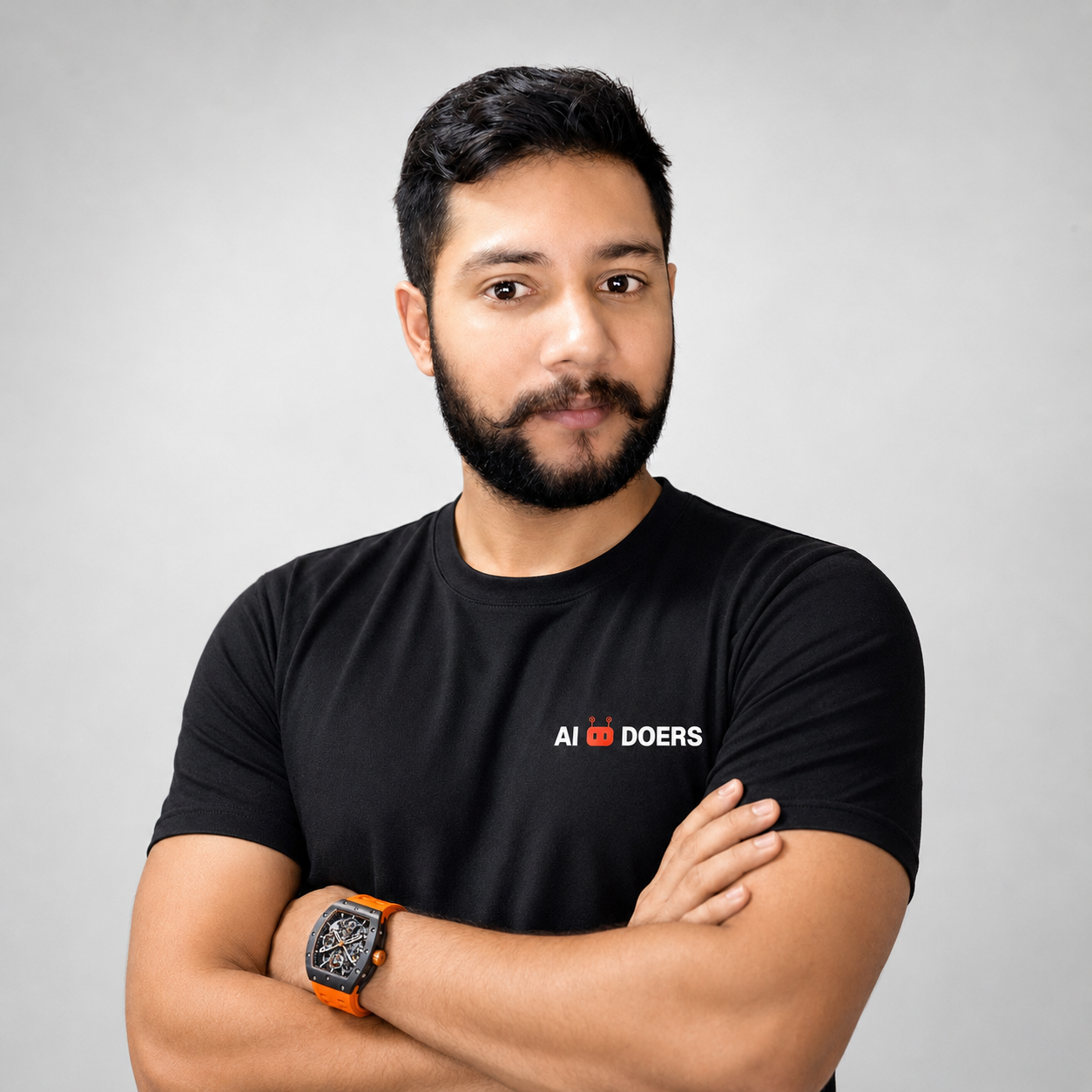
Anthropic reportedly filed confidentially to go public at a valuation near $965 billion, and whether that number holds or not, the filing itself forces a change in how the industry talks about these companies. I am Madhuranjan Kumar, and the seven things worth noting from this week go well beyond the IPO headline to include a technical leap from Claude that matters operationally, a coding benchmark that still shows OpenAI's edge, and a rumored GPT release that is already circulating in internal codebases.
1. An IPO filing forces real numbers into a story that has run on projections
Going public requires disclosure of actual revenue growth, inference costs, gross margins, and customer concentration. The AI boom has run largely on announced valuations and headline deals. An S-1 filing changes that, because investors need audited numbers, not growth narratives, and those numbers will be the first public look at whether the economics of frontier AI development are sustainable or are being subsidized by venture capital hoping for a different future.
The disclosure that matters most is gross margin on inference, the cost of actually running the model against the price users pay. If the margins are healthy, the business model is sound and the valuation can be justified. If inference costs are running close to or above revenue, the company is growing into a cost structure that requires either a dramatic efficiency improvement or indefinite subsidy. Neither of those is necessarily fatal, but they represent very different investment theses and very different levels of pricing power over time.
2. Whoever reaches public markets first between Anthropic and OpenAI gets a structural pricing advantage
The company that goes public first sets the market's reference frame for what this category is worth, what the metrics should look like, and what multiple is appropriate. The second company files into a comparison that already exists. That is not always a disadvantage, but it is a different position, and in a market where both companies are competing for enterprise customers who evaluate their vendors' financial stability, the publicly traded company with audited accounts has a structural credibility advantage over the privately held one.
The parallel to two authors racing to publish on the same topic is useful. The book that arrives first shapes the reader's frame. The second book either validates the first or corrects it, but it is always measured against it. Filing first is an advantage worth moving toward deliberately.
3. Opus 4.8 jumping on ARC-AGI 3 matters because of what that benchmark actually tests
Most AI benchmarks test knowledge recall: they ask questions whose answers exist in the training data, and a smart model that has seen enough examples can do well without actually reasoning through anything. ARC-AGI 3 is designed to prevent that. It presents novel visual puzzles that the model has never seen, cannot have memorized, and must solve through genuine pattern generalization. Most current models score around 0.5 percent or below on this test. Claude Opus 4.8 reached 1.5 percent.
That number sounds small and the gap it represents is large. A tripling of performance on a benchmark specifically designed to test fluid, novel reasoning is a meaningful signal about where Anthropic's research direction is taking the model. The contamination-free nature of the test means the improvement cannot be attributed to better memorization or closer alignment with the test's structure. It reflects genuine capability growth on the hardest kind of problem.
4. Object-level reasoning on novel problems is the capability gap that has always separated AI from human judgment
Observers watching the ARC-AGI 3 session noted that Opus 4.8 appeared to model objects and reason across longer horizons rather than treating the display as raw pixel data. That distinction matters. Pixel-level pattern matching is what earlier computer vision systems do. Object-level reasoning is what humans do when they look at a scene and understand what the elements are, how they relate, and what rules govern their interaction.
The ultra code effort mode, which runs at the highest thinking depth the model supports, produced a complete economic simulation from sparse instructions: a city with jobs, taxes, welfare, supply and demand, hiring and firing, all running across 42 turns of the benchmark. That is not task completion. That is system modeling, and it is the kind of reasoning that makes the model genuinely useful for complex analysis rather than just sophisticated text generation.
For a business owner considering whether to invest in building workflows around current AI capabilities, this improvement trajectory is the relevant signal. The gap between what these models can do now and what they will be able to do in 18 months is larger than most people assume, and the investment in understanding how to use them today compounds into much greater leverage tomorrow.
5. Deep SWE keeps GPT-5.5 ahead on coding even as reasoning benchmarks shift
On the contamination-free Deep SWE coding benchmark, which uses original software engineering problems that cannot have leaked into training data, OpenAI's GPT-5.5 high and extra-high effort settings outscored Opus 4.8. This is the relevant comparison for anyone making decisions about which model to use for software development tasks, because contamination-free benchmarks reflect what the model can actually solve rather than what it has seen close variants of.
The practical implication is straightforward: for pure coding work, GPT-5.5 at high effort is currently the strongest available option. For reasoning over novel problems, complex analysis, and multi-step judgment tasks, Opus 4.8 has made a meaningful leap. Matching the tool to the task type continues to matter, and the rotation between models based on task category is a better strategy than committing to a single tool for everything.
6. The rumored GPT-5.6 will not matter until you can test it on your own work
References to GPT-5.6 and a Pro variant are appearing in OpenAI Codex commit logs, suggesting a release is being prepared. Rumors describe a significant jump in coding capability and a context window near 1.5 million tokens, possibly large enough to warrant calling it GPT-6 rather than a minor increment. A live stream has been teased with no confirmed date.
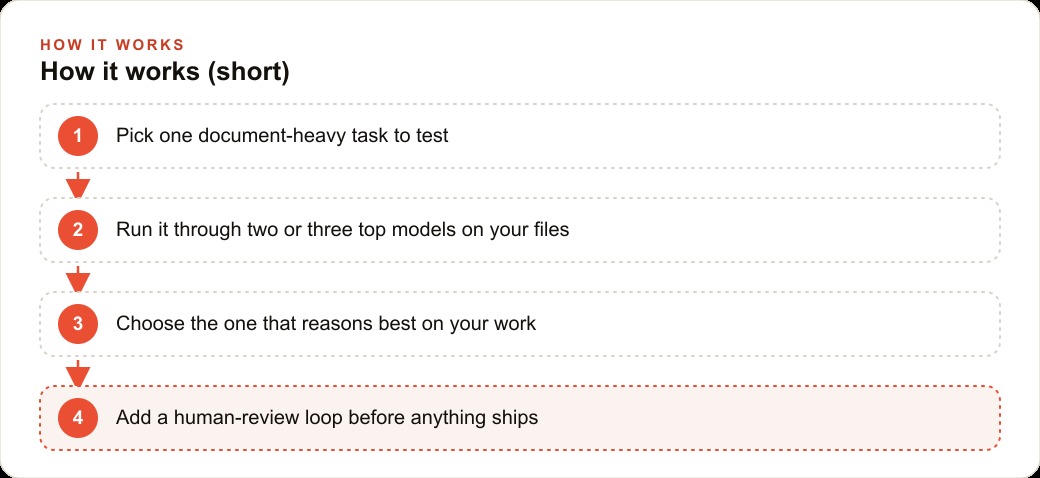
The rule for evaluating any model release is the same regardless of the hype: wait until you can run your own tasks through it, because the benchmark that matters is performance on the specific work your business does. A model that tops every public leaderboard but produces worse output on your document types or your analysis questions is not the right choice for you. Test first, adopt second.
The same skepticism applies to the IPO valuation: the number that matters is the one in the S-1, not the one in the announcement. And the same discipline applies to AI capability claims: the thing that matters is whether it improves the work you actually do, on the data you actually have, in the time you actually have to run it. Everything else is noise until you can verify it yourself.
For businesses building workflows on any of these platforms, the practical response to this week is to confirm which models your current setups reference, verify that none of them are scheduled for retirement, and plan a comparison session for any newly released model against a real task before making it the default for anything production-critical. ## What the IPO filing means for the businesses building on these platforms
The practical implication for businesses that have built workflows on Anthropic's tools is worth addressing directly. An IPO does not immediately change anything about the product or the pricing. What it changes is the information available about the company's financial health and the pressures it is operating under.
A publicly traded Anthropic will have quarterly reporting obligations, which means revenue trends, margin pressures, and major customer changes will be visible to anyone who reads the filings. For a business that has built significant infrastructure on Claude and the Anthropic API, that visibility is useful. It is much easier to evaluate whether a critical vendor is in good financial health when their financials are audited and public than when they are entirely private.
The pricing question is the one most businesses care about immediately. Will an IPO lead to price increases as the company tries to improve margins for public market investors? Or will the competitive pressure from OpenAI and Google keep prices in check regardless of ownership structure? The historical pattern in enterprise software is that companies that go public in competitive markets tend to price carefully rather than aggressively, because customers have alternatives and churn is expensive. The AI model market is competitive enough that aggressive pricing would accelerate migration to alternatives. The more likely outcome is modest, gradual pricing changes rather than dramatic increases.
The model capability trajectory is what matters most for businesses making long-term workflow investments. Opus 4.8's jump on ARC-AGI 3 is a signal that the research direction at Anthropic is producing results on the specific capability dimension, novel reasoning, that makes AI most useful for complex business analysis. A model that can reason about genuinely new problems rather than just match patterns from training is one that gets more useful over time as the problems you bring to it become more varied. That trajectory is worth more to a business than any single benchmark score, and it is the trajectory that justifies continued investment in building context and workflows on the platform.
For businesses using multiple AI platforms, the IPO is also a reminder to maintain that diversification. Building workflows that are portable between providers, using standard formats and avoiding deep proprietary lock-in where possible, keeps your options open regardless of how the financial situation at any individual lab develops. The businesses that build on open standards and maintain the ability to migrate are protected from the risks that come with any single vendor's financial trajectory, whether that vendor goes public, gets acquired, or changes its product direction.
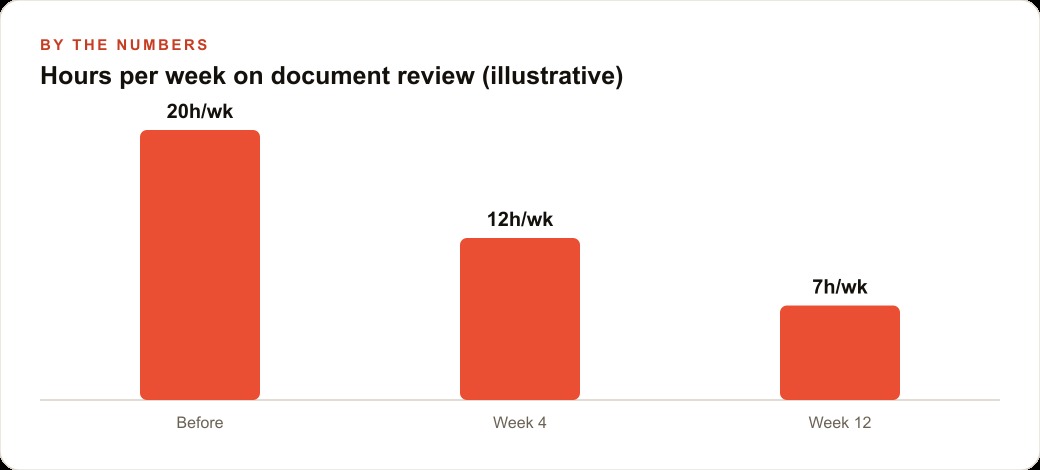
The worked example for this period is a law firm that evaluated the IPO news specifically in terms of vendor risk management. They had built three internal AI workflows using Claude through the API: contract review, research summarization, and client intake analysis. In response to the IPO news, they spent two hours documenting each workflow's dependence on specific Claude features and evaluating whether those features had equivalents in OpenAI or Google models. For two of the three workflows, the answer was yes and migration was feasible within a week. For the third, the answer was no, because of a specific multi-document reasoning capability that Claude handled more reliably than alternatives. That specific dependency became a known risk to monitor rather than an undocumented assumption. The documentation exercise took two hours and produced a clear vendor risk profile that informed future workflow development decisions.
The most important habit for businesses navigating this period of platform transitions is maintaining a current awareness of where each model is improving and which task types it now handles reliably. A model that was not useful for your specific use case six months ago may have crossed the threshold since. Running a systematic re-evaluation every quarter, applying a sample of your real tasks to the latest model versions, takes a few hours and occasionally produces a significant workflow improvement. The businesses that treat model selection as a periodic review rather than a one-time setup decision consistently find better tool-to-task matches and avoid both over-investing in expensive models for simple work and under-utilizing improved models for complex work.
The practical implication of the IPO timeline for businesses making infrastructure decisions is simple: if you have been considering building a workflow or application that depends heavily on Anthropic's models, the timing is reasonable. A company preparing for a public offering is unlikely to make pricing or product changes that would alienate its developer base in the six to twelve months before the filing. Post-IPO, the competitive landscape and public market pressure will both be clearer, and the pricing environment will be easier to forecast. For a business with significant API spend, monitoring the IPO coverage for any signals about pricing strategy in the roadshow materials is worth a few minutes of reading. The information that usually stays private during a company's private phase becomes visible during the IPO process.
That is exactly what we do at AI DOERS. Book a private 30-minute call with Madhuranjan Kumar and we will map the fastest path to it for your specific business.
Book your call →
Madhuranjan Kumar
Madhuranjan Kumar brings 20 years of performance-marketing experience and has managed over $200 million in Facebook ad spend for brands across the United States and beyond. His expertise spans the full modern marketing stack: Meta, Google Ads, TikTok, email automation, CRM, and the websites that hold it together. At AI DOERS he turns that track record into lead-generation systems for businesses across every industry.