
AI's iPhone Moment Is Real, But Skills Are a House on Sand
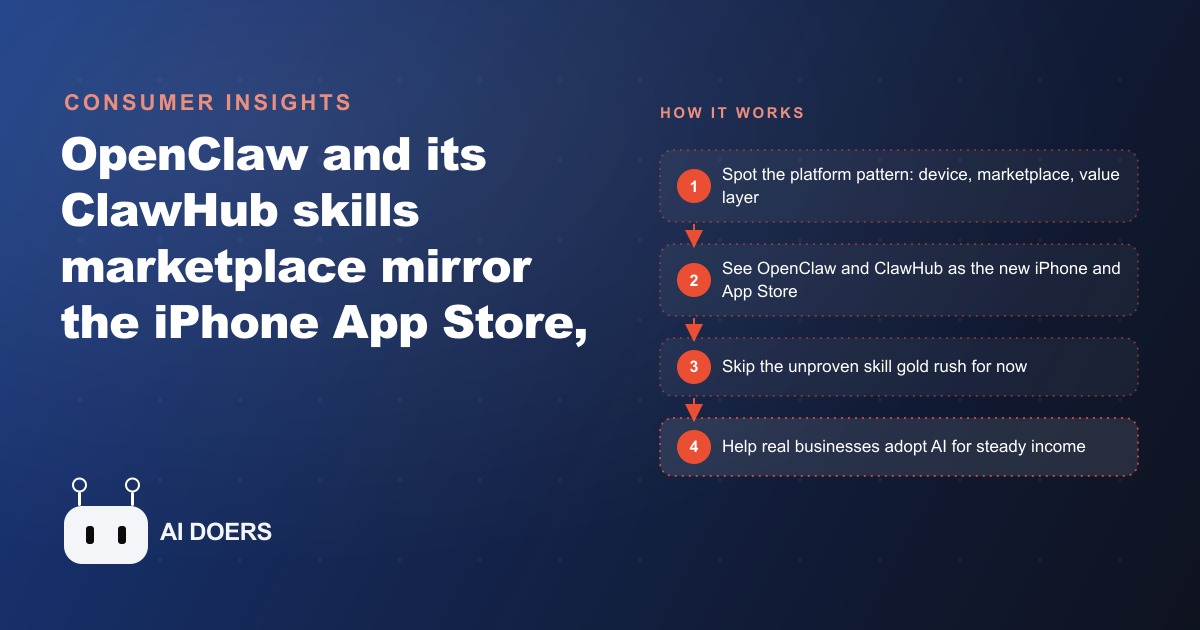
OpenClaw and its ClawHub skills marketplace structurally mirror the iPhone and App Store. But the more reliable money is not in building skills, it is in helping the millions of businesses that still need to understand and adopt AI.

I am Madhuranjan Kumar, and this is the story of a pest control company that almost bet its future on the wrong side of the biggest platform shift in a generation. The owner runs a mid sized operation. Around fourteen technicians, a couple of office staff answering phones, and a customer base of roughly three thousand homes and small businesses across a metro region. It is not a tech company. It sprays for termites, clears out rodents, and sets up quarterly service plans. Yet the decision this owner faced over one quarter is the exact decision millions of business people are quietly facing right now, and most of them are getting it wrong.
The story starts with a video the owner watched late one night about AI having its iPhone moment. That phrase stuck. And once you understand what it really means, you cannot unsee it.
The platform pattern the owner almost missed
Think back to 2007. The iPhone looked like a nice phone with a touchscreen. What it actually was, nobody fully grasped at the time, was the seed of an entire economy. Over the next fifteen years that single device grew into something worth well over a trillion dollars in economic activity, and it created more wealthy people than most gold rushes in history ever did. Here is the part that mattered to our pest control owner. Apple itself did not capture most of that money. The company paid out somewhere around 550 billion dollars to the outside people who built apps that ran on top of the iPhone. The builders on the platform, not the maker of the device, walked away with the largest share.
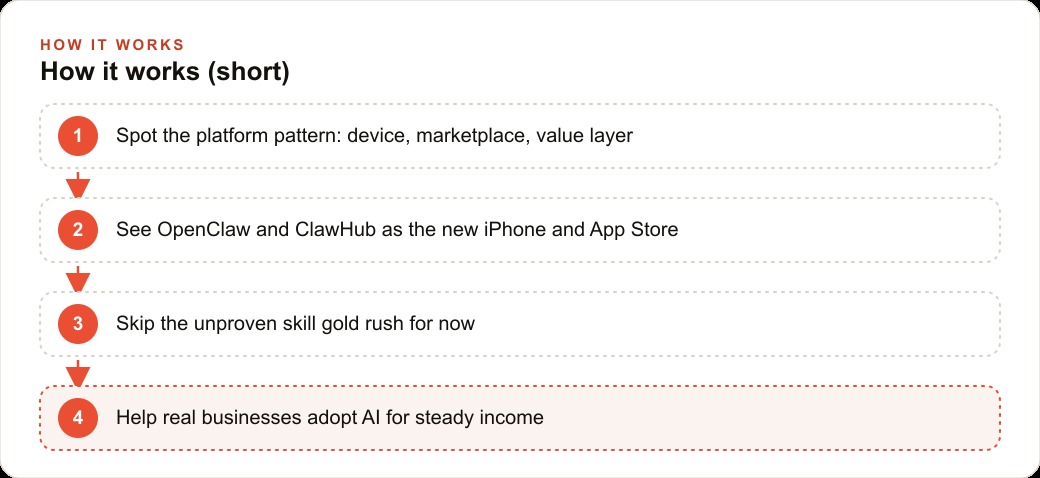
Every platform, once you learn to see it, has the same three layers. At the bottom sits the device, the thing you hold or run. In the middle sits the marketplace, the place where creators reach users and get distribution. And at the top sits the value layer, where people build the actual tools and services that everyone ends up paying for. The biggest earnings almost always land in that top value layer. It is the oldest lesson of the gold rush, retold. The people who reliably got rich were rarely the miners. They were the ones selling picks, shovels, tents, and train tickets to the miners.
The owner recognized the pattern instantly, and then made the connection that this breakdown was pointing at. A new tool had appeared that fit this shape almost perfectly. It is a personal AI assistant that lives directly on your computer and genuinely does tasks rather than just chatting. It clears inboxes, books travel, manages calendars, and can even write code. It hooks into your messaging apps and learns how you work over time. In roughly a single month it collected around seventy thousand stars from developers, which in that world is the sound of a rocket leaving the pad. Sitting on top of it was a marketplace, the equivalent of the App Store, already holding more than three thousand shareable skills. And a skill, it turned out, was nothing more exotic than a plain English instruction file that teaches the assistant to do one new job. The simplest ones need no code at all.
So the device layer had arrived. The marketplace layer had arrived. And the value layer, the place where the App Store minted its fortunes, was wide open. The owner did the natural thing that almost everyone does at this moment. He thought, I should build a skill. Get in early. Plant a flag on the new App Store before it fills up.
That instinct is exactly what this story is a warning about.
Why the skills marketplace was the wrong bet
I sat down with the owner and walked through why building a skill for that marketplace, right now, is a house built on sand rather than a house built on rock. Not because the marketplace is fake. It is genuinely the most exciting thing to happen in software in years. It is a house on sand because of when and who.
Consider the pace. The whole skills ecosystem moves so fast that a project which takes a newcomer two weeks to build carefully can be leapfrogged twenty times over by the most aggressive builders in that same window. Now consider who those aggressive builders are. They are cracked engineers, the kind who ship polished code at two in the morning and iterate all night with AI agents doing half the typing. If you are a pest control owner, or frankly almost any non technical business person, you are not going to out sprint a full time engineer at their own game. The few skills that truly break out and make real money will overwhelmingly come from that crowd. Everyone else is buying a lottery ticket and calling it a business plan.
Then consider the money itself. There is no proven, repeatable revenue model in that marketplace yet. People are sharing skills far more than they are reliably selling them. And there is the quiet dealbreaker that a business owner feels in his gut even before he can name it. Security and compliance are not there. You cannot hand a young, fast moving assistant platform your real customer list, your payment details, and your scheduling system and sleep soundly. For a company that holds three thousand customers' addresses and card information, that is not a small footnote. That is the whole ballgame.
So we drew the contrast plainly. Building a skill is a coding contest against people who code for a living. Helping a real business adopt AI is a relationship and a process. One of those is a race the owner would probably lose. The other is a game the owner is already built to win, because he has spent twenty years earning trust and running a real operation with real customers. The value layer of this new platform, it turns out, is not only the people writing the clever skill files. It is also the people who help millions of ordinary businesses actually use any of this. That second group is enormous, it is underserved, and almost nobody is racing to serve it because it is less glamorous than shipping code.
That reframing is the turning point of the whole story. The owner stopped asking how do I build the next hit skill, and started asking how do I become the person a business trusts to bring AI inside.
Chapter one: turning missed calls into booked jobs
We did not start with anything futuristic. We started with the bleeding wound every service business has and rarely measures. Missed calls.
The owner's front office answered phones during business hours, but a real chunk of inbound calls came in after five, on weekends, and during the summer surge when every phone line was jammed. A quick audit showed the company was missing somewhere near forty to fifty calls a week that never got called back. At an average job value of around 300 dollars, and a booking rate that would have been perfectly reasonable if anyone had answered, that was thousands of dollars leaking out the side of the business every single week.
So the first build was narrow and boring and enormously profitable. We set up an assistant, connected to the company's actual schedule and customer list, to catch every missed call, respond by text within a minute, answer the common questions about pricing and service windows, and offer the caller a booking slot straight from the real calendar. It sent follow up reminders for seasonal treatments. It fired a review request after every completed job. And it produced a plain summary each morning of which routes ran long and which appointments were still unconfirmed.
None of this required a skills marketplace. None of it required winning a coding contest. It required knowing how a pest control company actually runs and wiring a capable assistant into that reality. Within the first month the recovered bookings alone paid for the entire engagement several times over, and the owner had something more valuable than the money. He had proof. He had watched an AI system make him cash in a way he could point to on a spreadsheet.
To make the recovered calls turn into steady growth rather than a one time bump, we tied the front end to the rest of the machine. The same booking flow fed a proper CRM and website stack so no lead sat in a text thread and got forgotten, and the review requests quietly strengthened the company's SEO and organic search presence as fresh five star reviews stacked up on the map listing month after month.
Chapter two: earning the trust that compounds
Here is the move most people miss, and it is the emotional core of this story. The first project was never really about the missed calls. It was about earning the kind of trust that compounds.
Once the owner had watched an assistant handle his phones without dropping the ball, a door opened that no cold pitch could ever open. He started asking bigger questions. Could this help schedule the technicians more tightly and cut down the wasted drive time between jobs. Could it draft the seasonal marketing that always got pushed to next month and never happened. Could it help him finally run the paid campaigns he kept meaning to try. That last question turned into a modest test with Facebook and Instagram ad campaigns for the summer termite season, and later a search campaign on Google Ads for the emergency rodent calls that come with real urgency and real budget attached. Each new project was smaller and easier to sell than the last, because trust had already been paid for in full during chapter one.
This is precisely how the App Store fortunes actually got made, and it is worth staring at. The people who got wealthy were not only the ones who shipped the very first clever app in 2008. A huge share were people who already had a business, a customer base, and a trusted relationship, and who were simply standing in the right place, ready to move, the moment the platform matured underneath them. They did not win by being fastest at code. They won by being closest to the customer when the wave arrived.
The person helping this pest control company was building exactly that position. Not a skill that might pop off and probably would not. A relationship, a track record, and a deep understanding of how one real business breathes. That is an asset that appreciates while the skills marketplace churns and resets every few weeks.
Charging per employee when the platform matures
Now project forward to the part of the story that has not fully happened yet, but is coming fast. When these personal assistants mature to the point where they are safe and reliable enough for a business to run day to day, somebody has to actually set them up. Somebody has to sit with each employee, study how that person works, configure an assistant around their real tasks, and train them until they trust it. That work does not do itself, and a fast moving skill file on a marketplace does not do it either. A human who understands both the tool and the business does it.
That is where the model shifts from one time projects to something far larger. Picture the pest control company again. Fourteen technicians, plus office staff. When the platform is ready, the trusted operator who already saved the owner from those missed calls is the obvious choice to roll out a personal assistant to every single person on the team. Studying how each technician plans a route, configuring an assistant that handles their notes, their scheduling, their customer follow ups, and training them to actually use it, is worth a few thousand dollars per employee. Run the arithmetic on even a modest figure. At three thousand dollars per person across a team of sixteen, that is a single engagement worth roughly forty eight thousand dollars, from one company the operator already knows inside out. And that is before any ongoing retainer to keep the systems tuned as they improve.
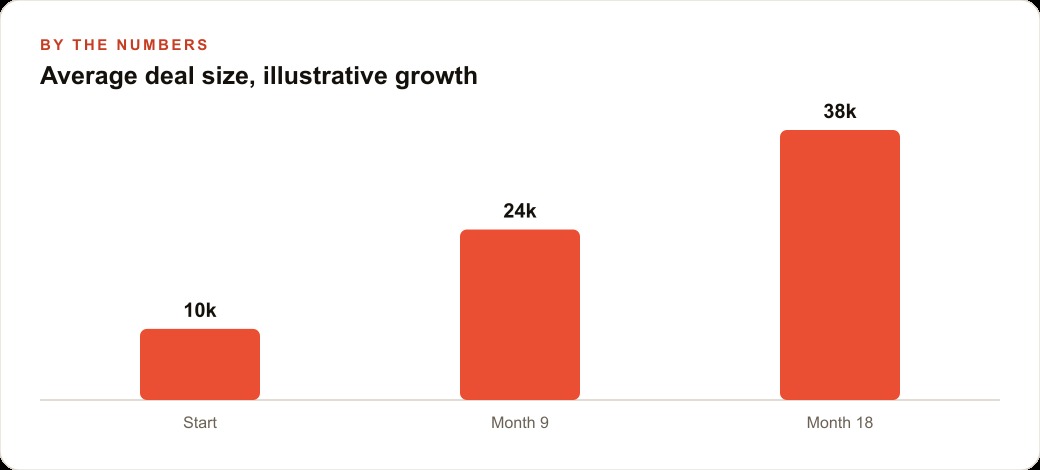
Now widen the lens. This is not one pest control company. It is tens of millions of businesses that do not understand AI, cannot evaluate it, and will pay real money for someone to figure out what is useful, build it, and train their teams. That demand is already showing up in the numbers of the people doing this work. In one community of AI service providers, the average deal size grew by something on the order of 380 percent across eighteen months, climbing from small starter projects into serious contracts. The trajectory is not subtle. As the tools get better and businesses feel the pressure to adopt, the value of being the trusted person who deploys them rises with it.
Where the owner stands when the dust settles
So where did our pest control owner land after that pivotal quarter. He never built a skill for the marketplace. He watched the gold rush from the shore instead of drowning in it. And in exchange he got a phone system that no longer leaks money, a set of marketing channels that finally run, a team that is slowly getting comfortable with AI in small safe steps, and a working relationship with someone who understands his business well enough to deploy the bigger systems the moment they are ready.
The lesson of the iPhone moment is not that you should race to build on the shiny new platform the day it appears. The lesson is subtler and far more durable. The money in a platform economy flows to the value layer, and the value layer is not only the clever builders sprinting against each other on the marketplace. It is also the people who sit closest to real customers, hold their trust, and are positioned to move when the technology finally matures. Chasing unproven skills right now puts you in a sprint against full time engineers on ground that shifts under your feet every week. Building the adoption business puts the compounding firmly on your side, one trusted relationship at a time.
If you run a business, the same fork is in front of you, whether you have noticed it or not. The exciting path is a house on sand. The steadier path is a house on rock. And the surprising truth is that the steadier one is also, in all likelihood, the far richer one over the years that matter. Start with one real problem, solve it in a way you can point to, earn the trust that follows, and stand in the right place for what is coming next. That is the whole strategy, and it is available to almost anyone willing to be patient while everyone else chases the shine.
That is exactly what we do at AI DOERS. Book a private 30-minute call with Madhuranjan Kumar and we will map the fastest path to it for your specific business.
Book your call →
Madhuranjan Kumar
Madhuranjan Kumar brings 20 years of performance-marketing experience and has managed over $200 million in Facebook ad spend for brands across the United States and beyond. His expertise spans the full modern marketing stack: Meta, Google Ads, TikTok, email automation, CRM, and the websites that hold it together. At AI DOERS he turns that track record into lead-generation systems for businesses across every industry.