
The AI Developments That Matter Most for Your Dental Practice Right Now
A two-week sprint of AI releases, from reasoning video models to AI embedded in YouTube Shorts and Chrome, creates concrete tools for dental practices to improve patient education, staff training, and local discoverability.
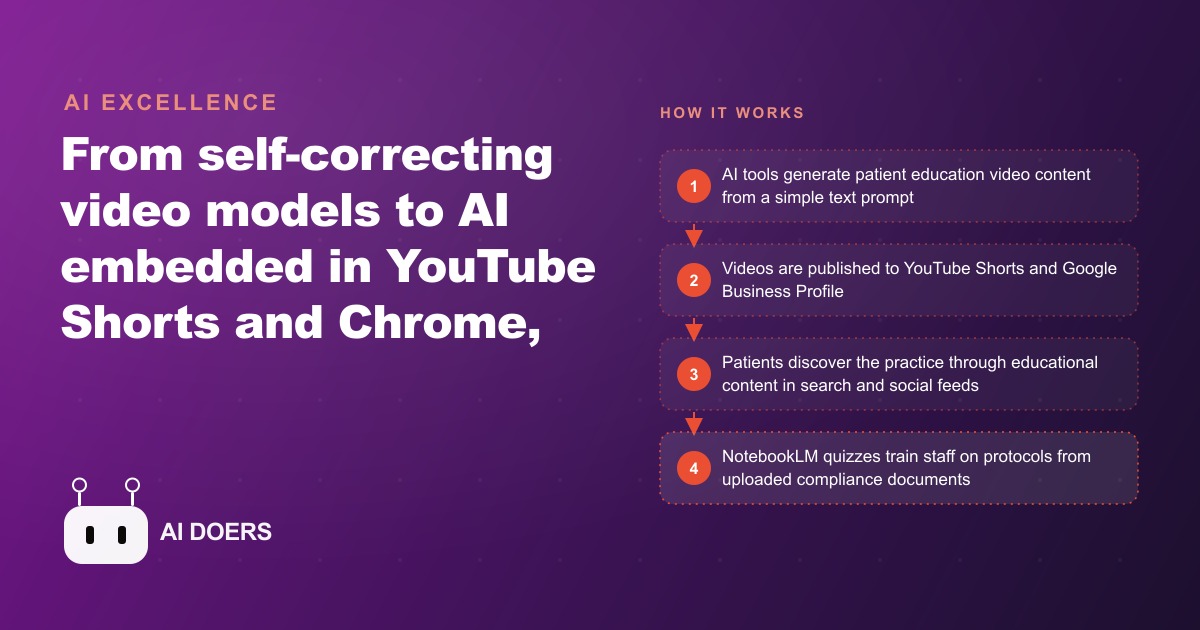
Twenty-nine AI stories broke this week, and I am going to tell you that twenty-six of them have no bearing on what a dental practice, a legal office, or a home services company does on Monday morning. That is not cynicism. That is the honest result of filtering AI news through one question: can a local business owner use this in the next thirty days without a developer, a special API key, or a budget increase? By that test, three announcements survive. Two of them are completely free.
This is the problem with most AI roundups. They cover everything with equal weight, which means the one paragraph that actually matters for your business sits between a chip architecture announcement and a wearable display that will not ship until next year. I, Madhuranjan Kumar, have spent time this week going through twenty-nine stories that circulated across AI newsletters and picking out the three that a local business can act on before the next cycle starts. The rest gets a single paragraph at the end of this article, which is exactly how much attention it deserves from you right now.
Twenty-nine headlines, three actual opportunities
The week's AI news splits cleanly into two buckets. The first bucket is genuine platform-level change: new features rolling out to tools that hundreds of millions of people already use, available now, at no additional cost. The second bucket is research milestones, hardware releases, AR hardware that costs a fortune and requires a gesture-based wristband to operate, and reasoning models that are technically impressive but inaccessible without a developer and a paid API account. For a business owner, the first bucket is this quarter's work. The second bucket is next year's reading, at the earliest.
Three announcements landed in the first bucket this week. YouTube is rolling out VO3 AI video generation directly inside the Shorts creation workflow at no additional cost. Google's NotebookLM added interactive quiz and flashcard generation from uploaded documents. ChatGPT introduced a feature called Pulse that sends a personalized morning briefing to your phone based on your conversation history and stated interests. That is the list. Everything else either requires capital you do not have, a technical setup you cannot justify, or is simply not available to the public yet.
The reason I am starting with this framing rather than burying it in paragraph seven is that the biggest risk for a business owner reading AI news right now is spending time researching and trialing tools that are either not real yet or not designed for non-technical users. There is a meaningful opportunity cost to chasing the wrong announcements. The three tools above are real, accessible, and solve problems that cost local businesses money every week.
Free VO3 in YouTube Shorts is the one you should act on first
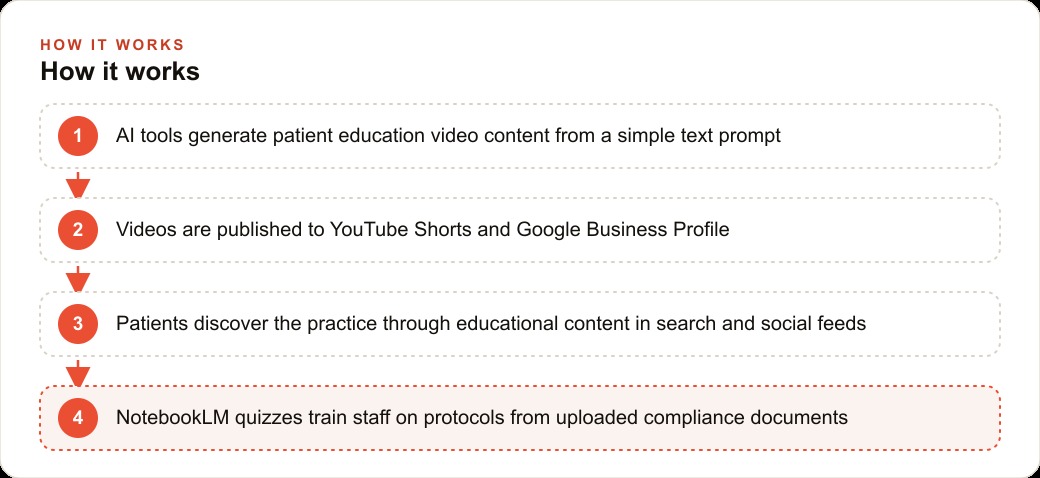
YouTube is embedding Google's VO3 video generation model directly into the Shorts creation interface. Creators in the US, UK, Canada, Australia, and New Zealand get access to this at no additional charge. That means if you have a YouTube account, you can generate polished AI video inside the upload workflow without paying for a separate generation platform, without signing up for a new service, and without hiring a videographer.
For a dental practice, this changes the economics of patient education content completely. A single video explaining what to expect during a root canal procedure, narrated in a clear voice and animated to show a simple cross-section of a tooth, has historically required a professional production team to create. The cost for even a short educational video runs from a few hundred to a few thousand dollars depending on the market and the vendor. That cost structure kept most practices from building a real library of patient education content. They might produce one or two videos a year for a specific campaign, but not the ten to fifteen clips that would actually move the needle on treatment acceptance and new patient acquisition.
The VO3 integration removes that cost floor. A practice can now generate a video on a topic patients ask about every week, post it to YouTube Shorts, and repeat that process weekly without touching a production budget. Topics that perform well in this format include what to expect during a first adult cleaning, how dental implants work, why early gum disease treatment matters, how to choose the right electric toothbrush for sensitive gums, and what a cavity looks like before it becomes a root canal. Each of those is a search query real people make on YouTube every day, and a short informative video attached to a local dental practice's channel creates a discovery pathway that compounds over time.
For a practice spending money on Facebook and Instagram ads to acquire new patients, this kind of organic short-form video content is a meaningful complement. The paid ad creates the first impression; the educational content library builds the trust that converts a curious searcher into a booked appointment. It works for any local service business that has questions customers ask before they decide to hire: the HVAC company explaining what a seasonal tune-up involves, the law office explaining what a free consultation covers, the auto shop explaining how to know when your brakes actually need replacing. This breakdown format works anywhere the educational angle is honest and specific.
NotebookLM quizzes just replaced your most boring staff training task
Google's NotebookLM added the ability to generate interactive quizzes and flashcards from any document you upload. Upload a PDF or a Google Doc and the tool creates test questions from the content, which the trainee can answer independently before you review the results.
This is immediately useful for any business that has compliance training obligations or complex operational procedures that new hires need to absorb before they go live. For a dental practice, that means HIPAA compliance procedures, insurance verification protocols, infection control checklists, and new patient intake procedures. These documents exist in every practice. The problem is delivering the training efficiently: a senior team member needs to walk a new hire through the material, which takes their time away from patient work, and there is no reliable way to know how much the new hire actually retained until a mistake happens in the real workflow.
The NotebookLM approach sidesteps this. Upload the HIPAA compliance guide. Generate a quiz from it. Send the quiz to the new front-desk hire. They take it independently and submit the results. You review the score before they handle their first real patient interaction. Any question they got wrong becomes a targeted follow-up conversation rather than a full re-walkthrough of the document. The senior team member's involvement drops from ninety minutes of one-on-one time to a fifteen-minute review of the quiz results and a short conversation about the specific gaps.
The same principle applies to any operational protocol that new hires need to know: scheduling rules, billing codes, cancellation and rescheduling policies, how the practice management software handles specific edge cases. NotebookLM can generate questions from any of these documents, and the flashcard format lets a new hire study before the quiz in the same tool. The feature is free at the basic tier. A practice with frequent staff turnover or seasonal hiring will find this saves several hours of training time per new hire without reducing the quality of what the hire actually learns.
For businesses using a CRM and website stack to manage client intake and follow-up, the same document-to-quiz process can be applied to training staff on the intake workflow itself. When the process is documented clearly enough to generate a quiz from it, it is documented clearly enough that a new hire can learn it independently, which means less dependency on one senior person who holds the process knowledge entirely in their head.
ChatGPT Pulse: the morning briefing that actually pays for itself
ChatGPT Pulse delivers a personalized daily digest to your phone each morning based on your conversation history and stated interests. You tell it what topics matter to your practice, it monitors those topics, and it assembles a briefing before the workday starts.
For a practice owner, this solves a real information problem. Staying current on dental industry developments, insurance regulatory changes, local competitor activity, and new treatment research is professional overhead that never gets a dedicated slot in the schedule. Most owners manage it by scanning a few newsletters when they remember to, or by picking up information reactively from peers and vendors. The result is a patchy, inconsistent picture of what is happening in their market.
Pulse changes the information intake from passive and reactive to active and scheduled. You configure it toward dental industry news, emerging treatment options, insurance billing regulatory changes, and anything related to the specific services your practice offers. Every morning before the first appointment, the digest arrives. The owner reads it in five to ten minutes while coffee is brewing. Over time, Pulse learns from which items you engage with and which you skip, improving its calibration automatically.
The business case for this is straightforward: better market awareness leads to better strategic decisions. An owner who knows a new competitor has opened nearby in the past month can respond with a retention campaign before they see a dip in patient counts. An owner who reads a briefing on a new insurance policy change can call the billing team before patients start asking about it. Pulse does not make the decision; it ensures the decision is made with current information rather than outdated assumptions.
Pulse requires a ChatGPT Plus subscription at twenty dollars a month. For any owner already paying for it, the feature is already there. For those who are not, the breakeven on twenty dollars per month against the value of staying current on market and regulatory developments is not a difficult calculation.
A worked example: three months with all three tools at one dental practice
A dental practice runs each of these three tools alongside its existing operations for one quarter. Here is what the numbers look like in illustrative terms.
In month one, the front office uploads the HIPAA compliance guide, the insurance verification protocol, and the scheduling policy to NotebookLM and generates quizzes from each. Two new hires onboard during the month. Each spends forty minutes on the NotebookLM quizzes independently before their first day with patients, and each gets a fifteen-minute debrief with the office manager on missed questions. The previous onboarding process took ninety minutes of the office manager's time per hire for the compliance portion alone. The practice recovers roughly two hours of skilled staff time in the first month at zero cost.
In month two, the practice owner sets up ChatGPT Pulse and directs it toward dental industry news, insurance regulatory updates, and competitor activity within five miles of the office. At the end of the month, the owner has flagged three items from the morning briefings that influenced operational decisions: a change to how one insurance plan codes a preventive treatment, a competitor that opened two miles away, and a new clinical guideline from the American Dental Association on remineralization therapy. Each of those would have taken separate subscriptions and active reading time to catch. Pulse surfaced all three in the morning digest with no additional effort.
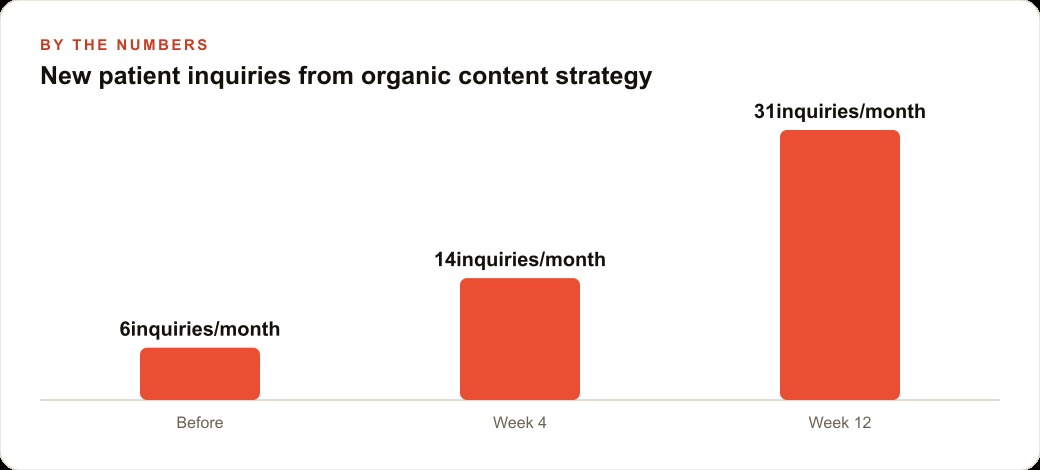
In month three, the practice begins publishing two YouTube Shorts per week using VO3 to generate patient education videos. Topics are drawn from questions patients asked in that week's appointments. By the end of the quarter, the channel has twenty-four videos and begins appearing in search results for local queries about dental procedures. The practice tracks a modest increase in organic appointment inquiries attributed to YouTube discovery. The cost of all twenty-four videos is zero.
Against traditional costs for the same outputs, the comparison is stark. Professional compliance training by an external trainer runs a few hundred dollars per session. Professional video production for a comparable library of twenty-four patient education clips runs several thousand dollars at minimum. A business information monitoring service that covers your market in meaningful depth runs anywhere from fifty to several hundred dollars a month. The three tools deliver equivalents for the cost of a ChatGPT Plus subscription, with less friction and more customization than any of the traditional alternatives.
The practice's total investment over the quarter: sixty dollars in ChatGPT Plus fees. The recovered time in staff onboarding, the market intelligence from the morning briefings, and the patient education video library are all byproducts of that sixty dollars and the few hours it took to configure each tool. None of this involves a developer, a marketing agency, or a production budget.
What to ignore until next quarter: chips, glasses, and quantum milestones
The remaining twenty-six stories from this week's news cycle include Meta's new Ray-Ban display glasses with AR overlays and a neural gesture wristband, chip architecture announcements from multiple semiconductor companies, quantum computing milestone reports, a self-correcting video generation model that is technically impressive but not publicly available to businesses yet, and platform integrations for tools that most local businesses do not use. Luma's Ray 3 self-corrects its own video output, which is a meaningful technical achievement, and Cling 2.5 is available on multiple platforms including several AI generation hubs, but both require a level of experimentation and API comfort that most practice owners do not have time for right now.
None of these are bad news. Some of them are genuinely significant technical progress. But significant technical progress and actionable business opportunity are different things, and conflating them is how a practice owner spends three hours researching tools they will not use for eighteen months. The AR glasses require a wristband and cost more than a piece of dental equipment. The semiconductor announcements are interesting to people who invest in technology companies. The quantum computing milestones are foundational science with no near-term business application.
When you are reading AI news from now on, the filter I use is this: can a non-technical business owner use this in the next thirty days without a developer or a budget increase, and does it replace something that currently costs money or takes skilled time? Applying that filter to twenty-nine headlines produces three. Those are the three worth acting on this week. The rest goes into a reading pile that you revisit in six months when the tools have matured and the business case has become clearer.
The opportunity cost of chasing every announcement is real. Your team's attention is finite. Every hour spent researching a tool that is not production-ready is an hour not spent deploying the three tools that are. The dental practice that posts two YouTube Shorts this week using the free VO3 integration is compounding its SEO and organic search presence. The one waiting to see what the self-correcting video model produces when it opens to the public is not.
This is the discipline that separates businesses that get meaningful value from AI from the ones that are perpetually evaluating and never executing. Pick the three tools that pass the filter. Use them for a quarter. Measure the result. Then revisit the reading pile and see what else has crossed the threshold into ready.
That is exactly what we do at AI DOERS. Book a private 30-minute call with Madhuranjan Kumar and we will map the fastest path to it for your specific business.
Book your call →
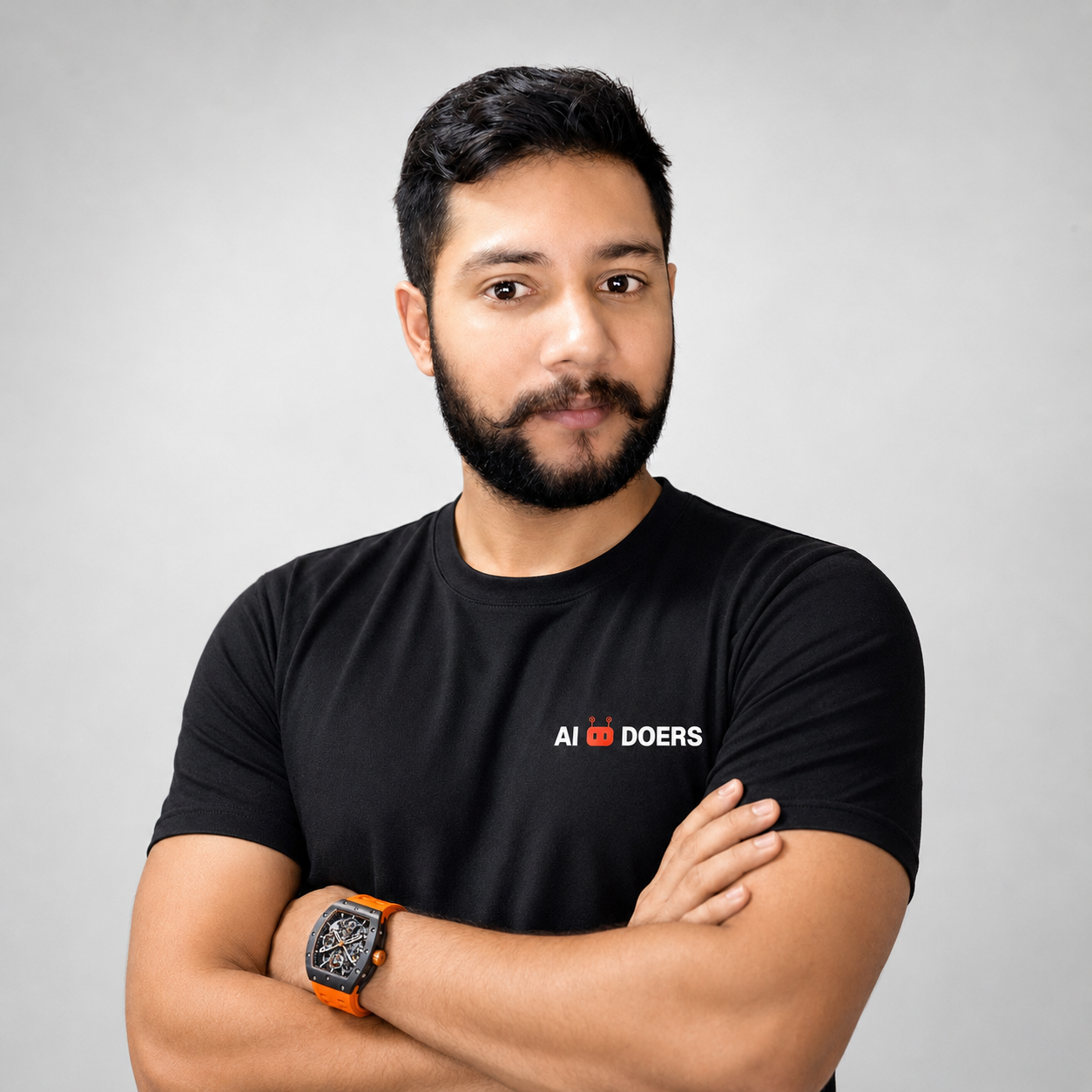
Madhuranjan Kumar
Madhuranjan Kumar brings 20 years of performance-marketing experience and has managed over $200 million in Facebook ad spend for brands across the United States and beyond. His expertise spans the full modern marketing stack: Meta, Google Ads, TikTok, email automation, CRM, and the websites that hold it together. At AI DOERS he turns that track record into lead-generation systems for businesses across every industry.