
2025 in AI: The Moments That Mattered and the 2026 Bets
2025 was defined by DeepSeek breaking the token price floor, vibe coding going mainstream, a leap in video led by Veo 3, and Google pulling ahead. I will recap what mattered and show what it means for an HVAC company in 2026.
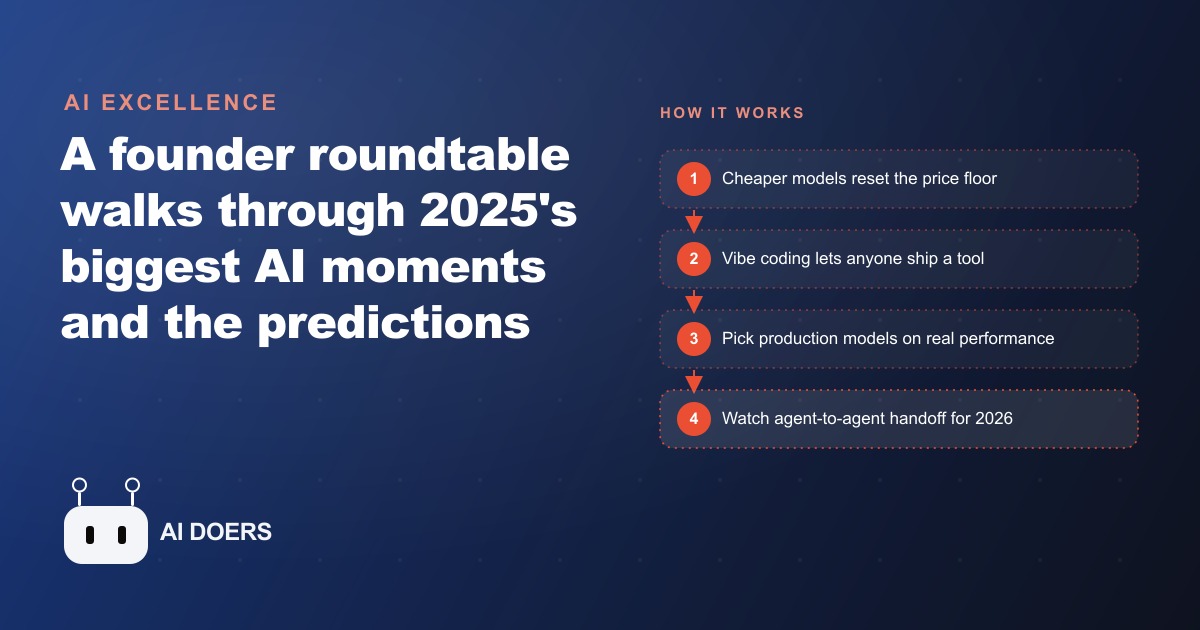
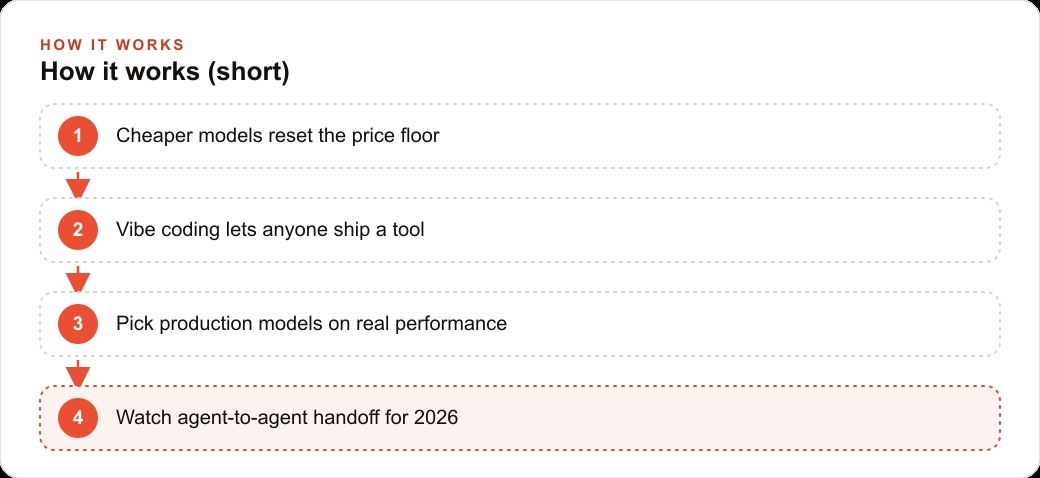
An HVAC company that ignored every AI headline in 2025 still ended the year with cheaper tools, better marketing options, and one clear risk it needed to lock down, whether the owner knew it or not. The story of that year is not really about model launches. It is about a handful of shifts that quietly changed what a service business can afford and how it should buy. This is a walkthrough of 2025 told through one HVAC company, chapter by chapter, ending with the moves that carry into 2026.
I am Madhuranjan Kumar, and I went through the full year in review so I could pull out the parts a business owner should actually care about. The throughline was speed. Models that felt cutting edge in spring were ordinary by winter, and the cost of using them fell the whole time. The point is not to follow every release, it is to notice the few moments that reset what is cheap and what is possible, and then to act on them. Here is how the year landed for one HVAC shop.
January: the price floor broke, and the shop did not notice yet
The year opened with a jolt. DeepSeek shipped an open source, state of the art model and Nvidia lost 600 billion dollars in a single day. The panel framed it as a Sputnik moment that broke the price floor the big labs had quietly maintained. For an HVAC owner, nothing visibly changed that week, but everything downstream did. When the price floor breaks, the cost of every AI feature you might run starts falling, and that is exactly what happened for the rest of the year.
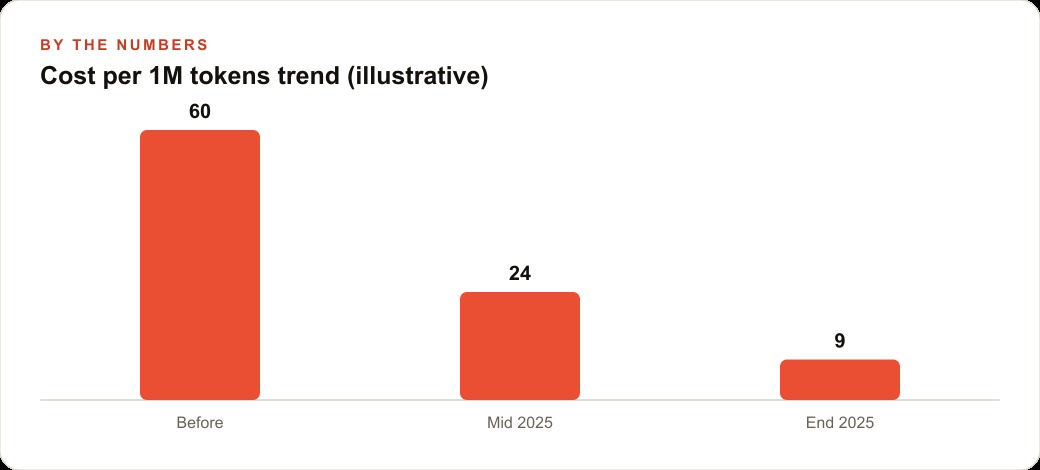
The concrete effect showed up later in the shop's phone bill, so to speak. An AI receptionist that books service calls and answers after hours questions was borderline too expensive to run year round at the start of 2025. By the shape of the illustrative cost trend, a unit of AI usage that cost around 60 early in the year fell toward 24 by midyear and closer to 9 by the end. That collapse is the single most important fact of the year for a small business, because it turns AI features from a luxury you ration into something you can run continuously.
February: vibe coding arrived, and so did the trap
February gave the year its defining term, vibe coding, and it became the biggest trend of the year. Suddenly anyone with an idea and no engineering background could ship a working demo. For the HVAC shop, this meant an office manager could stand up a quick scheduling tool over a weekend, which is genuinely useful.
But the chapter comes with a warning the shop needed to hear. Speed has a cost. People wired apps to databases without knowing an API key must stay private, and in some cases a leaked key handed an AI full access to a live production database. For an HVAC business, that database is full of customer addresses and phone numbers, so a leaked key is not a hypothetical embarrassment, it is a real breach. The lesson for the shop was simple and non negotiable: if anyone vibe codes an internal tool, the keys get locked down first. The convenience is real, and so is the trap directly beside it.
March through summer: images and video got cheap enough to do in house
March brought ChatGPT image generation and a flood of stylized portraits, the biggest step change in images the panel had seen. Later, Veo 3 delivered the year's biggest video leap, ahead of Sora 2 for many, and crucially it let you drop in your own product so it appears intact with logos and text. For the HVAC shop, this was the chapter where marketing production moved in house.
Before this, a branded video meant hiring a crew or skipping it. After it, the shop could produce a short clip showing a clean install or a seasonal tune up offer and drop its own logo and truck into the scene so it looked like its own team. That capability feeds directly into the channels that bring in jobs. Fresh, cheap creative is exactly what lifts the performance of Facebook and Instagram ad campaigns, where a strong video can lower the cost per lead noticeably, and it gives the shop something to post that also strengthens its SEO and organic search presence at no extra cost. The image and video leaps meant a small company could produce ad assets in house rather than paying a studio for every one.
August: the hype model disappointed, and taught the year's best lesson
August was supposed to be the AGI moment. GPT-5 arrived hyped to the sky and landed as merely fine for daily use. Many builders kept running production apps on GPT-4o and 4.1 instead, and OpenAI even added emotional routing after users found the newer model colder and drifted away.
This is the chapter with the most useful operating lesson of the whole year, and the HVAC shop applied it directly. Do not chase whichever model has the splashiest launch. Pick your production model on how it performs on your actual task, not on launch day headlines. For the shop, that meant testing two or three models on the real jobs, drafting quote follow ups and triaging emergency calls by urgency, and keeping whichever actually performed on its work regardless of which had the bigger press cycle. The hyped model is not always the one your users want, and the shop that learned to run a short side by side test instead of trusting headlines made better, cheaper choices for the rest of the year.
Year end: Google pulled ahead and the protocols quietly shifted
By year end Google had pulled ahead with Gemini 3, Nano Banana Pro, and Veo 3, owning the full stack from training data to its own TPU hardware and a tightly integrated studio. For a business choosing where to start testing, that made Google a sensible default to try first, not because it will always win but because owning the whole stack tends to mean steady, well integrated tools.
Two quieter shifts set up 2026. Anthropic donated MCP to the Linux Foundation, signaling it as a first step rather than a finished standard, and the panel flagged its token bloat and security rough edges on remote servers. More importantly, agent to agent protocol emerged, which lets one agent hand a task to another that works on its own and reports back. For the HVAC shop, that is the chapter to watch. Picture one agent handling the booking while another checks parts availability and a third texts the customer their appointment window, a cross agent handoff that turns a busy dispatch desk into something that runs itself between calls. Reasoning models that think, search, call tools, and think again also became the norm, with the caution that the visible thinking trace is a readable explanation, not the literal computation, so you still verify the answer.
The worked example: what the shop should actually do
Pulling the year together, here is the plan for the HVAC company, with illustrative numbers to show the shape. The cheaper token cost means the AI receptionist that once penciled out only for peak season now runs all year, so late night callers get booked instead of dumped to voicemail and lost to a competitor. Call it a handful of recovered after hours jobs a month that used to slip away. This breakdown leap means the shop produces its own branded clips for a seasonal offer without a crew, feeding its paid campaigns and its organic presence, and a stronger creative can meaningfully cut the cost per lead on those campaigns. On model choice, the shop runs a short side by side test on quote follow ups and emergency triage and keeps the winner, rather than swapping tools every time a new one trends. On security, any quickly built scheduling tool has its keys locked down before it touches the customer database, and the leads and bookings all flow into the shop's CRM and website stack so nothing falls through. And the owner keeps one eye on agent to agent workflows, because the shop that prepares for cross agent handoff will move first when it matures in 2026.
What the year told the shop about buying, not just using
Step back from the individual launches and 2025 delivered a lesson about how a small business should buy AI, which is more valuable than any single tool. The first buying rule the year taught is that falling prices reward patience on commitment and speed on adoption. Because token costs fell hard all year, locking into a long expensive contract early would have meant overpaying for something that got cheaper every quarter. The shop that stayed flexible, adopting capable free and cheap tools quickly but avoiding long lock ins, ended the year with better tools at lower cost than one that signed a big annual deal in January.
The second buying rule is that capability is now a moving target, so you buy for the task, not the brand. The GPT-5 letdown proved that the biggest name and the splashiest launch are not reliable signals of what will perform on your actual work. For an HVAC shop, the right question was never which model is the best, it was which model drafts my quote follow ups and triages my emergency calls best, and that answer only comes from a short test on real jobs. Buying on headlines would have meant paying for the hyped model while a cheaper one did the job better.
The third rule is that the platform winners give you a safer starting point but not a permanent home. Google pulling ahead by owning the full stack made it a sensible first place to test, but the year's whole story was that today's leader is next quarter's baseline. The shop that treated any single provider as a default to test rather than a marriage kept its options open, which matters when the leader changes as fast as it did in 2025.
Underneath all three rules is one attitude. The shop that won was not the one that adopted the most AI or the flashiest AI. It was the one that stayed curious, tested cheaply, committed slowly, and locked down the basics, and that attitude costs nothing but discipline.
It is also worth being clear about what an HVAC owner should not do with all of this, because the year produced as many cautionary tales as opportunities. The owner should not rip out a working phone system or booking process to chase a shiny new model that launched last week, because the switching cost is real and the new tool is rarely as different as its announcement claims. The owner should not let an enthusiastic employee wire up a quick tool touching customer data without a security check, because the vibe coding trap turned real for plenty of businesses in 2025 and a leaked key on a database of home addresses is the kind of mistake that ends in a lawyer's office. And the owner should not assume that because a capability exists, it is worth adopting today, because half the value of watching the year unfold was learning which shifts mattered and which were noise. The receptionist and the in house video were worth acting on now. The agent to agent workflows were worth watching, not building yet. Knowing the difference between act now and watch for later is the judgment that separates a shop that uses AI well from one that thrashes chasing every headline, and that judgment is the real deliverable of a year in review.
The four habits the year taught
Strip away the launches and 2025 left four durable habits. Treat every API key as a secret and never expose it in a quickly built app, no matter how small the tool feels. Pick production models on real task performance, not hype, by running a short side by side test on the work you actually do. Watch agent to agent protocol, since cross agent handoff is the next leverage point and the businesses that prepare for it will move first. And use reasoning models for genuinely hard problems while remembering the visible thinking trace is an explanation, not the literal computation, so you still verify the answer.
The pace is not slowing, so the real edge in 2026 is judgment about where to point these tools, not knowledge of every release. You can absolutely keep up yourself by testing carefully and locking down the basics. If you would rather have someone translate these shifts into a working setup for your business, the receptionist, the creative, the right models, and the security, you can do it yourself or bring in an expert, and that is the kind of build I take on for clients.
That is exactly what we do at AI DOERS. Book a private 30-minute call with Madhuranjan Kumar and we will map the fastest path to it for your specific business.
Book your call →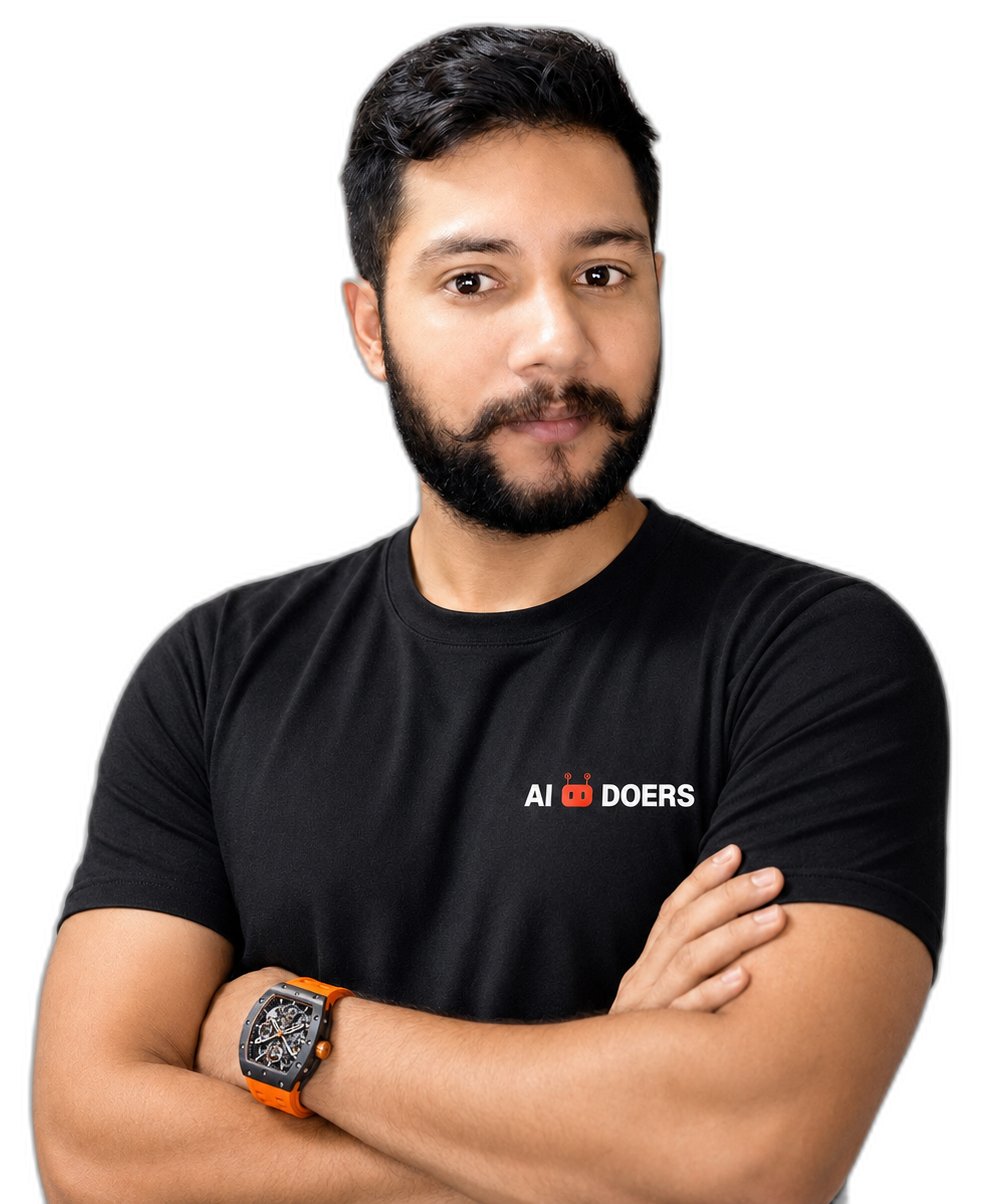
Madhuranjan Kumar
Madhuranjan Kumar brings 20 years of performance-marketing experience and has managed over $200 million in Facebook ad spend for brands across the United States and beyond. His expertise spans the full modern marketing stack: Meta, Google Ads, TikTok, email automation, CRM, and the websites that hold it together. At AI DOERS he turns that track record into lead-generation systems for businesses across every industry.