
19 AI Stories From This Week That Will Change How You Build and Market Your Business
The week's biggest AI developments, from Claude's app publishing to a landmark copyright ruling and Google's open-source CLI, are moving faster than most business coverage tracks. Here is what each one means.

Why do the AI stories that get less attention often matter more for business?
Every week, the AI news cycle focuses heavily on the biggest model releases and the most dramatic announcements. GPT-5 rumors, a Grok benchmark comparison, the latest video model. These are the headlines. But the stories that carry the most immediate business value are often in the secondary layer of the news: a new connector that links two tools you already use, a legal ruling that clarifies what AI companies can actually do, a free developer tool that opens up an automation you could not build before.
In this piece I want to work through 19 stories from a recent week's news, focusing specifically on the implications for business owners rather than for AI researchers or technology enthusiasts. Some of these stories are from the biggest AI companies. Others are from smaller players. All of them carry practical meaning for how you build, market, or operate a business in 2025.
How does Claude Artifacts change what a small business can build?
Claude Artifacts is a feature within Anthropic's Claude that generates not just text but functional HTML, CSS, and JavaScript code that can run in the browser as an interactive application. What sets Artifacts apart from simply asking an AI to write code is that the output renders inside Claude's interface, letting you test it immediately, and can be published to a shareable URL with one click.
For a plumbing company, this opens a specific and valuable capability: interactive calculators and tools on their website that previously required a developer to build. A water heater cost estimator, a drain cleaning frequency calculator, a pipe sizing guide based on the customer's home square footage, all of these are simple tools that help customers make decisions and build trust in the service provider. Before Artifacts, building these required a developer and several thousand dollars of development time. With Artifacts, a plumbing business owner can describe the calculator they want, receive working code, preview it, and publish it in an afternoon.
The same applies to any service business with a common customer question that benefits from an interactive answer rather than a static FAQ. A roofing company could build a replacement timeline estimator. An HVAC company could build a unit sizing guide. A pest control company could build a seasonal treatment schedule tool. All of these are lead generation and trust-building assets that the business previously did not have the resources to create.
What do the ChatGPT connectors mean for businesses with a lot of documents?
ChatGPT's file connectors, linking directly to Google Drive, Dropbox, and Box, eliminate one of the most tedious steps in AI-assisted document work: finding the file, downloading it, uploading it to ChatGPT, and waiting. With the connector active, you can simply say 'review the Q3 sales report in my Google Drive and identify the three accounts with the largest year-over-year revenue decline' and ChatGPT accesses the file, reads it, and answers.
For a plumbing company that manages service agreements, customer histories, and supplier contracts across a shared Drive or Dropbox, this means natural language queries against the company's actual data rather than the model's training data. 'Which customers had more than three service calls in the last 12 months? Pull from our service history folder.' This kind of query previously required a separate database tool or significant manual work.
The legal and compliance implication is worth noting: before connecting business data to any AI tool, review the tool's data retention and training policies. For most subscription-tier users, files submitted to ChatGPT are not used for training and are not retained after the session. Confirm this in the platform's current privacy settings before connecting sensitive customer or financial data.
Why does the Anthropic copyright ruling matter for businesses that use AI content?
A court ruling that Anthropic's use of copyrighted books for AI training constitutes fair use is important not because it directly affects most business owners' day-to-day operations, but because it confirms the legal direction of AI content. The ruling reduces the legal risk profile of AI-generated content and AI-assisted writing for commercial purposes.
For businesses that have been hesitant to use AI-generated marketing content, blog posts, or client documents because of uncertainty about copyright exposure, this ruling is a green light for continued use. The AI models themselves are not producing copyrighted copies of their training data. They are generating new content influenced by patterns in that data, and courts are now affirming that this distinction matters.
The more specific implication for businesses is in how they use AI to research and summarize existing published material. Asking an AI to summarize a competitor's blog post for internal analysis, to extract the key points from an industry report, or to help write content that responds to a published article is now on firmer legal ground than it was before this ruling.
What does Higgsfield Soul mean for businesses that need AI presenters?
Highsfield's Soul image model is specifically designed to generate photorealistic human faces with consistent identity across multiple image generations. The practical problem it solves is one that has limited many AI creative workflows: if you generate an AI character for one image and then try to generate the same character in a different setting or pose, earlier models would produce a visually different face that did not match.
For a plumbing company that wants to use a consistent AI spokesperson or mascot in its marketing, Soul means that character can appear in an explainer video, a social media post, a website header, and a mailer with a consistent face and identity. This creates a brand character without requiring a real person to appear in all marketing materials, which is valuable for businesses where the owner does not want to be the public face of the brand but still wants a human presence in their marketing.
For professional service firms, a consistent AI character can serve as the firm's educational spokesperson: a figure who appears in explainer videos, FAQ pages, and social posts, giving the firm a visual identity that is not tied to any specific employee who might leave.
How does the 11 AI voice assistant fit into a business workflow?
The 11 AI voice assistant from ElevenLabs is a voice-controlled AI that integrates with Google Calendar and Slack. In practice, this means you can speak to it to check your schedule, add meetings, send messages to Slack channels, and receive summaries of your unread notifications without looking at a screen.
For a plumbing service owner who spends a significant portion of the workday in the truck between service calls, a hands-free voice assistant that can manage scheduling communications without requiring the owner to pull over and type is a genuine quality-of-life improvement. Confirming an appointment while driving, dictating a note to the office team via Slack, or checking whether tomorrow's schedule has conflicts before finishing a job are all achievable without stopping.
The integration with ElevenLabs' voice technology means the assistant's voice sounds significantly more natural than traditional voice assistant products. For business owners who have tried Siri or Google Assistant for business tasks and found them inadequate, the 11 AI assistant represents a meaningfully different experience.
How do these tools work together for a plumbing company specifically?
Here is a practical integration example for an owner-operated plumbing company with three employees. The owner runs the business from his truck most of the day, does not have a dedicated office staff member, and wants to reduce the administrative time he spends outside of actual plumbing work.
Claude Artifacts: the owner uses Claude to build a simple pipe sizing calculator that goes on the company website. Customers entering information about their home renovation project get an immediate estimate of what pipe diameter they need, which also tells the owner what materials to bring before the job. The calculator generates three to four warm leads per month from homeowners who would not otherwise have contacted the company.
ChatGPT Drive connector: all service reports, customer records, and supplier invoices live in a shared Google Drive folder. The owner prompts ChatGPT once a week: 'summarize what we spent with each supplier this month and identify any invoices over $500 that do not have a corresponding service job record.' This accounts reconciliation task, which used to take 90 minutes of spreadsheet work, now takes ten minutes of review.
11 AI voice assistant: during driving time, the owner dictates follow-up notes to the office Slack after each service call, confirms next-day appointments by checking the calendar, and receives a summary of customer messages that came in while he was on site. This recovers approximately 45 minutes per day that he previously spent parked and typing.
Higgsfield Soul: the company wants to run Facebook ads without the owner appearing on camera. A consistent AI technician character is generated and appears in three ad variants showing common plumbing problems and solutions. The character is consistent across all ads, building recognition across the campaign without requiring a photo shoot.
The combined workflow recovers approximately six hours per week of administrative time and produces two to three marketing assets per month without any additional contractor costs. The total tool cost is under $50 per month.
What is the realistic ROI of this kind of integrated AI workflow for a service business?
For a plumbing company billing $180,000 per year in services, recovering six hours per week of owner time has one of two values depending on how that time is used. If the owner uses recovered time to take one additional service call per week at an average ticket of $350, the annual revenue impact is $18,200. That is a 10 percent revenue increase from the same team without any additional marketing spend.
If the recovered time is used for rest and reduced burnout rather than additional calls, the value is harder to quantify but equally real. Owner-operated service businesses typically lose between 15 and 30 percent of their revenue when the owner burns out and makes poor decisions. Anything that reduces that risk has disproportionate value.
The calculator as a lead generation tool, producing three to four warm leads per month, is worth an additional $2,000 to $3,000 per year in revenue at the company's close rate, assuming those leads convert at 30 to 40 percent.
Total estimated annual value: $20,000 to $22,000 in a business that was already running at full capacity. Against a tool cost of approximately $600 per year, the ROI is over 3,000 percent.
What mistakes are most common when businesses try to integrate multiple AI tools?
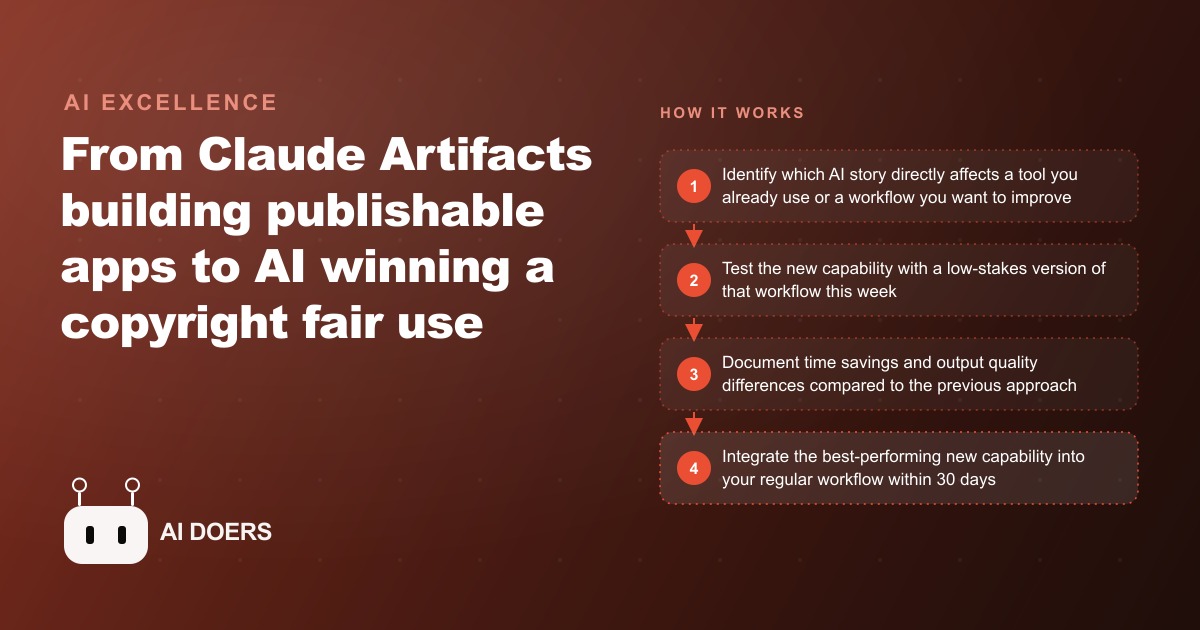
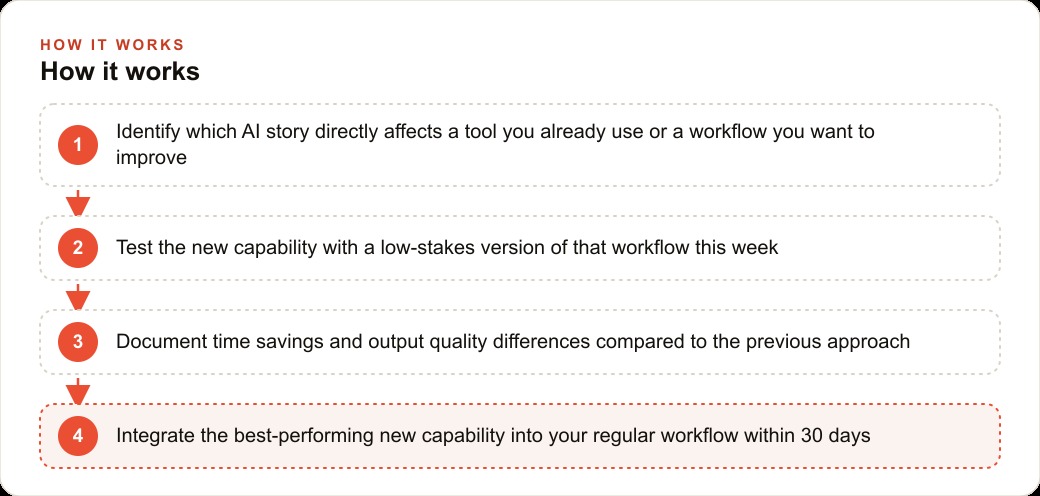
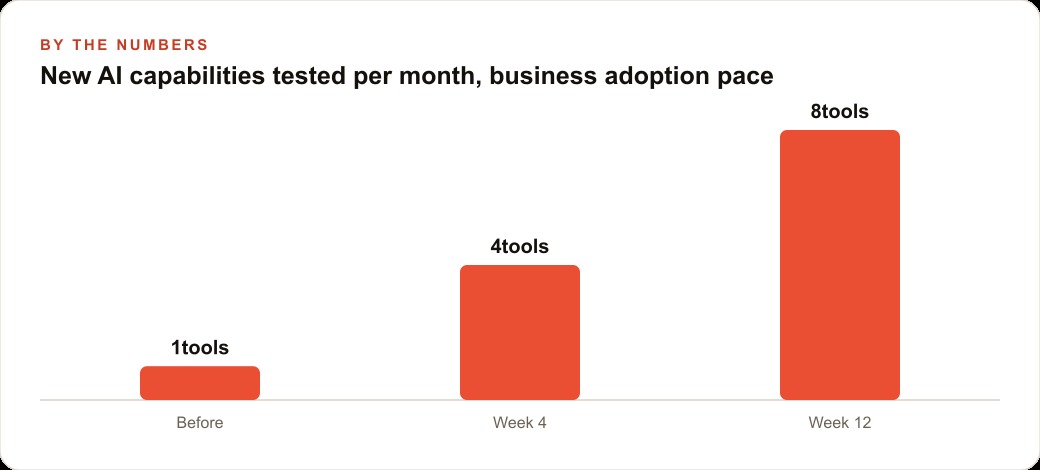
The most common mistake is trying to integrate all the tools at once. Each new tool requires a learning curve, a setup cost, and a workflow change. Adopting five tools in the same week means five simultaneous learning curves and five new places where something can go wrong. The resulting confusion often leads businesses to abandon the tools before they have built the habits that produce results.
The right approach is sequential: one tool per week, applied to a specific task, evaluated against the previous approach. Only after the first tool is a reliable part of the workflow do you add the second.
The second mistake is applying AI tools to tasks that are already fast. AI tools produce the most dramatic results when applied to tasks that are currently slow, require a lot of manual data gathering, or involve writing that is done from scratch each time. If a task already takes five minutes, making it take three minutes with AI is not transformative. If a task takes 90 minutes, making it take 15 minutes is a fundamental change.
How do I prioritize which tools to adopt first?
Make a list of the five tasks in your business that take the most time per week and produce no direct revenue while you are doing them. Administrative tasks, research tasks, and communication tasks are typically on this list. Then map each task to one of the tools in this article or elsewhere and estimate how much time the tool would save.
Start with the task where the estimated time savings is largest and the tool is simplest to set up. Claude Artifacts and the ChatGPT Drive connector are both usable within an hour of setup. The 11 AI voice assistant requires a few minutes of account connection. Higgsfield Soul requires generating initial character assets, which takes an afternoon but produces reusable assets for months.
Implement the first tool for two weeks before evaluating. Document the time saved. If the savings are real and consistent, add the second tool. This cadence produces sustainable habit change rather than a burst of adoption followed by reversion.
All of this is manageable in house for a motivated business owner. If you want help mapping the tools to a comprehensive marketing and lead generation strategy, rather than just operational efficiency, that is worth a dedicated conversation.
That is exactly what we do at AI DOERS. Book a private 30-minute call with Madhuranjan Kumar and we will map the fastest path to it for your specific business.
Book your call →
Madhuranjan Kumar
Madhuranjan Kumar brings 20 years of performance-marketing experience and has managed over $200 million in Facebook ad spend for brands across the United States and beyond. His expertise spans the full modern marketing stack: Meta, Google Ads, TikTok, email automation, CRM, and the websites that hold it together. At AI DOERS he turns that track record into lead-generation systems for businesses across every industry.